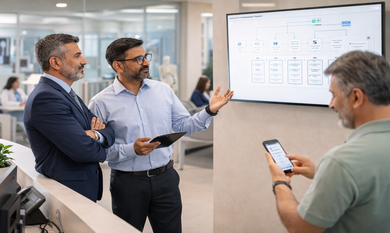
Hybrid wealth advisory firms are navigating a fast-changing landscape. Clients now expect faster responses, personalized guidance, and better visibility into their portfolios. At the same time, advisors are handling more clients with limited time and resources. This is where AI in wealth management is starting to make a real difference.
Cities like Hyderabad, which have grown into strong fintech and technology hubs, are seeing increasing interest in digital tools that can support advisory operations. For firms looking to scale without losing the human touch, an AI copilot for wealth advisors offers a practical starting point. It is not about replacing advisors. It is about helping them do their work more effectively.
What Is an AI Copilot for Wealth Advisors?
An AI copilot is essentially a digital assistant built specifically for financial advisors. Think of it as an intelligent layer that sits alongside your existing advisory workflow.
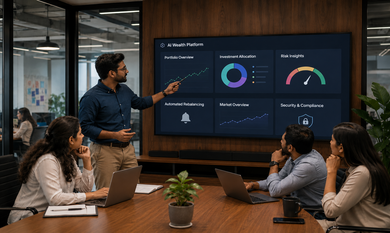
It can review client data, portfolio history, financial goals, and risk profiles. It can pull in relevant market information and summarize it in a format that is easy to act on. When a client meeting is coming up, the copilot can prepare a quick brief so the advisor walks in informed.
Crucially, an AI-powered advisor copilot does not make decisions. It gives advisors better inputs so they can make better decisions. The advisor stays in control of every recommendation, every communication, and every client interaction.
Why Hybrid Wealth Advisory Firms Need AI Copilots
Advisors at hybrid wealth advisory firms often find themselves caught between growing client demands and limited working hours. The challenges are familiar: too much time spent on manual research, repetitive report generation, and slow meeting preparation. Adding new clients to the roster can feel risky when each relationship requires careful, personalized attention.
Beyond client management, compliance pressure is increasing. Documentation requirements are getting more detailed, and keeping records in order takes real effort. Scaling an advisory practice without losing the quality of human interaction is genuinely difficult.
This is where advisor productivity tools become relevant. When advisors spend less time on routine tasks, they have more capacity for the conversations that actually build client relationships. AI copilots are designed to support routine operational tasks so advisors can focus on what they do best.
How Agentic AI Helps Advisors in Real Time
Modern AI copilots are not just static tools. They can operate across multiple workflows in an active, connected way. This is where agentic AI financial advisory solutions come into the picture.
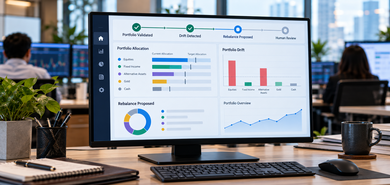
In practice, this means a copilot can monitor a client's portfolio in real time and flag a risk exposure that may need attention. It can suggest possible next steps for the advisor to review, based on the client’s financial goals and recent market changes. It can prepare a meeting summary before the advisor even opens the calendar invite, and automatically log updates in the CRM after a client interaction.
Follow-up tasks, documentation updates, and communication reminders can all be handled with minimal manual input from the advisor. This kind of workflow automation across advisory tasks can significantly reduce the time spent on administration.
One important point: agentic AI can work across these workflows, but every client-facing recommendation or decision must still go through advisor review and approval. The AI handles the groundwork. The advisor handles the judgment.
The workflow below shows how an AI advisor copilot supports the advisory process while keeping the human advisor in control of final decisions.
Figure: AI Copilot workflow showing how client data, market insights, AI recommendations, human advisor review, and compliance controls work together in a hybrid wealth advisory model.
Key Features of AI Advisor Copilots
A well-designed AI copilot for advisory teams typically includes the following capabilities:
Client insight summaries. Before a client call or review, the copilot pulls together recent activity, goal progress, and any changes in the client's financial situation into a concise brief.
Portfolio recommendation support. The copilot can surface relevant rebalancing options or risk considerations based on predefined parameters, which the advisor then reviews before any action is taken.
Meeting preparation. Agenda suggestions, talking points, and prior action items are all organized automatically.
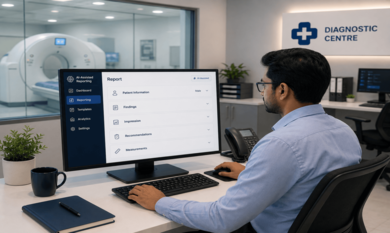
Automated documentation. Meeting notes, recommendation summaries, and approval records are generated and stored, reducing manual documentation time. This supports financial advisor automation without removing human oversight.
Follow-up reminders. The copilot can track pending tasks and send the advisor timely prompts so nothing slips through the cracks.
Compliance support. Draft documentation and audit trail maintenance help keep records organized and ready for review.
Realistic Example
A well-known real-world example of AI supporting wealth advisors comes from Morgan Stanley Wealth Management. The firm announced a strategic initiative with OpenAI to create an internal-facing tool that helps financial advisors access Morgan Stanley’s internal research, insights, and intellectual capital more quickly. Rather than spending time manually searching through large volumes of content, advisors can ask the system a question and receive a relevant response generated from Morgan Stanley’s own internal content, with links to source documents.
The purpose of the tool is to improve advisor efficiency and information access, not to replace the advisor’s role. Morgan Stanley has also emphasized that trust-based relationships and human advice remain central to wealth management. This makes the example useful for showing how AI can support large advisory teams while keeping experienced professionals in control. Read More
Human-in-the-Loop Control
For any advisory firm evaluating AI tools, the question of control is non-negotiable. Human-in-the-loop AI is the only responsible approach in a field where client trust and regulatory accountability are at stake.
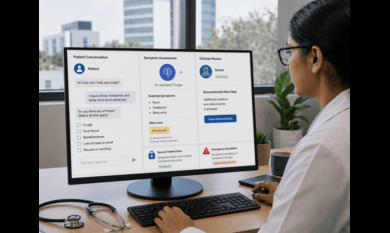
What this means in practice is straightforward. The AI surfaces suggestions. The human advisor reviews them. Final advice goes to the client only after the advisor has assessed and approved it. Sensitive financial decisions, especially those involving significant portfolio changes or complex life events, always require human judgment.
This matters for more than compliance reasons. Clients choose advisors because they trust them. That trust is built on empathy, accountability, and personalized understanding. AI can improve the quality and speed of information available to advisors, but the relationship itself is irreplaceable.
Business Benefits for Wealth Advisory Firms
When AI copilots are implemented thoughtfully, the operational improvements can be meaningful. Advisors can serve more clients in the same amount of time, response quality improves, and the client experience becomes more consistent.
Firms may also see better real-time portfolio insights because information is organized and surfaced faster. Personalized client communication becomes easier to scale when the groundwork is automated. Administrative tasks that once consumed hours each week can be reduced significantly.
Depending on workflow maturity, firms may reduce a meaningful amount of time spent on research, documentation, and reporting. This is not guaranteed, but firms that have integrated AI copilots into structured workflows have reported meaningful time savings. The result is a more productive advisory team and a better experience for clients.
Technology Stack Suggestions
Building an effective AI copilot for wealth advisory typically involves large language models for document understanding and generation, machine learning models for risk profiling and recommendations, and CRM integration to keep client records connected.
Portfolio management system APIs and market data feeds provide the real-time inputs the copilot needs. Cloud infrastructure allows firms to scale securely. A secure advisor dashboard gives advisors a clean, centralized interface. Role-based access control ensures that sensitive data is only accessible to the right people, and audit logs maintain a clear record of every interaction.
Hyderabad fintech firms are well positioned to use cloud-based architecture to build and scale these systems securely and cost-effectively.
Compliance and Data Security Checklist
Any AI deployment in wealth advisory must account for regulatory and data security requirements. Compliance-ready AI workflows include the following safeguards:
- Data encryption at rest and in transit
- Consent-based data access and usage
- Complete audit trails for all AI-assisted interactions
- Explainable recommendations that advisors can review and understand
- Human approval workflows before any client-facing advice is delivered
- Role-based access control across all system components
- Secure CRM and portfolio system integration
- Regular model monitoring to catch performance issues or drift
- Compliance team review before any major workflow changes go live
Frequently Asked Questions
Can AI copilots replace wealth advisors?
No. AI copilots are designed to support advisors, not replace them. They help with information gathering, documentation, workflow automation, and meeting preparation, but final advice and client decisions must remain with human advisors. Regulatory frameworks also require human accountability for financial recommendations.
Are AI copilots useful for hybrid wealth advisory firms?
Yes, particularly for firms that want to combine digital speed with human trust. AI copilots help with client servicing, portfolio reviews, meeting preparation, and documentation, which are the tasks that tend to consume the most advisor time without necessarily requiring deep human judgment.
Can AI copilots help with compliance?
Yes, in a supportive capacity. They can help maintain audit trails, generate approval records, and organize documentation in a structured way. However, compliance teams and human advisors should review all important workflows to ensure that the AI's output meets regulatory standards before it is used in any client-facing context.
Conclusion
AI copilots offer hybrid wealth advisory firms a practical way to work faster without losing the human judgment that clients depend on. They can support real-time insights, streamline documentation, automate routine workflows, and help advisors prepare for client conversations more effectively. At every step, human advisors remain in control of final advice and client relationships.
For firms in Hyderabad looking to build these capabilities, working with an experienced AI development company in Hyderabad can help ensure that the technology is designed with the right safeguards, integrations, and compliance infrastructure from the start. The goal is not to automate advisory work. It is to make advisors better at it.
About Theta Technolabs
Theta Technolabs is a technology company with capabilities across AI, web, mobile, and cloud development. We help fintech and wealth advisory firms build intelligent, secure, and scalable solutions, including AI copilot development, secure advisor dashboards, and workflow automation platforms designed for regulated industries.
If you are exploring AI-powered tools for your advisory team, we would be glad to discuss your requirements.
Contact us at sales@thetatechnolabs.com