
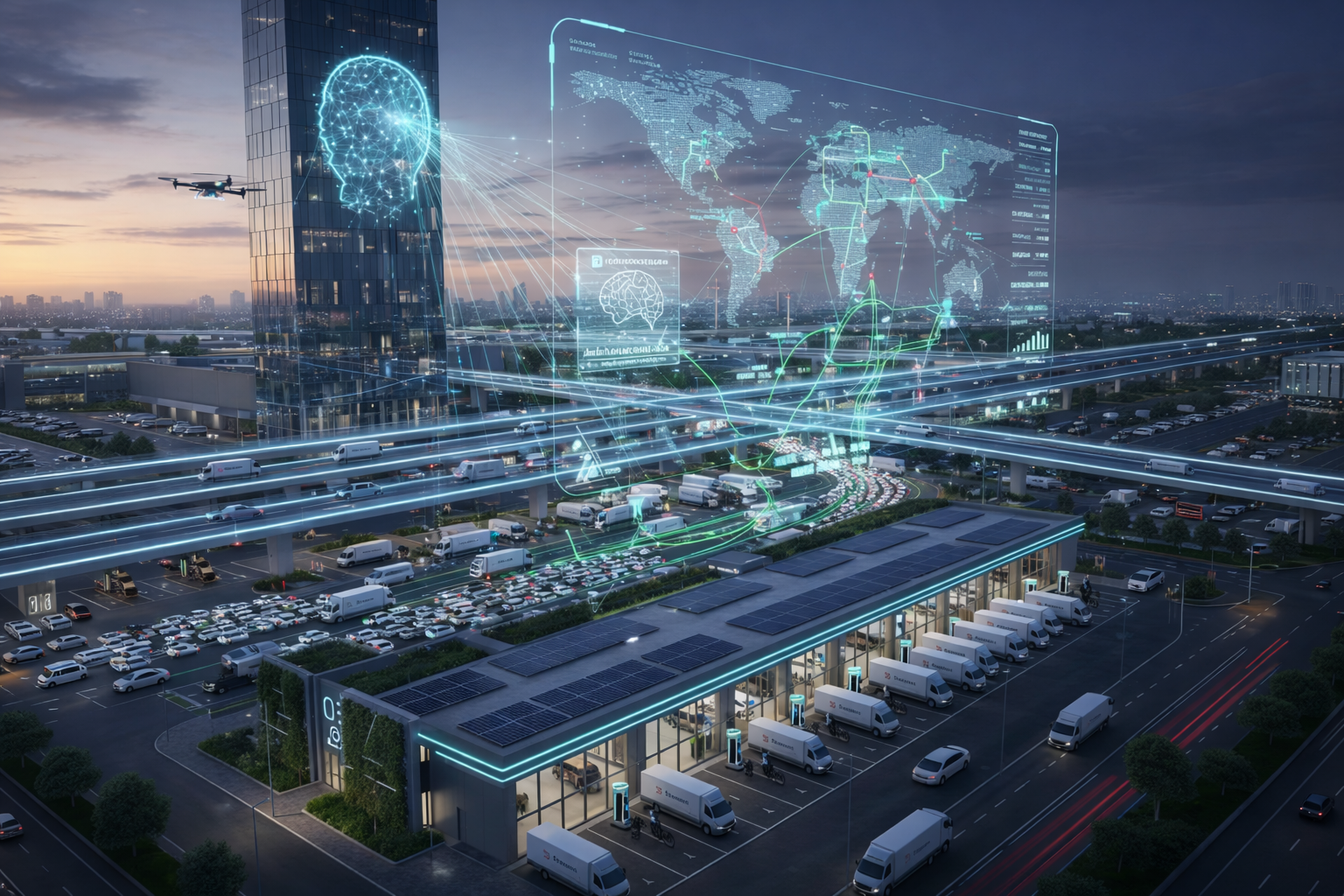


Logistics in 2026 is no longer about moving vehicles from point A to point B. It is about managing hundreds of variables at once, traffic that changes by the minute, customers who expect precision delivery windows, and sustainability targets that sit right next to profit margins.
For years, fleet planning relied on fixed rules. Clear logic, predictable outcomes, and systems that worked well as long as the world behaved as expected. But the modern supply chain rarely does.
This is where the conversation around AI vs rule-based fleet planning becomes critical. Not as a tech debate, but as a business one. What if planning systems could think ahead instead of just reacting? What if fleet decisions adjusted themselves in real time rather than waiting for manual intervention?
That shift, from static logic to adaptive intelligence, is shaping how serious logistics leaders think about growth, resilience, and long-term fleet efficiency.
The Rule-Based Era: Reliable Until Reality Changes
Rule-based fleet planning is built on “if-then” logic.
If traffic is high on Route A, then divert to Route B.
If a vehicle reaches capacity, then assign the next delivery to another truck.
These systems are predictable and easy to explain. They work well in stable environments where variables are limited and change is slow.
Now picture a realistic situation. A busy commercial district experiences a sudden road closure due to emergency maintenance. A rule-based system checks its predefined logic. It reroutes vehicles using the next approved route, even if that route is already congested, even if it causes missed delivery windows, even if fuel usage spikes.
The system is not wrong. It is simply blind to context.
Rule-based planning struggles when multiple disruptions happen together. Weather shifts, driver availability, fuel prices, and customer changes are treated as separate conditions rather than connected signals. As fleets grow larger, these limitations multiply, making delivery planning harder to scale without adding manual oversight.
The AI Transformation: What If Intelligence Is Embedded
Now imagine a different approach.
What if AI is implemented not as a layer on top, but as the brain of planning itself?
AI systems analyze patterns instead of just following instructions. Machine learning models continuously learn from historical routes, live traffic, weather data, driver behavior, and vehicle performance. When something changes, the system recalculates priorities rather than switching to a fallback rule.
In this scenario, an AI platform detects the road closure, anticipates downstream congestion, considers driver fatigue levels, checks delivery urgency, and recalculates routes that balance cost, time, and safety.
This is the core of AI-driven fleet optimization. Decisions are no longer binary. They are contextual.
AI also enables intelligent logistics planning workflows where planning, dispatch, monitoring, and optimization are connected. For many logistics leaders, this shift starts with building a centralized planning platform, often developed by a web app development company in Dubai, that brings routing intelligence, fleet visibility, and decision-making into one unified system. The system does not wait for exceptions. It predicts them. Over time, it improves fleet efficiency by learning which decisions actually worked and which did not.
AI vs Rule-Based Fleet Planning: A Practical Comparison
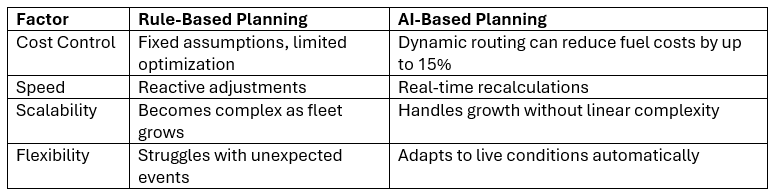
This comparison highlights why AI vs rule-based fleet planning is less about replacing software and more about enabling operational scalability without operational chaos.
Real-World Scenario: Scaling from 50 to 500 Vehicles
Consider a B2B logistics company operating 50 vehicles. Manual oversight and rule-based systems are manageable. Planners know drivers personally, routes are familiar, and disruptions are handled through calls and spreadsheets.
Now scale that operation to 500 vehicles across multiple regions. Suddenly, every inefficiency becomes expensive. A five-minute delay multiplied across hundreds of deliveries impacts customer trust. Fuel waste becomes a line item worth millions annually.
With AI in place, the system becomes the coordinator. Vehicles are grouped dynamically. Routes are optimized across the entire fleet, not in isolation. Driver schedules are balanced to reduce burnout. Carbon-neutral routing options are suggested automatically, aligning sustainability with profitability.
This level of operational scalability is nearly impossible with static rules alone. AI allows growth without losing control.
2026 Trends Shaping Fleet Planning
Several trends are accelerating the shift toward AI-driven fleet optimization in 2026.
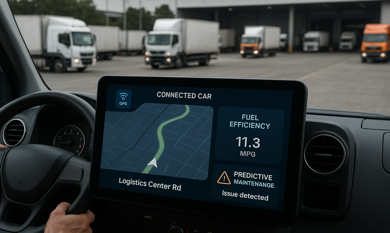
5G connectivity enables real-time data exchange between vehicles and planning platforms. IoT sensors provide live insights into vehicle health, load conditions, and fuel consumption. Autonomous agents now handle micro-decisions, such as reassigning deliveries during minor disruptions without human input.
Carbon-neutral routing has also become a business priority. AI models evaluate emissions impact alongside delivery timelines, helping companies meet regulatory and ESG goals without sacrificing efficiency.
These advances are redefining intelligent logistics planning workflows as living systems rather than static tools.
A Global Perspective
Even in fast-growing logistics hubs like Dubai, where infrastructure is modern and highly digitized, fleet complexity continues to increase. Companies operating in such environments are finding that fixed logic cannot keep up with the pace of change, making AI-based planning a strategic advantage rather than an experiment.
Conclusion: The Long-Term Vision of Intelligent Logistics
Fleet planning in 2026 is moving toward intelligence that adapts, learns, and improves continuously. The debate around AI vs rule-based fleet planning is ultimately about how prepared an organization is for growth, uncertainty, and sustainability.
Rule-based systems will continue to exist, but their role is narrowing. AI is becoming the foundation for logistics strategies that aim to scale without losing efficiency or control.
Companies that invest early in intelligent logistics planning workflows position themselves not just to respond to change, but to anticipate it. That is where long-term fleet efficiency truly comes from.
Theta Technolabs stands out as a leading AI development company in Dubai, helping logistics businesses design and implement future-ready planning systems. With deep expertise across Web, Mobile, and Cloud solutions, the team builds platforms that align technology with real operational goals.
Upgrade your fleet planning
Ready to explore what AI-driven fleet planning could look like for your business?
Consult with Theta Technolabs to design custom, scalable AI solutions tailored to your logistics operations.
Reach out to our team for a strategic consultation at sales@thetatechnolabs.com
Frequently Asked Questions
1. Is transitioning from rule-based systems expensive?
Initial investment exists, but most companies recover costs within 12 to 18 months through fuel savings, reduced delays, and better asset utilization.
2. Does AI replace fleet managers?
No. AI supports decision-making. Managers gain visibility and control rather than losing authority.
3. How secure is fleet data in AI systems?
Modern platforms use encrypted data pipelines and role-based access, often exceeding the security of legacy systems.
4. Can AI work with existing fleet software?
Yes. AI solutions are typically integrated through APIs, allowing gradual transition rather than full replacement.
5. How long does implementation take?
Most deployments start delivering insights within weeks, with continuous improvement over time.









.png)





.png)
































.avif)
.avif)
.avif)



















_How%20IoT%20Can%20Reduce%20Energy%20Costs%20in%20Smart%20Factories_Q4_25.avif)
_How%20AI%20Development%20Companies%20in%20Ahmedabad%20are%20Transforming%20the%20Shopping%20Experience_Q4_25.avif)
_Node.js%20and%20Blockchain_%20A%20Perfect%20Pair%20for%20Fintech%20Innovation%20in%20Dubai_Q3_24.avif)
_Choosing%20the%20Right%20Computer%20Vision%20Development%20Partner%20in%20Ahmedabad%20for%20Construction_Q3_24.avif)
_The%20Transformative%20Role%20of%20Open%20Banking%20APIs%20in%20Fintech%20for%202024_Q3_24.avif)
_Explore%20the%20Best%20Cross-Platform%20App%20Development%20Frameworks%20of%202024_Q3_24.avif)

_Integrating%20IoT%20with%20Mobile%20Apps%20for%20Advanced%20Renewable%20Energy%20Solutions_Q2_24.avif)
_Top%20Benefits%20of%20Cloud%20Computing%20for%20All%20Business%20Sectors_Q2_24.avif)

_Understanding%20the%20Impact%20of%20AI%20and%20Machine%20Learning%20on%20Fintech%20Web%20Apps%20in%20Dubai_Q2_24.avif)


_Smart%20Manufacturing%20in%20Dubai_%20How%20AI%20is%20Driving%20Efficiency%20and%20Innovation_Q1_In_24.avif)
_Automated%20Checkout%20Systems.avif)


