In January 2026, manufacturing leaders are facing a clear shift. Maintenance systems no longer stop at predicting failures. They are expected to act on them. Dashboards that flash warnings are no longer enough when downtime costs rise by the minute.
This is where agentic AI in maintenance scheduling changes the game.
Instead of waiting for planners to interpret alerts, modern systems observe, decide, and execute. Maintenance planning moves from reactive coordination to autonomous action. For plant managers and CTOs alike, this marks a practical step forward in Industry 4.0 maturity.
The Old Problem vs. The New Reality
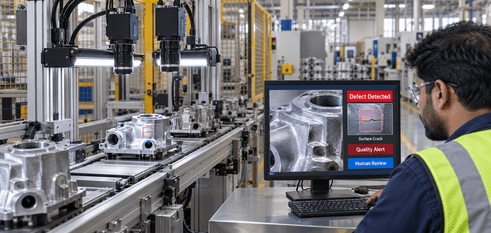
Traditional predictive maintenance has helped manufacturers detect issues earlier. Sensors flag abnormal temperature, vibration, or pressure. Alerts appear on dashboards. Emails are sent. And then the waiting begins.
Someone still has to:
- Check machine priority
- Look up spare part availability
- Coordinate technician schedules
- Adjust production plans
This delay often turns a small issue into extended downtime.
With agentic AI in maintenance scheduling, the system does not stop at prediction. It becomes an active participant in operations.
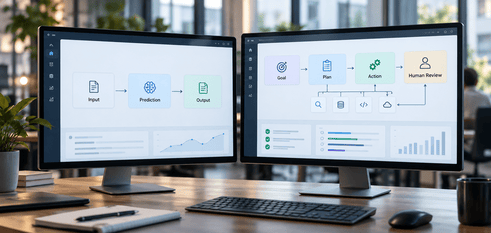
The difference is simple. Predictive systems inform. Agentic systems act.
From Predictive to Autonomous: What Changes
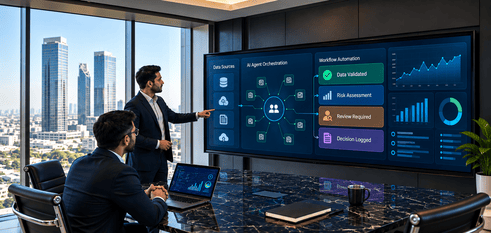
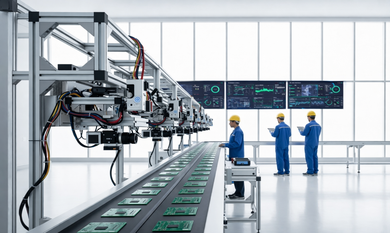
Agentic AI introduces autonomy into AI-driven maintenance planning. It connects condition monitoring, ERP data, workforce schedules, and production priorities into one decision loop.
Here is how the shift looks on the shop floor.
How Agentic AI Works in a Real Maintenance Scenario
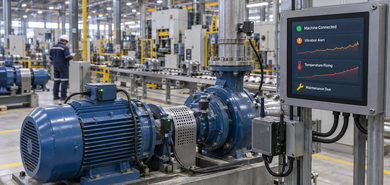
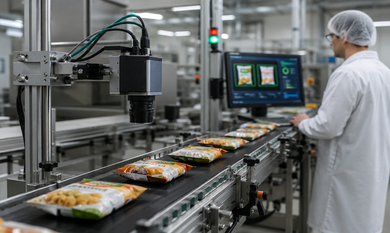
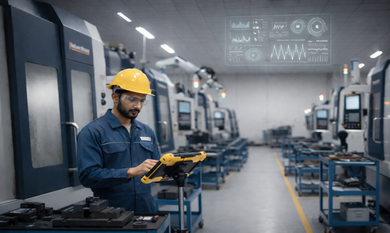
Imagine a CNC machine in a smart factory outside Pune, a well-known manufacturing hub. To stay ahead of such high-stakes failures, forward-thinking plants are increasingly collaborating with a specialized AI development company in Pune to build these autonomous response layers. In this scenario, sensors detect a vibration anomaly that historically precedes spindle failure, and the system—rather than just alerting—begins the coordination process instantly.
In a traditional setup, this would trigger an alert.
In an agentic setup, the system takes the next steps automatically.
- Detection and Context
- The AI agent confirms the anomaly using historical and live data.
- It assesses failure risk against current production commitments.
- Resource Check
- The agent checks spare part availability in the ERP.
- It identifies that the required bearing is in stock.
- Workforce Coordination
- It finds a certified technician available in the next shift.
- It considers skill matching and labor compliance rules.
- Scheduling Automation
- Maintenance is scheduled during a low-impact production window.
- The shift plan is updated automatically.
- Execution and Feedback
- The technician receives the updated task on a mobile app.
- Post-repair data feeds back into the learning model.
This closed-loop decision-making is what defines autonomous maintenance workflows.
Why Equipment Uptime Improves So Significantly
When decisions happen instantly, downtime shrinks. Agentic systems reduce the gap between detection and action, which is often where losses occur.
Key outcomes include:
- Faster response to early-stage faults
- Fewer emergency breakdowns
- Better alignment between maintenance and production
Over time, plants see consistent gains in equipment uptime without increasing maintenance headcount.
Business Impact at a Glance

ROI That Manufacturing Leaders Care About
From a B2B perspective, the value is clear. Manufacturers adopting AI-driven maintenance planning report:
- 20 to 30 percent reduction in unplanned downtime
- 15 to 25 percent improvement in maintenance workforce efficiency
- Faster return on asset investments
Because agentic systems operate across Web, Mobile, and Cloud platforms, decision latency drops to near zero. Maintenance becomes part of production strategy, not an interruption to it.
Integration Without Disruption
A common concern is whether agentic AI requires replacing existing systems.
In practice, it does not.
Modern implementations integrate with:
- ERP systems
- CMMS platforms
- IoT sensor networks
- Mobile workforce tools
The intelligence layer sits on top, orchestrating decisions across systems rather than disrupting them. This makes adoption practical for mid-sized and large manufacturers alike.
FAQ: What Manufacturers Ask Before Implementing
Is agentic AI secure for maintenance operations?
Yes. Enterprise-grade deployments use role-based access, encrypted data flows, and audit logs. Decision authority can be configured to align with governance policies.
How fast can ROI be measured?
Most manufacturers see measurable impact within the first two quarters, especially in reduced downtime and better schedule adherence.
Does it replace maintenance planners?
No. It augments them. Planners move from firefighting to oversight and optimization, focusing on strategy rather than coordination.
Can it work with legacy equipment?
Yes. Agentic systems can operate using partial sensor data and historical records, making them suitable even for mixed-generation plants.
The Bigger Picture: Industry 4.0 in 2026
In 2026, Industry 4.0 is no longer about connectivity alone. It is about autonomy. Web platforms enable visibility. Mobile tools enable execution. Cloud infrastructure enables scale.
Agentic AI brings these layers together into systems that think and act.
This is the future of maintenance scheduling. Not alerts waiting for action, but systems that take responsibility for outcomes.
Theta Technolabs is at the forefront of this shift as a leading agentic AI development company, helping manufacturers build intelligent maintenance systems across Web, Mobile, and Cloud environments.
Upgrade Your Maintenance Strategy
If you are planning your next step toward autonomous maintenance, now is the right time to act.
Connect with the experts at Theta Technolabs to discuss your AI roadmap and explore how agentic systems can seamlessly fit into your existing operations. Reach out to sales@thetatechnolabs.com for a consultation tailored to your manufacturing goals.