Managing investor portfolios at scale is one of the most operationally demanding challenges digital wealth advisory platforms face. Market conditions shift rapidly, investor risk profiles evolve over time, and portfolio drift from target allocations can erode returns before a manual review cycle even begins. For digital wealth advisors handling hundreds or thousands of portfolios simultaneously, the gap between when rebalancing is needed and when it actually happens represents a real performance cost.
AI-driven predictive portfolio rebalancing gives digital wealth platforms a way to close that gap. Rather than waiting for fixed threshold triggers or scheduled review cycles, AI systems can monitor portfolios at high frequency, analyze market signals and investor behavior, and surface rebalancing recommendations before portfolio drift becomes a performance or compliance problem significantly reducing the lag that manual review cycles create. For digital wealth advisors in Kolkata and across India exploring AI-driven predictive portfolio rebalancing, understanding how this can be implemented in practice is the right starting point.
It is important to note that no AI rebalancing system guarantees portfolio performance. These systems improve the speed and quality of information available to advisors but outcomes depend on market conditions, investor circumstances, and the quality of decisions made at every step.
Why Manual and Rule-Based Rebalancing Falls Short
Traditional portfolio rebalancing approaches create structural gaps that compound over time at scale:
- Time lag between market movement and action: Manual review cycles mean portfolio drift can persist for days or weeks before a rebalancing decision is made, during which market conditions may have shifted further.
- Fixed threshold limitations: Rule-based systems trigger rebalancing when a portfolio crosses a predefined drift percentage, regardless of broader market context. A 5% drift during stable conditions carries different implications than the same drift during high volatility.
- Inability to process behavioral signals: Investor behavior withdrawal patterns, periodic risk tolerance updates, and life stage shifts rarely feeds into rule-based rebalancing logic in a structured or timely way.
- High analyst effort per portfolio: As portfolio volumes grow, manual rebalancing review becomes operationally unsustainable without proportional increases in advisory staff.
- Inconsistent outcomes: Similar investor profiles may receive meaningfully different rebalancing treatment depending on when their portfolio is manually reviewed.
According to industry research, portfolios that are rebalanced reactively rather than proactively can experience meaningful allocation drift during periods of elevated market volatility directly impacting risk-adjusted returns over time.
Understanding how AI predicts portfolio rebalancing needs for wealth advisors starts with recognizing that these are not individual failures they are structural limitations of approaches built for a lower-volume, slower-moving market environment.
How AI-Driven Predictive Rebalancing Can Work
An AI-driven rebalancing system operates across three interconnected layers that work continuously rather than on a scheduled cycle.
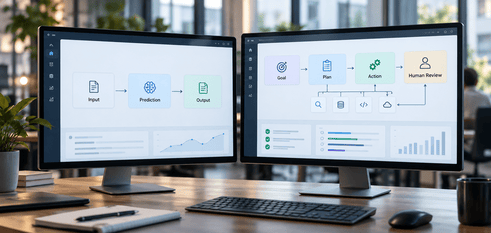
Figure: AI-Driven Predictive Portfolio Rebalancing Workflow for Digital Wealth Advisory Platforms
The market signal layer ingests price movements, volatility indicators, sector rotation signals, and macroeconomic data relevant to the portfolio's asset allocation. Rather than waiting for a drift threshold to be crossed, the predictive model can identify conditions where drift is likely to accelerate and flag portfolios for proactive review.
The investor behavior layer analyzes patterns specific to each investor — including periodic risk tolerance inputs, contribution and withdrawal history, and time horizon changes — to build a clearer picture of each investor's evolving financial priorities. This layer allows the system to personalize rebalancing recommendations rather than applying uniform rules across all portfolios.
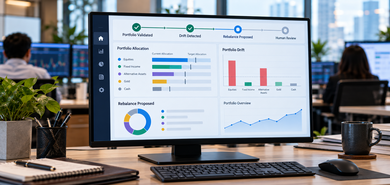
The portfolio drift monitoring layer continuously compares current allocation against target weights and risk thresholds for each investor. When the predictive model identifies that drift is approaching a meaningful level given current market conditions and investor context, it generates a rebalancing recommendation with structured rationale explaining which signals drove the suggestion.
The accuracy and relevance of these recommendations depend on the quality of data inputs and the parameters defined during system setup — both of which require periodic review by the platform.
Importantly, AI recommends — it does not execute autonomously. The final rebalancing decision sits with the licensed advisor or the investor depending on the platform's structure. Dynamic asset allocation in fintech environments requires that human oversight and regulatory accountability remain at the center of every portfolio action.
To understand the practical difference this creates — consider a portfolio exposed to a sudden sector rotation in mid-cap equities. A rule-based system would wait until drift crosses a fixed threshold before triggering a review. A predictive AI system, reading volatility signals and sector movement data together, would flag that portfolio for advisor review days earlier — giving the advisor a meaningful window to act before drift compounds. The performance value is not in the AI acting faster. It is in the advisor being informed earlier.
Key Capabilities AI Brings to Wealth Advisory Platforms
When implemented for a digital wealth advisory platform, AI-powered portfolio management can support several specific functions:
- Continuous drift monitoring: Portfolio composition is tracked against target allocation and individual risk thresholds on a near real-time basis, subject to data feed availability and system latency.
- Multi-signal market analysis: Price, volatility, and macroeconomic indicators are processed together to give rebalancing recommendations market context rather than purely mathematical triggers.
- Behavioral pattern recognition: Investor behavior analytics are incorporated into rebalancing logic, allowing recommendations to reflect individual financial circumstances rather than generic portfolio rules.
- Explainable recommendation generation: Each rebalancing suggestion includes structured rationale that advisors and investors can review, question, and act on with full visibility into the AI's reasoning.
- Tax-aware rebalancing logic: The system can surface information about potential tax events that may result from a rebalancing action — such as triggering short-term capital gains — so that advisors have relevant context available. This is informational only. Tax assessment and advice remain solely the responsibility of a qualified tax professional or the licensed advisor.
- Scalable portfolio coverage: Predictive rebalancing tools for digital wealth advisory can monitor large numbers of investor portfolios simultaneously without proportional increases in analyst workload.
Platforms evaluating how AI fits into their broader technology stack can explore fintech AI development solutions designed for wealth management infrastructure.
Compliance, Governance, and Investor Oversight
For digital wealth platforms operating in India, the regulatory environment sets clear expectations. SEBI regulations governing portfolio advisory services and automated investment tools set clear expectations around explainability, auditability, and human advisor review — requirements that AI-driven rebalancing systems must be built to meet. Platforms must maintain clear records of how rebalancing decisions are made and ensure that investors understand the role AI plays in the advisory process.
Platforms should also maintain a clear audit trail for every AI-generated recommendation — including the signals that triggered it, the timestamp, and the advisor action taken. This is not only good governance practice but a practical requirement for demonstrating compliance during any SEBI review.
Automated portfolio rebalancing in Indian fintech must also address data privacy under India's Digital Personal Data Protection framework. Investor financial data used to train and operate rebalancing models must be handled with appropriate access controls, encryption, and consent frameworks.
Why This Matters for Digital Wealth Platforms in Kolkata
Kolkata's fintech and wealth management ecosystem is growing alongside India's broader retail investor expansion. Rising participation in mutual funds, SIPs, and equity markets is creating demand for digital advisory platforms that can deliver personalized, data-driven portfolio management without the cost structure of traditional advisory models.
For AI-driven investment portfolio optimization in Kolkata, 2026 represents a practical window where implementation expertise is accessible and investor expectations for responsive, personalized portfolio management are rising. Platforms that build predictive rebalancing capabilities now are better positioned to serve growing investor bases efficiently as scale increases.
Conclusion
AI tools for digital wealth advisory portfolio optimization can help platforms manage portfolios more responsively, more consistently, and at greater scale than manual or rule-based approaches allow. The value is not in removing advisor judgment from the process. It is in giving advisors better information, earlier, so that rebalancing decisions are made with fuller context and less operational lag.
Implementation requires clean data infrastructure, a well-governed AI recommendation layer, and a clear framework for human oversight at every decision point. For digital wealth platforms in Kolkata ready to evaluate this capability, connect with an experienced AI development company in Kolkata that understands both the technical requirements and the regulatory environment.
Frequently Asked Questions
1. What does AI-driven predictive portfolio rebalancing mean for wealth platforms? It refers to AI systems that continuously monitor portfolio allocation, market signals, and investor behavior to generate rebalancing recommendations before drift becomes a performance problem. Unlike scheduled manual reviews, predictive rebalancing responds to current market and portfolio conditions as data becomes available. All final rebalancing decisions remain with the licensed advisor or investor.
2. How does AI rebalancing differ from rule-based automated rebalancing?
Rule-based systems trigger rebalancing when a portfolio crosses a fixed drift threshold regardless of market context. AI-driven systems analyze multiple signals simultaneously including market conditions, volatility, and investor behavior to generate contextual recommendations. This allows for more precise, personalized rebalancing rather than uniform threshold-based triggers across all portfolios.
3. How are SEBI compliance and human oversight addressed in these systems?
AI rebalancing systems for Indian wealth platforms must generate explainable, auditable recommendations that advisors review before execution. SEBI regulations require that automated investment tools operate within a framework where human advisor accountability is maintained. The AI surfaces recommendations with structured rationale. The licensed advisor or investor makes the final decision.
4. How long does implementation typically take for a digital wealth platform? Implementation timelines depend on the platform's existing data infrastructure, the number of portfolios in scope, and the depth of integration required with existing portfolio management systems. A focused initial build covering core rebalancing recommendation functionality can often be scoped within a few months, with additional capabilities added in subsequent phases.
Ready to Build AI-Driven Portfolio Rebalancing for Your Platform?
Building predictive rebalancing into a digital wealth platform is a technically and regulatory specific challenge. If your platform is at the stage of evaluating what implementation actually involves — architecture, data requirements, compliance alignment — Theta Technolabs works with fintech and wealth management teams to scope and build these systems across web, mobile, and cloud infrastructure. You can reach the team at sales@thetatechnolabs.com.