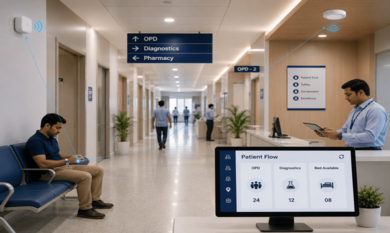
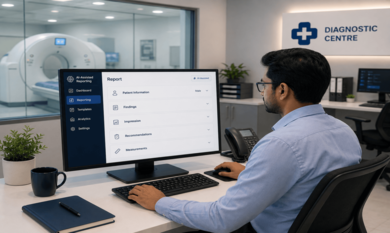
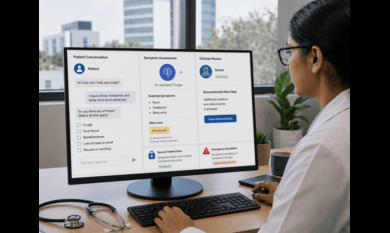
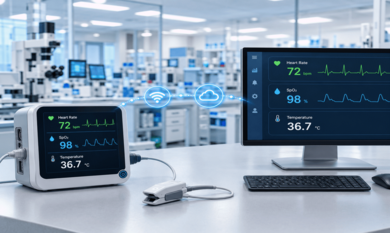
Cardiac hospitals in Dubai operate under a level of pressure that most general facilities do not face. Patient admissions are rarely predictable. A surge in acute cardiac cases can fill an ICU within hours, leaving ward managers scrambling to coordinate beds, staff, and equipment without adequate lead time. The core problem is not a lack of data — most hospitals generate considerable operational data daily. The problem is that this data rarely reaches the right people in time to act on it.
IoT-based predictive capacity forecasting can change that. By connecting physical hospital infrastructure to intelligent monitoring systems, cardiac hospitals can move from reactive bed management to a model where capacity pressure is visible before it becomes a crisis.
The Capacity Challenge in Cardiac Hospitals
Cardiac care units deal with a specific kind of unpredictability. Unlike elective surgery wards, cardiac admissions frequently arrive through emergency pathways, with little advance notice and high acuity needs. A single cluster of STEMI cases on a busy evening can overwhelm an ICU that was at manageable occupancy just hours earlier.
The challenges compound quickly. When high-dependency beds are full, incoming patients wait longer in emergency holding areas. Discharge coordination often runs on manual processes — a nurse calling a ward manager, who checks a whiteboard, who calls the attending physician. Each handoff adds time. Meanwhile, a patient who could have been stepped down to a general cardiac ward hours ago remains in an ICU bed because no one had a clear picture of step-down availability.
Operations teams frequently lack cross-ward visibility. A bed coordinator may know the CCU status but not the telemetry ward, or vice versa. Without a unified real-time view, decisions get made on incomplete information, and the system absorbs inefficiency at every level.
Without connected medical devices feeding live data into a central system, patient admission forecasting relies heavily on manual observation and historical experience rather than real-time infrastructure signals. Teams rely on experience and intuition rather than signals the infrastructure could realistically provide.
How IoT Can Enable Predictive Capacity Forecasting
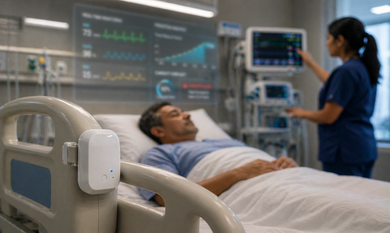
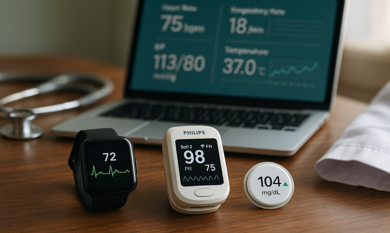
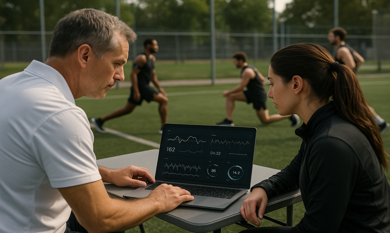
The implementation path starts with the physical layer. IoT sensors can be deployed at bedsides, cardiac monitoring stations, and care transition zones throughout the hospital. These devices continuously capture data points: bed occupancy status, patient vitals activity, equipment usage, and location signals from connected assets.
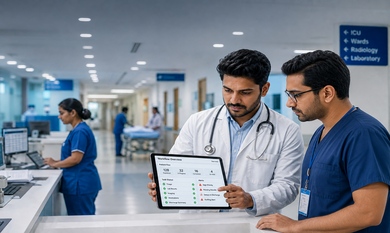
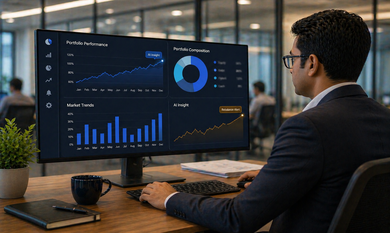
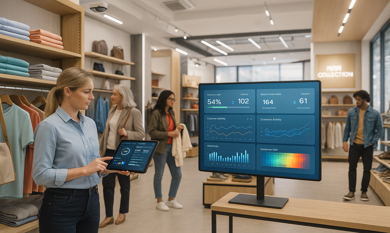
This real-time data streams into a central operations dashboard, where it combines with historical admission patterns, seasonal trends, and current patient acuity signals. A predictive layer processes this combined input and generates forward-looking capacity signals. Instead of telling a ward manager that a unit is currently full, the system can indicate that the unit is likely to reach capacity within a defined window, based on observed trends.

Figure: IoT-Based Predictive Capacity Forecasting Workflow in Cardiac Hospitals
Discharge planning can benefit directly from this setup. When a patient's monitoring data indicates improving stability over a consistent period, the system can flag this to the clinical team as a potential step-down or discharge candidate. This does not generate an automatic discharge decision. That authority remains with the treating physician. What it does is surface the right information at the right time, so clinical conversations happen earlier and bed transitions move faster.
Alerts can be configured at ward or facility level, notifying operations leads when occupancy is trending toward defined thresholds. This gives bed managers and clinical leads time to coordinate proactively rather than responding after the pressure point has arrived.
This is particularly relevant for cardiac ICU capacity optimization, where IoT sensors can signal approaching thresholds well before clinical teams are caught in a reactive position. Reliable cardiac hospital bed forecasting at this level requires sensors, HIS integration, and a well-configured alert logic working together as a single system.
Key IoT Components in a Cardiac Hospital Setup
A practical IoT deployment for cardiac capacity forecasting typically involves several interconnected components.
Bedside monitoring sensors track patient presence and connect with existing cardiac monitoring equipment to feed live status signals into the central system.
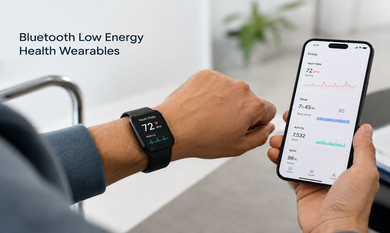
BLE-enabled asset tracking allows teams to locate critical equipment like portable defibrillators, infusion pumps, and cardiac monitors with near-real-time accuracy, reducing time lost searching for equipment during high-demand periods.
RTLS (Real-Time Location Systems) extend this to staff and patient movement, supporting faster response coordination across wards.
Connected nurse call and alert systems integrate with the forecasting layer so that escalation signals reach the right personnel without manual relay chains.
HIS and EMR integration is what ties the operational layer to clinical data. When the IoT system can read structured discharge summaries, admission orders, and patient acuity scores from the hospital's existing information systems, the predictive model becomes significantly more accurate. Without this integration, the system operates on partial data, which limits its practical value.
Together, these components support real-time cardiac ward monitoring across the full facility. When combined into a unified hospital occupancy forecasting system, operations teams in Dubai cardiac hospitals gain a live picture of where pressure is building and where capacity remains available.
Integration with AI-Driven Remote Monitoring and Telehealth
IoT-based capacity forecasting does not need to operate as a standalone system. For cardiac hospitals exploring broader digital health infrastructure, there is meaningful value in connecting this layer to remote patient monitoring and telehealth platforms.
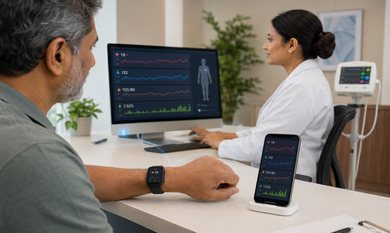
When post-discharge cardiac patients are monitored remotely through connected devices, their vitals and recovery data can feed back into the hospital's capacity planning model. When recovery signals show concerning trends, the system can flag this for clinical review, potentially supporting earlier intervention through a telehealth consultation rather than an unplanned admission. This does not eliminate the risk of acute events but can support earlier clinical awareness in monitored patients.
This kind of integration connects inpatient capacity management to outpatient and remote care in a way that traditional systems do not support. For hospitals evaluating AI-driven digital healthcare solutions for remote monitoring and telehealth connectivity, the IoT forecasting layer becomes a natural extension of a connected care model rather than a separate investment.
Operational and Clinical Benefits
When implemented with proper integration and clinical buy-in, IoT-based predictive capacity forecasting can support several meaningful operational improvements.
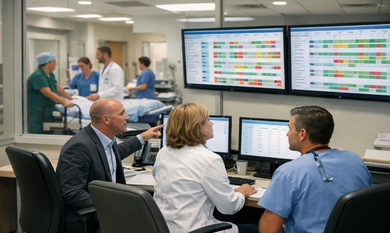
Ward managers can gain a unified, real-time view of occupancy across cardiac units, high-dependency areas, and step-down wards. This visibility alone can help reduce the time spent on manual bed coordination calls and status checks. For Dubai hospitals managing high cardiac admission volumes, IoT-based predictive analytics for cardiac patient flow can also reduce the coordination gaps that slow bed turnover during peak periods. Better predictive patient flow management gives operations teams a forward-looking view rather than a snapshot of current status.
Earlier awareness of capacity pressure points may allow operations teams to initiate bed preparation, staffing adjustments, or transfer coordination before a shortage becomes acute. The lead time this creates, even if modest, can make a material difference in how cardiac units function during peak admission periods.
Discharge timing support can help clinical teams identify step-down and discharge candidates earlier in the day, improving bed turnover and reducing the backlog that builds when discharges cluster in the afternoon.
It is worth noting that results depend on implementation scope, data quality, and the depth of HIS integration. A system built on clean, well-structured clinical data will generate more reliable forecasting signals than one working with fragmented or inconsistent inputs.
When integrated with hospital capacity planning software, IoT data can also strengthen clinical resource utilization across departments, reducing the administrative overhead that ward managers carry when bed coordination relies on manual checks.
Compliance, Data Governance, and Trust Considerations
Any IoT deployment in a Dubai cardiac hospital operates within a regulatory environment that takes patient data seriously. The Dubai Health Authority sets clear expectations around how clinical data is handled, stored, and shared. Hospitals aligned with NABIDH, the emirate's health information exchange, must ensure that any connected system handles data in a manner consistent with those frameworks.
IoT devices in clinical environments create new data touchpoints, and each one requires governance. Data encryption in transit and at rest, access controls by role, and audit logging are baseline requirements, not optional additions.
Beyond technical security, change management matters considerably. Clinical staff who do not understand or trust what the system is doing are unlikely to act on its outputs. Implementation should include training, transparent communication about what the system does and does not do, and clear boundaries around clinical authority. IoT forecasting informs operational and clinical decisions. It does not make them.
Illustrative Implementation Scenario
The following is an illustrative scenario for reference purposes only. It does not represent a confirmed case.
A mid-sized cardiac specialty hospital in Dubai, operating a 120-bed facility with a dedicated CCU and telemetry ward, is evaluating IoT-based capacity forecasting to address recurring peak-period bottlenecks. During a six-week pilot scoping phase, the operations team maps existing data flows across their HIS, nurse call system, and bedside monitoring equipment.
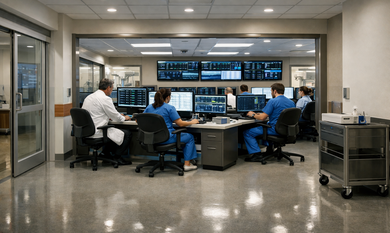
The initial deployment focuses on the CCU and step-down ward, where capacity pressure is most acute. IoT sensors are integrated with the existing monitoring infrastructure, and a central dashboard is configured to display real-time occupancy and trend data for the bed coordinator team. After integration with the HIS, the system begins generating capacity trend alerts during morning and evening shift transitions — the periods historically most prone to bottlenecks. The clinical team reviews outputs weekly and adjusts alert thresholds based on operational feedback.
Why This Matters for Cardiac Hospitals in Dubai
Dubai's healthcare sector is actively moving toward smart hospital infrastructure, guided by the DHA's digital health strategy and the UAE's broader AI and innovation commitments. Cardiac care, given its high-acuity nature and growing patient volumes across the UAE, sits squarely within the areas where operational inefficiency carries the highest clinical and commercial cost.
Private cardiac hospitals in Dubai also face competitive pressure to demonstrate operational quality, not just clinical outcomes. Patients and referring physicians notice delays, capacity failures, and coordination breakdowns. Hospitals that can manage capacity more intelligently are better positioned to deliver consistent care quality, even under demand pressure.
For healthcare IT and operations leaders, 2026 is a practical window to evaluate IoT infrastructure investment, while the regulatory environment is supportive and implementation expertise in the region is increasingly accessible.
As Dubai builds out IoT-enabled hospital infrastructure across both public and private cardiac facilities, IoT hospital capacity management is shifting from a pilot-stage concept to a practical operational priority. Early adopters may be better positioned to manage rising patient demand more efficiently as their operational data foundation matures.
Conclusion
IoT-based predictive capacity forecasting represents a practical and implementable step forward for cardiac hospitals looking to move beyond reactive bed management. The technology does not require a complete infrastructure overhaul. It works by connecting existing clinical and operational systems into a coherent real-time view, then adding a predictive layer that helps teams act earlier and coordinate more effectively.
The value is not in automating clinical decisions. It is in giving the right people better information at the right time, so that cardiac wards function with less friction and more foresight. As Dubai's healthcare infrastructure continues to mature, hospitals that build this operational intelligence layer now will be better prepared for the capacity demands ahead.
To explore implementation options, connect with an experienced IoT and BLE development company Dubai UAE that understands both the technical requirements and the clinical environment.
Ready to Strengthen Your Hospital's Capacity Intelligence?
If your facility is evaluating IoT-based solutions for bed management, patient flow, or predictive operations, Theta Technolabs can help you assess what implementation looks like for your specific infrastructure. We deliver end-to-end web, mobile, and cloud solutions designed for complex healthcare environments. Reach out to our team at sales@thetatechnolabs.com to start the conversation.
Frequently Asked Questions
1. What does IoT predictive capacity forecasting mean in a hospital context?
It refers to using connected sensors and devices throughout a hospital to collect real-time operational data, which is then processed by predictive models to generate forward-looking signals about bed availability, ward occupancy trends, and capacity pressure points. The goal is to give operations and clinical teams earlier visibility so they can act before a shortage becomes a crisis.
2. How is this different from traditional manual bed management?
Traditional bed management relies on phone-based coordination, whiteboards, and periodic manual checks. It is reactive by nature. IoT-based forecasting replaces this with a continuous, automated data feed that updates in real time and can indicate where capacity is heading, not just where it stands at a given moment. This shifts the team from reacting to pressure to anticipating it.
3. What hardware and software components are typically involved?
A standard implementation involves bedside occupancy sensors, BLE-enabled asset tags for equipment tracking, RTLS infrastructure for staff and patient location, connected nurse call systems, and a central dashboard platform. On the software side, integration with the hospital's HIS and EMR is essential for the predictive layer to incorporate clinical data alongside operational signals.
4. How long does implementation typically take for a cardiac hospital?
Timelines vary based on facility size, existing infrastructure, and integration complexity. A focused pilot covering one or two wards, such as a CCU and step-down unit, can often be scoped and deployed within a few months. A full hospital-wide rollout with deep HIS integration typically takes longer and is best approached in phases.
5. How is patient data privacy handled in IoT-connected hospital environments? Any IoT deployment in a Dubai hospital must align with DHA data governance requirements and, where applicable, NABIDH framework standards. This includes encrypted data transmission, role-based access controls, audit logging, and clear data retention policies. Patient data generated by connected devices must be handled with the same governance standards applied to any clinical data system.
6. Does this system replace the role of the physician or clinical team in decision-making?
No. IoT predictive capacity forecasting is an operational support tool. It surfaces data and trends to inform decisions, but all clinical determinations, including discharge decisions, step-down approvals, and treatment changes, remain the authority of the treating physician and clinical team. The system improves information flow; it does not substitute clinical judgment.