

Cardiac hospitals deal with some of the most time-sensitive decisions in healthcare. A small delay in identifying patient deterioration, a missed pattern in ECG data, or fragmented monitoring across departments can affect outcomes, length of stay, and operational efficiency. For hospital administrators, CMOs, cardiology department heads, and digital transformation leaders, the challenge is no longer just collecting patient data. The real question is how to use that data fast enough to support better action.
This is where predictive AI in cardiac care is becoming increasingly valuable. Instead of waiting for visible deterioration, hospitals can use AI models to detect early warning signals, support triage decisions, and improve monitoring across high-risk cardiac patients.
For hospitals in high-density hubs like Delhi, where patient volume often outpaces specialist availability, predictive analytics bridges the gap between data collection and life-saving action.
When implemented correctly, AI for cardiac risk prediction in hospitals can help teams identify patterns earlier, prioritize interventions, and strengthen care coordination without replacing medical judgment.
What Challenges Are Cardiac Hospitals Trying to Solve?
Cardiac hospitals face a combination of clinical and operational problems that are difficult to manage through manual review alone.
One major issue is delayed risk identification. Patients may show subtle warning signs in ECG trends, vitals, lab values, or imaging data before a cardiac event becomes obvious. If teams are relying only on periodic checks or disconnected systems, early intervention opportunities can be missed.
Another issue is fragmented data. Cardiology departments often work across EHR systems, bedside monitors, imaging platforms, lab reports, and nursing inputs. Without a unified intelligence layer, clinicians spend valuable time piecing together information instead of acting on it.
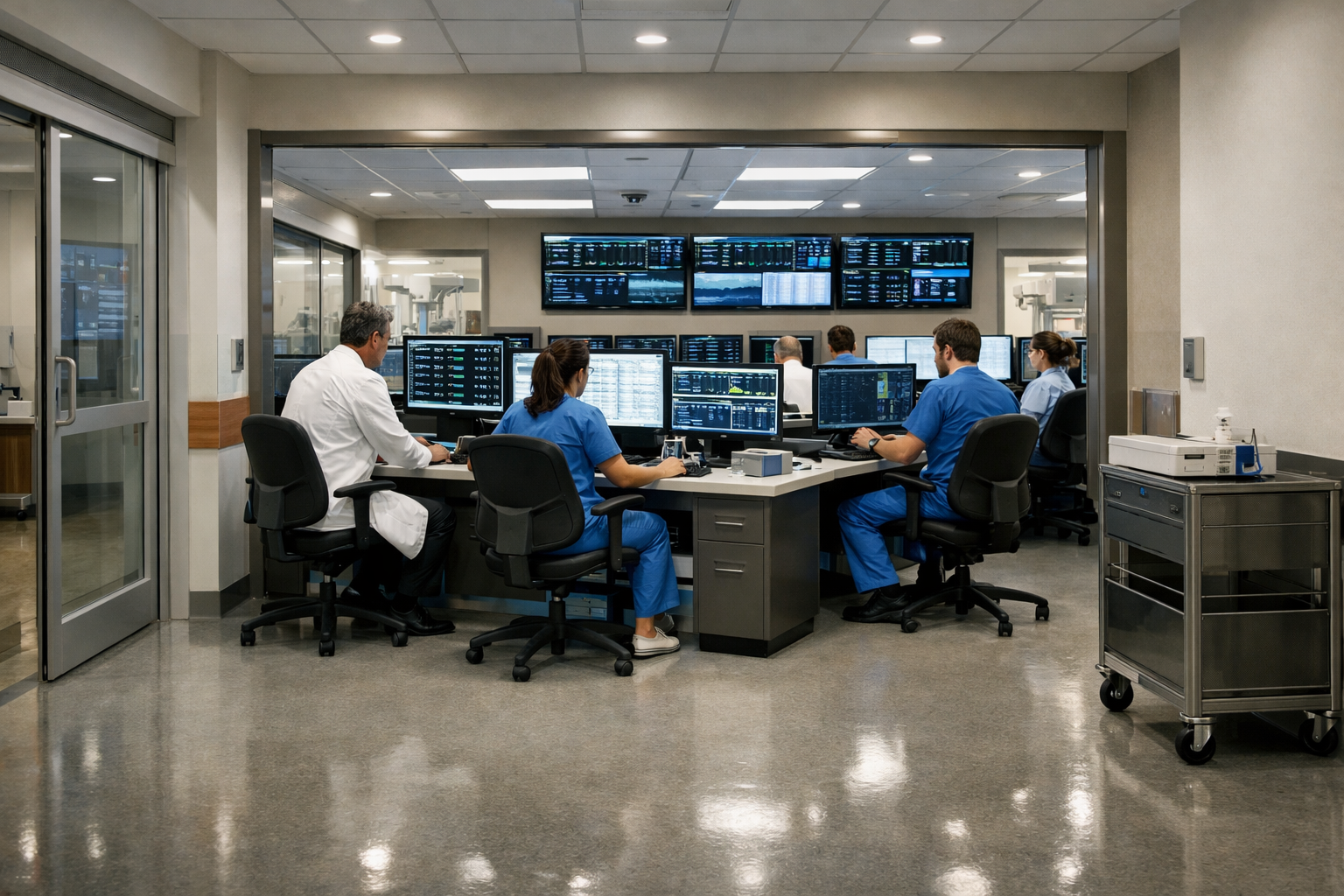
Operational inefficiency is also a growing concern. Cardiac ICUs, step-down units, emergency departments, and outpatient follow-up teams all need better visibility into which patients may need escalation. This is why many leaders are exploring AI-powered cardiac patient monitoring systems and predictive healthcare analytics solutions to support faster, more coordinated decision-making.
For Delhi-based hospitals, these challenges are tied not only to patient outcomes but also to bed utilization, specialist time, readmission pressure, and overall service quality.
How Can Predictive AI Be Implemented in Cardiac Hospitals?
A practical implementation usually starts with one focused use case instead of a full hospital-wide rollout. For example, a cardiac hospital can begin with early risk detection for post-angioplasty patients, high-risk ICU patients, or emergency admissions with suspected cardiac instability.
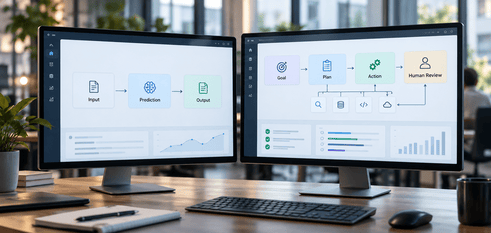
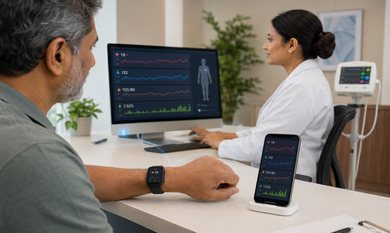
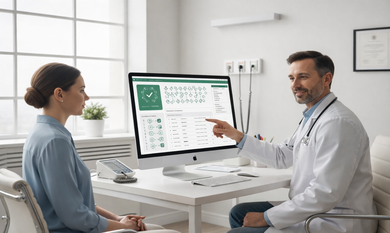
Fig.: Workflow diagram showing AI-powered cardiac patient monitoring system integration with EHR and clinical dashboards for early intervention.
The implementation path can follow a structured model:
1. Define the clinical objective
The hospital first identifies where predictive intelligence can create the highest value. This may include:
- early heart disease detection using AI
- identifying patients at risk of arrhythmia or readmission
- supporting ICU escalation decisions
- improving discharge planning for cardiac recovery cases
2. Connect the right data sources
The AI layer can be built using EHR data, ECG signals, imaging summaries, vitals, medication history, lab values, and nursing observations. This foundation is essential for AI in patient outcome prediction healthcare environments where timing matters.
3. Train and validate predictive models
Hospitals can use machine learning models to detect patient deterioration patterns, readmission risks, or condition severity. In many cases, cardiology data analytics platforms are used to turn multiple streams of patient information into usable risk scores.
4. Integrate into clinical workflows
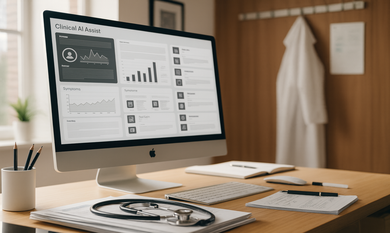
To be effective, the AI must integrate directly into existing nursing and physician dashboards, acting as a supportive 'second set of eyes' rather than an extra administrative burden. It should feed alerts, scores, and recommendations into existing workflows such as nurse stations, cardiology reviews, and physician dashboards. This is where clinical decision support in cardiology becomes highly practical.
5. Conduct Shadow Validation
Before a full "live" launch, the hospital should run the AI model in the background for at least 30 days. During this "Shadow" phase, the system generates risk scores privately without sending alerts to doctors. This allows technical teams to compare the AI’s predictions against actual patient outcomes to ensure the system is accurate and reliable before it begins influencing real-time care.
6. Start with pilot deployment
A phased rollout in one department or use case allows hospitals to test data quality, alert logic, user adoption, and outcome improvement before scaling.
Which Capabilities Make Predictive AI Useful in Cardiac Care?
The most valuable systems are built around functional capabilities that support both clinical teams and hospital leadership.
Early risk scoring
AI models can identify patterns linked to deterioration before symptoms become critical. This supports early heart disease detection using AI and better prioritization of high-risk patients.
Real-time monitoring intelligence
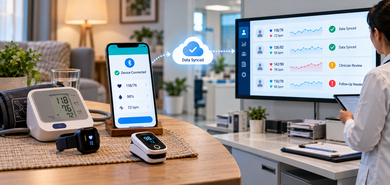
With real-time cardiac monitoring systems, hospitals can move beyond passive monitoring and use AI to flag abnormal trends in near real time. This helps reduce dependency on manual observation alone.
Decision support for clinicians
Through clinical decision support in cardiology, the platform can surface risk indicators, treatment context, or patient history that may influence intervention timing.
Adopting a Human-in-the-Loop Policy: It is critical to establish that the AI serves strictly as a "Decision Support" tool. This policy ensures that a human clinician—whether a cardiologist or a specialized nurse—always reviews the AI’s flags and makes the final medical call. The technology is designed to enhance human expertise, not replace the clinical judgment that is vital in cardiac emergencies.
Readmission and recovery prediction
Predictive models can help estimate which patients are more likely to require readmission, closer follow-up, or post-discharge support. This is one of the strongest benefits of AI in cardiac hospitals for patient outcomes.
Workflow prioritization
AI can also support non-clinical efficiency by helping staff decide where immediate attention is needed. This directly supports hospital workflow automation with AI and improves coordination across departments.
What Technology Stack and Workflow Considerations Matter Most?
A hospital-grade architecture must be practical, secure, and interoperable.
At the data level, predictive systems usually connect with EHR platforms, bedside monitoring devices, ECG systems, PACS imaging repositories, laboratory systems, and clinician documentation workflows. Standards such as HL7 and FHIR help structure data exchange between systems.
At the intelligence layer, machine learning models process structured and semi-structured inputs to generate probability scores, alerts, and prioritization logic. Depending on the use case, the model may analyze trends across vitals, ECG waveform summaries, diagnosis history, medication patterns, and imaging findings.
At the application layer, hospitals may use dashboards, alert systems, mobile apps, and AI-powered healthcare web platforms to make outputs accessible to care teams and administrators. These interfaces should be designed for clarity, not overload.
From a workflow perspective, hospitals should plan for:
- alert threshold tuning
- clinician feedback loops
- escalation protocols
- audit logging
- model retraining and governance
- integration with nursing and physician routines
This is also why many hospitals evaluating best AI solutions for cardiology departments in hospitals focus not only on the model, but on the surrounding delivery environment across web, mobile, and cloud systems.
What Business Benefits and ROI Can Hospitals Expect?
When deployed with proper governance, predictive AI in cardiac care can create measurable operational and clinical value.
It can improve early detection by helping teams identify risk faster and intervene sooner. This strengthens patient safety and supports more consistent care pathways. It can also help reduce avoidable readmissions and improve ICU resource planning by giving teams a clearer picture of likely patient trajectories.
From an efficiency perspective, predictive analytics in cardiac hospitals can reduce time spent on manual review, improve prioritization, and help specialists focus on the cases that need urgent attention. The true commercial value lies in compressed decision cycles and optimized bed utilization—turning stagnant data into a tool for faster patient throughput.
Realistic commercial impact may include:
- stronger care coordination across departments
- improved response time for high-risk cases
- lower operational waste from delayed actions
- better use of specialist time
- more reliable documentation and decision visibility
In many implementation scenarios, hospitals exploring cost reduction using AI in cardiac hospital operations are also looking at how AI can support discharge planning, reduce complications, and improve throughput without compromising care quality.
What Risk, Compliance, and Trust Considerations Should Be Addressed?
Cardiac AI systems must be trustworthy to be useful. In healthcare, accuracy alone is not enough.
Hospitals need strong data governance, secure integrations, role-based access control, and clear auditability. Since these systems may use sensitive patient information, compliance planning should cover data privacy requirements, internal IT governance, and vendor accountability.
Clinical teams also need transparency. If the model gives a high-risk score, the care team should understand what signals influenced that score. By clearly showing which data points (like specific ECG trends or lab values) triggered a high-risk score, the system moves from being a 'black box' to a transparent partner in clinical decision-making.
Hospitals should also manage change carefully. To prevent 'alert fatigue,' models must be tuned to high-specificity thresholds. This ensures clinical teams receive only actionable, high-priority notifications rather than constant background noise.
For hospitals in Delhi, trust depends on whether the solution can be implemented securely, integrated into existing systems, and scaled without disrupting clinical operations.
Realistic Implementation Scenario
Consider a multi-specialty cardiac hospital in Delhi that wants to reduce deterioration events in its step-down cardiac unit.
The hospital begins by integrating ECG summaries, vital signs, lab results, medication history, and nursing notes into a predictive layer. A machine learning model is trained to identify patterns associated with sudden instability, unplanned ICU transfer, and post-procedure complications.
Each admitted cardiac patient receives a dynamic risk score. When certain combinations of abnormalities appear, the system alerts the cardiology team and nursing supervisor. The clinician can then review the patient earlier, adjust medication, order additional diagnostics, or transfer the patient for closer observation.
Over time, the hospital can use these insights to improve staffing focus, refine escalation protocols, and strengthen discharge readiness assessments. This scenario shows use cases of AI in cardiac patient monitoring systems in a practical, operationally realistic way.
Why Does This Matter for Hospital Decision-Makers in Delhi?
For hospital administrators and operations heads, this is not just a technology discussion. It is a care quality, efficiency, and scalability discussion.
Delhi’s cardiac hospitals operate in an environment where patient expectations are high, specialist resources are valuable, and rapid response can shape reputation as much as outcomes. Leaders need systems that can help teams move from reactive care to earlier intervention.
For CMOs and digital health leaders, AI for cardiac risk prediction in hospitals supports a more data-driven model of care. For strategy heads, it creates a path toward better service quality and smarter hospital operations. For department leaders, it offers a way to unify monitoring, prioritization, and action.
Frequently Asked Questions
- What is predictive AI in cardiac care?
Predictive AI in cardiac care uses machine learning models to analyze patient data, detect risk patterns early, and support clinicians with faster decisions. It can help hospitals respond sooner to signs of deterioration or complication.
- How can AI for cardiac risk prediction in hospitals improve outcomes?
It can help care teams identify high-risk patients earlier, prioritize intervention, and reduce delays in response. This can support better monitoring, stronger follow-up, and more consistent patient management.
- What data is usually needed for predictive analytics in cardiac hospitals?
Hospitals typically use EHR records, ECG outputs, imaging findings, lab values, vitals, medication history, and clinical notes. The stronger and cleaner the data foundation, the more useful the predictive model becomes.
- Are AI-powered cardiac patient monitoring systems difficult to implement?
Implementation can be manageable if hospitals start with one clear use case and a phased rollout. The key is to align data integration, workflow adoption, and alert logic with actual clinical operations.
- How predictive analytics improves hospital efficiency in cardiac departments?
It helps teams prioritize cases, reduce manual review time, improve escalation speed, and use specialist resources more effectively. This can support smoother workflows and better operational control.
- What are the main AI implementation challenges in cardiac hospitals?
Common challenges include data fragmentation, alert fatigue, system integration complexity, clinician adoption, and governance requirements. A structured pilot approach usually helps reduce these risks.
- What should hospitals look for in the best AI solutions for cardiology departments in hospitals?
Hospitals should look for strong clinical workflow fit, secure integration, explainable outputs, compliance readiness, and the ability to scale across departments. A technically advanced model alone is not enough without operational usability.
Conclusion
Cardiac care depends on timing, clarity, and coordinated action. Predictive AI can help hospitals identify high-risk patients earlier, support better clinical decisions, and improve operational efficiency across monitoring, escalation, and recovery workflows. When built with the right data foundation, workflow integration, and governance, it can create measurable value in both patient outcomes and hospital performance.
For cardiac hospitals evaluating scalable innovation, this is no longer just an experimental concept. It is a practical strategy for improving care delivery in a demanding clinical environment. For organizations seeking a reliable AI development company in Delhi, the real differentiator is the ability to combine healthcare domain understanding with secure implementation across web, mobile, and cloud systems.
Minimize delays in cardiac intervention
Theta Technolabs helps healthcare organizations design and implement practical AI solutions for real operational challenges. From predictive intelligence systems to connected digital platforms, our team builds secure, scalable solutions tailored to healthcare workflows.
If your hospital is exploring predictive models, monitoring platforms, or digital systems that improve cardiac care delivery, Theta Technolabs can help you move from idea to implementation with expertise across web, mobile, and cloud.
Ready to move from reactive to predictive care? Contact our Healthcare AI Strategists at sales@thetatechnolabs.com for a customized implementation roadmap.