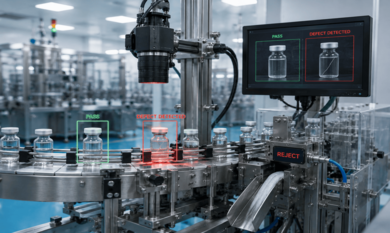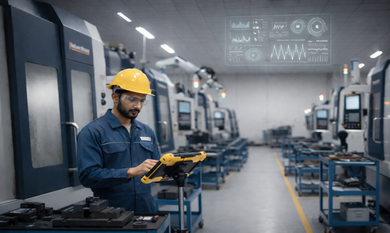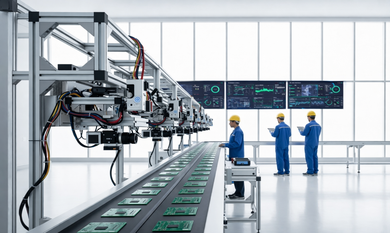


Global logistics in 2026 operates in a state of constant motion. Trade routes shift overnight due to geopolitical decisions. Flash sales trigger demand surges across regions. Fuel prices fluctuate faster than procurement cycles can adjust. For logistics leaders, the question is no longer whether volatility exists, but how quickly they can respond to it.
This is where generative ai for demand forecasting in logistics is emerging as the predictive engine behind resilient operations. Rather than simply analyzing past shipment data, these systems generate forward-looking scenarios, anticipate disruptions, and recommend adaptive planning strategies.
For CTOs, it represents a technological leap in intelligence. For warehouse managers, it means fewer surprises and more stable workflows.
Moving Beyond Historical Data
Traditional forecasting models rely heavily on historical averages. They examine last year’s seasonal patterns, recent order volumes, and known supplier lead times. This approach worked when markets were relatively stable. Today, it often fails to capture sudden shifts in demand volatility.
Imagine a logistics network serving electronics retailers. A viral product launch creates a surge in demand that historical data cannot predict. Static models under-forecast, inventory runs short, and fulfillment teams scramble.
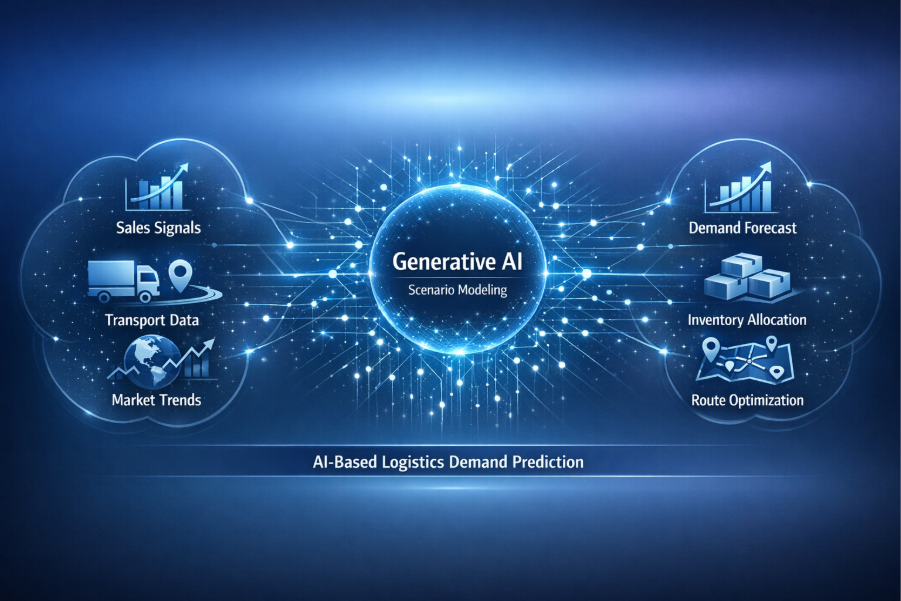
Generative ai for demand forecasting in logistics changes this equation. Instead of depending solely on historical inputs, it integrates:
- Real-time sales signals
- Market sentiment indicators
- Weather data and transport alerts
- Macroeconomic signals
It then generates multiple potential demand trajectories. The result is not a single forecast, but a probability-driven outlook. This approach strengthens ai-based logistics demand prediction by accounting for uncertainty rather than ignoring it.
For global hubs like Dubai, where trade flows connect Asia, Europe, and Africa, this adaptive intelligence is particularly valuable. Many enterprises in the region are now collaborating with an AI development company in Dubai to modernize forecasting systems and improve demand visibility. A rerouted shipping lane or customs delay in one region can ripple through interconnected supply chains within hours.
Smarter Planning Through Simulation
One of the most transformative aspects of generative systems is scenario modeling. Instead of asking, “What will demand be next month?” companies can ask, “What happens if fuel prices spike by 15 percent?” or “What if a major port faces congestion for two weeks?”
Through predictive supply chain planning, organizations simulate “what-if” events before they occur.
For example:
- A port delay scenario shows potential backlog accumulation.
- A sudden eCommerce promotion reveals warehouse capacity constraints.
- A supplier shutdown model predicts ripple effects across regional hubs.
The system does not just simulate outcomes. It suggests mitigation strategies, such as reallocating inventory, rerouting shipments, or adjusting safety stock levels.
This proactive intelligence transforms forecasting from a reporting function into a strategic planning tool.
A Realistic Implementation Scenario
Consider a mid-sized logistics provider managing regional distribution for consumer goods brands. The company struggles with demand volatility driven by seasonal promotions and unpredictable retail campaigns.
Previously, planners updated forecasts weekly using spreadsheets and static BI dashboards. Missed signals resulted in overstocking slow-moving goods and understocking high-demand SKUs.
Now imagine this firm implements ai-based logistics demand prediction powered by generative models.
The system continuously ingests:
- Retail POS data
- Online order trends
- Marketing calendar inputs
- Transport lead time fluctuations
During a major flash-sale event, the AI identifies early acceleration patterns within the first few hours. Instead of waiting for end-of-day reports, it adjusts projected demand curves in real time.
Warehouse managers receive automated recommendations to:
- Reprioritize picking schedules
- Allocate temporary labor
- Redirect inventory from slower regions
Within weeks, the company sees measurable improvements in forecast accuracy. Stockouts decline. Excess inventory reduces. Planning meetings shift from reactive troubleshooting to strategic coordination.
This is the operational shift that defines the next phase of predictive supply chain planning.
Why Accuracy Matters More Than Ever
In today’s environment, small forecasting errors can trigger cascading operational issues.
Low forecast accuracy can lead to:
- Emergency freight costs
- Idle warehouse capacity
- Customer dissatisfaction
- Strained supplier relationships
By contrast, high forecast accuracy strengthens planning resilience. Organizations gain the ability to absorb shocks without disrupting service levels.
Generative models improve resilience by:
- Updating predictions continuously
- Weighing multiple risk variables
- Learning from new patterns in near real time
The result is a supply chain that adapts dynamically instead of reacting late.
For executives, this translates into financial stability. For operations teams, it means clearer priorities and smoother execution.
Conclusion
The logistics landscape demands systems that think ahead rather than react behind. Generative ai for demand forecasting in logistics represents the next big leap in operational intelligence. By combining scenario modeling, improved forecast accuracy, and adaptive planning resilience, companies can move from uncertainty to informed control.
As organizations evaluate implementation strategies, partnering with a trusted generative ai development company becomes critical. Theta Technolabs brings expertise across Web, Mobile and Cloud technologies, helping logistics enterprises design scalable, intelligent forecasting ecosystems that align with real-world operational needs.
Strengthen Your Demand Intelligence
Ready to explore how generative AI can transform your logistics forecasting strategy?
Connect with our experts at Theta Technolabs to design a tailored implementation roadmap.
Contact us at: sales@thetatechnolabs.com
Let’s build a more resilient and intelligent supply chain together.
Frequently Asked Questions
Q1: How is generative AI different from traditional AI forecasting?
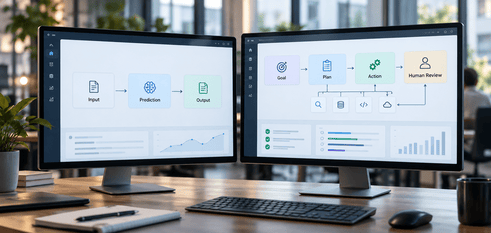
Traditional models analyze past data to predict a single outcome. Generative systems create multiple future scenarios, improving flexibility and response planning.
Q2: Can generative forecasting handle sudden demand spikes?
Yes. By integrating real-time signals and probabilistic modeling, it identifies demand surges early and adjusts projections dynamically.
Q3: Is predictive supply chain planning only for large enterprises?
No. Scalable platforms allow mid-sized logistics firms to deploy AI modules incrementally, starting with high-impact segments.
Q4: What infrastructure is required?
Cloud-based data integration, clean data pipelines, and cross-functional collaboration between IT and operations are essential for effective implementation.