

In 2026, utility companies are operating under pressures that did not exist at this scale a decade ago. Electrification is accelerating across industries, urban populations are expanding, and customers now expect instant, accurate responses across every service channel. Power, water, and gas providers are no longer judged only on uptime. They are judged on communication, transparency, and responsiveness.
This is where intelligent chatbots for utility services move from a support add-on to a core operational capability. These systems are no longer simple chat windows answering FAQs. Once implemented at scale, they act as agentic AI layers that understand context, predict intent, and coordinate actions across utility systems.
The question in 2026 is not whether utilities should use AI. The real question is what happens when these intelligent systems are deeply embedded into utility operations.
The “What If” Implementation Scenario: A Day Inside an AI-Driven Utility
Imagine starting a day at a regional electricity provider where intelligent systems already know what customers will ask before the first call comes in.
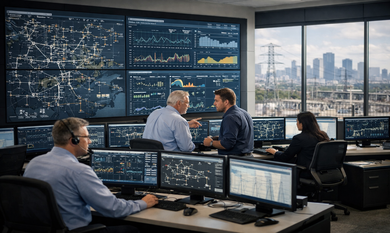
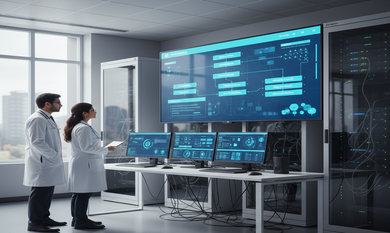
Overnight, AI models analyze grid telemetry, weather forecasts, and historical usage. By morning, the chatbot platform has already prepared responses for areas likely to experience voltage fluctuations. Customers receive proactive notifications explaining potential issues and estimated resolution times.
When service requests arrive, they are not queued blindly. The AI understands urgency, customer history, and operational impact. Requests are routed, resolved, or escalated automatically.
This is not reactive support. This is predictive, coordinated, and autonomous service management built around intelligent chatbots for utility services.
AI-Powered Utility Customer Support in Practice
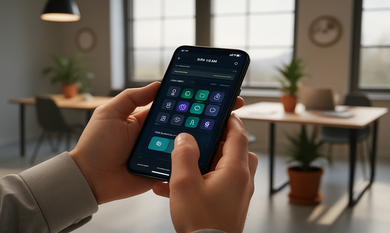
Once deployed at full scale, AI-powered utility customer support becomes deeply personalized and proactive.
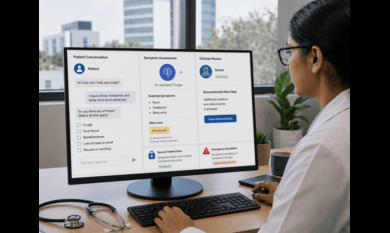
Instead of generic replies, chatbots leverage Retrieval-Augmented Generation (RAG) to pull real-time data from billing systems, outage maps, and maintenance logs. Every response is grounded in live operational context.
Sentiment analysis plays a key role. When frustration is detected, the system adapts tone, shortens resolution paths, or escalates to a human specialist with a complete interaction summary. Customers no longer repeat information. The AI already knows their issue.
Proactive engagement also becomes standard. If consumption patterns indicate abnormal spikes, the chatbot alerts the customer before a billing complaint ever arises. Support shifts from damage control to experience management.
This evolution fundamentally improves customer query management across all utility touchpoints.
Automated Service Request Handling and Operations
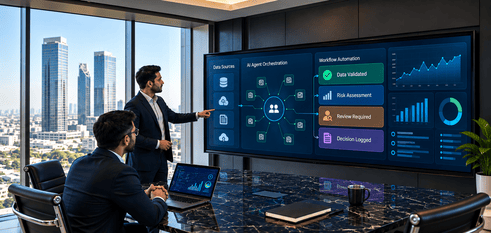
The real transformation happens when automated service request handling extends beyond chat interactions into backend execution.
In 2026, intelligent chatbots do not just log service tickets. They complete them.
Meter recalibration requests trigger automated diagnostics. If conditions allow, recalibration is scheduled without human intervention. Outage reports are validated against grid data and merged into active incident workflows. Billing disputes are resolved through rule-based validation combined with AI reasoning.
This tight integration enables true service response automation. Utility operations teams see fewer manual queues and more exception-based workflows. Engineers focus on infrastructure improvements instead of administrative follow-ups.
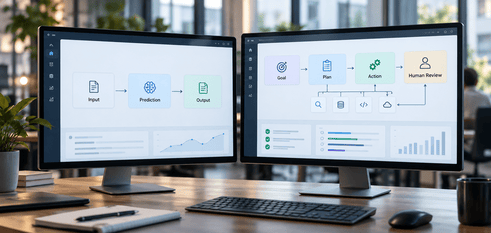
Over time, the system learns which actions resolve issues fastest and refines its own decision logic. This continuous learning loop is what separates agentic AI from earlier automation tools.
The Impact on Human Teams: Augmentation Over Replacement
A common concern in 2026 is whether AI systems replace human expertise. In utilities, the opposite happens.
Human agents and engineers are augmented, not displaced.
Chatbots handle high-volume, repetitive interactions. Humans step in for complex infrastructure decisions, regulatory compliance, and safety-critical interventions. Every escalation comes with full context, history, and recommended actions generated by AI.
This collaboration reduces burnout, shortens training cycles, and improves decision accuracy. Teams become smaller but significantly more effective.
Utility operations benefit from clarity rather than chaos.
Realistic Scenario: City-Scale Grid Stress Management
Consider a large-scale scenario involving a monsoon-driven grid disruption in Kolkata, a city with dense urban load and aging infrastructure. Managing such complexity requires more than just standard software; it requires a specialized AI development company in Kolkata that understands the unique challenges of the local power grid.
As rainfall intensifies, the AI system predicts transformer overload risks in specific zones. Intelligent chatbots for utility services begin proactive outreach, notifying customers about potential disruptions and advising on safety measures.
When outages occur, customer query management operates at scale. Thousands of incoming messages are categorized, prioritized, and resolved automatically. Restoration timelines are dynamically updated based on field data.
Human crews receive optimized dispatch plans generated by AI. Customers receive accurate updates without flooding call centers. Trust is preserved even during disruption.
This scenario demonstrates how intelligent automation transforms crisis response into coordinated service delivery.
Data Privacy and Trust in 2026
Trust is the foundation of AI adoption in utilities.
In 2026, leading platforms operate with explainable AI models. Customers can see why a recommendation was made or how a billing adjustment was calculated. Data usage is transparent and permission-based.
Zero-trust security architectures, encrypted data pipelines, and regulatory-aligned governance frameworks are standard. AI systems are audited continuously, not annually.
This transparency builds loyalty. Customers are more willing to engage with automated systems when they understand how decisions are made and how data is protected.
Trust becomes a competitive advantage.
Conclusion
In 2026, intelligent automation is no longer optional for utilities. Once implemented, intelligent chatbots for utility services become the connective tissue between customers, operations, and infrastructure.
They enable proactive engagement, scalable service delivery, and resilient operations under pressure. Utilities that invest early gain operational efficiency and customer trust that competitors struggle to match.
To achieve this level of maturity, organizations must partner with experts who understand both AI and complex utility environments. Choosing the right chatbot development services is a strategic decision, not a technical one.
Theta Technolabs stands out as a trusted partner delivering enterprise-grade AI solutions across Web, Mobile, and Cloud platforms, designed for scale, security, and real-world utility operations.
Bring AI into utility operations
If your utility organization is planning its next phase of digital transformation, now is the time to act.
Connect with the experts at Theta Technolabs to explore how intelligent chatbot platforms can be tailored to your operational reality.
Email sales@thetatechnolabs.com to schedule a strategic consultation and take the first step toward future-ready utility services.
Frequently Asked Questions
Will AI replace human engineers in utilities?
No. AI automates routine processes and decision support. Engineers remain essential for infrastructure planning, safety, and complex problem-solving.
How secure is automated billing resolution?
Automated billing systems operate within strict validation rules, audit trails, and encryption standards, reducing errors and fraud risks.
Can chatbots handle emergency situations?
Yes. They assist by managing communication, triaging requests, and coordinating responses while human teams handle physical interventions.
What role does Agentic AI play here?
Agentic AI allows systems to act autonomously within defined boundaries, completing tasks rather than just suggesting actions.
How does RAG improve chatbot accuracy?
RAG ensures responses are grounded in real-time utility data rather than static training information.
Are multimodal interfaces relevant for utilities?
Yes. Voice, text, and visual interfaces improve accessibility and speed, especially during emergencies.