

Hyderabad’s first-time mutual fund investors are increasingly mobile-first, digitally aware, and sensitive to poor app experiences. For wealthtech companies, mutual fund distributors, and financial product teams, this creates a clear product challenge. The platform must make SIP onboarding, payments, portfolio tracking, and compliance feel simple enough for beginners while still being reliable enough for regulated financial operations. SIP investing has become a familiar entry point for many first-time investors, especially those who prefer starting small through a mobile-first experience.
Here's the problem. These investors don't leave because mutual funds are hard. They leave because the platform is. If you run a distribution business or you're building a wealthtech product, the app experience decides whether someone stays. This is what good mutual fund app development looks like when it's built for beginners, not just feature checklists. Building this kind of fintech software development starts with getting the basics right. This blog explains the seven platform capabilities that help wealthtech businesses support first-time SIP investors in Hyderabad, from onboarding and SIP automation to payments, AI-assisted education, security, compliance, and scalable launch options.
Capability 1 - Frictionless Digital Onboarding and KYC
The first place you lose a first-time investor is signup. If KYC feels like paperwork, they close the app. A modern platform does it in minutes on the phone. PAN check, Aadhaar-based e-KYC, bank account verification, and nominee details, all in one clean flow. Digital KYC onboarding done right means a beginner goes from download to first SIP in one sitting. This is also where your investor app and your distributor's web dashboard have to feel equally smooth, which is why the mobile and web app development needs to be planned together, not bolted on later. Keep the language simple too. A first -timer shouldn't need to know what FATCA means to finish signing up.
For businesses, onboarding is not only a UX feature. It directly affects activation, investor confidence, and the quality of customer data captured at the start. A poorly planned onboarding flow can increase support queries, delay first investments, and create avoidable compliance gaps.
Capability 2 - Simple, Automated SIP Management
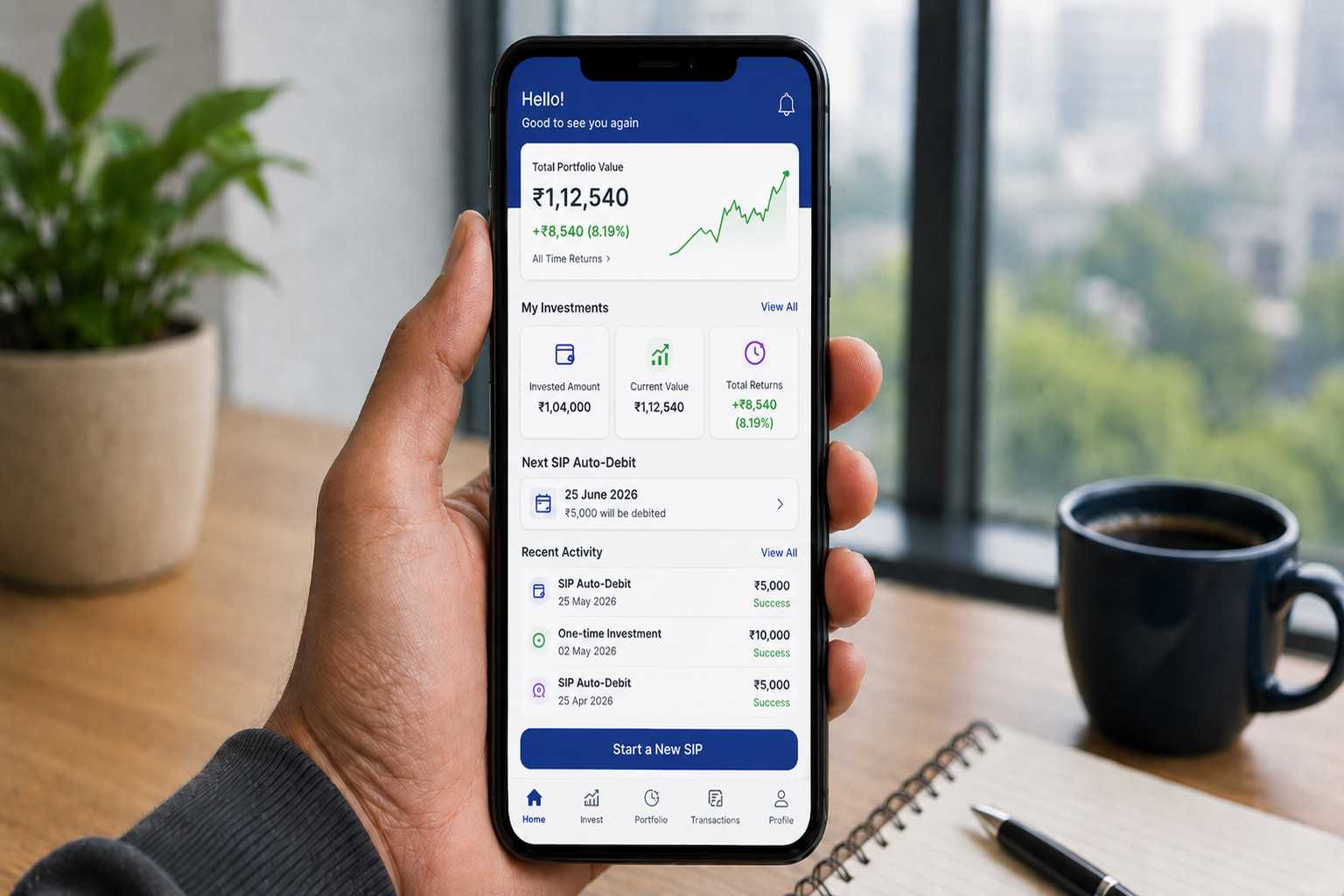
SIPs are the whole point for most beginners. So, the SIP tools must be effortless. Set up an auto-debit, pick a date, and you're done. Let people pause when money is tight, resume later, and step up the amount when they get a raise. Send a gentle reminder before each debit. Good SIP investment platform development treats these as core flows, not add-ons. For the investor, it's set-and-forget. For the distributor, every smooth SIP is one more month of retained assets. Advanced moves like STP and SWP can come later. Pause, resume and modify are day-one features.
From the platform side, SIP automation should also support clean status tracking, clear user notifications, and easy back-office visibility for distributors. This helps teams understand whether a SIP is active, paused, modified, failed, or waiting for mandate confirmation.
Capability 3 - Clear NAV Tracking and Portfolio View
Beginners check their money often, so what they see must make sense. Show the current value, how much they've put in, returns so far, and a simple history of every transaction. Add a capital-gains view for when tax season comes around. The trick is plain language. "Your ₹5,000 is now ₹5,240" lands better than a wall of jargon. Solid NAV tracking and portfolio management builds the one thing that keeps a nervous first-timer invested through a dip, and that's trust. If the numbers are accurate and easy to read, people stay. If they're confusing or lag, people pull out at exactly the wrong time.
Capability 4 - Reliable Payments and Mandate Handling
This is the plumbing, and it must just work. UPI AutoPay, e-NACH mandates, a secure payment gateway, and real-time status so the investor knows their money went through. The detail most teams underestimate is failed mandates. Cards expire, bank limits change, debits bounce. A good platform catches these early, tells the investor clearly, and makes it easy to fix. A silent failed SIP is how you lose someone without ever hearing from them.
Important product note: A failed mandate should never stay silent. If a debit bounces, a bank limit changes, or a payment authorization fails, the platform should notify the investor clearly and give them a simple way to fix it.
Capability 5 - AI-Driven Guidance for First-Time Investors
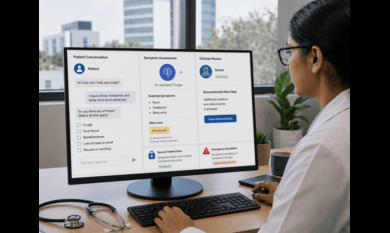
This is where you can stand out. Most first-timers don't know which fund fits them. A platform can help, carefully. Ask a few questions, build a risk profile, suggest fund categories that match a goal, and nudge people toward staying invested. Keep it as guidance and education, never a promise of returns. That line matters, both for trust and for staying within the rules. Plain-language explainers inside the app do a lot of quiet work here. Building this well takes real machine-learning experience, which is why teams often bring in an AI development company in Hyderabad rather than bolting on a generic recommendation engine.
The safest approach is to design AI guidance according to whether the platform operates as an MFD, RIA, EOP, or technology provider.
Capability 6 - Built-In Security and SEBI Compliance
Money apps live and die on trust. Data encryption, audit trails, clear investor consent, and role-based access for your team and distributors are the baseline. On top of that, the workflows have to line up with the rules the regulator sets. A genuinely SEBI compliant mutual fund platform builds this in from the first sprint instead of patching it later. A mutual fund platform should be designed with SEBI-aligned workflows, secure data handling, audit trails, investor consent, and access controls from the first sprint instead of treating compliance as a later patch.
Check the current requirements directly with SEBI rather than relying on hearsay, because the rules do change. The exact compliance responsibility depends on the business model, license type, distribution role, and whether the platform gives execution-only access, distribution support, or investment advice.
Capability 7 - Scalable Cloud and a Fast, Affordable Launch
Two worries sit behind every build decision. Will it scale, and can we afford to launch soon? Cloud infrastructure handles the first. As your investor base grows, the platform shouldn't slow down or fall over on a busy SIP date. The second worry is where no-code app development earns its place. For a smaller distributor or an early-stage wealthtech, no-code and low-code tools can get a working platform live faster and cheaper than a full custom build. You trade some flexibility for speed. For many teams testing the market, that's the right trade early on.
Build From Scratch or Use Ready Infrastructure?
So, build it all yourself or use ready pieces? The honest answer is that it depends on your stage. A full custom build gives you the most control and the cleanest fit, but it takes longer and costs more. Ready-made or white-label infrastructure gets you live faster with predictable costs, at the price of some flexibility. Most teams land in between, going custom where it matters and using ready components everywhere else. Thoughtful mutual fund software development is about making that call well, not defaulting to building everything from zero. Timelines run from a few weeks for a configured launch to several months for a deep custom build. Be wary of anyone quoting a fixed price before they understand your scope.
The decision should depend on your compliance needs, investor journey, integration requirements, internal team capacity, and long-term product roadmap. For example, onboarding, payments, reporting, distributor dashboards, and AI-assisted education may not all need the same build approach. Some parts can use ready infrastructure, while sensitive or differentiating workflows may need custom development.
Choosing the Right Partner in Hyderabad
Get these seven rights and the math changes. A first -timer who has a smooth signup, easy SIPs, clear numbers and a platform they trust tends to keep investing for years. That's the real return on a good build. When you pick who builds it, look for a team that understands both fintech rules and beginner behaviour, and that can show you real work. A mutual fund app development company in Hyderabad that knows the local investor and the regulatory side is worth more than the cheapest quote. If that's the stage you're at, let's talk.
That's the kind of build Theta Technolabs focuses on. We help distributors, fund houses and wealthtech teams ship SIP and mutual-fund platforms across mobile, web, cloud, AI and no-code, with the compliance pieces handled from the start rather than patched in later. Whether you want a quick configured launch or a full custom platform, the right first step is a simple conversation about your investors and where you are today. If you're ready for that, reach us at sales@thetatechnolabs.com and we'll map out what your platform actually needs. When choosing a development partner in Hyderabad, look beyond basic app development experience. The right team should understand mutual fund workflows, SIP automation, KYC journeys, payment mandates, investor dashboards, distributor operations, AI use cases, cloud architecture, and compliance-sensitive product design.
Frequently Asked Questions
1. What does it cost and how long does it take to build a SIP and mutual fund platform?
It varies with scope. A configured or white-label launch can go live in a few weeks, while a deep custom build runs into several months. Be cautious of any fixed price quoted before someone has seen your actual requirements.
2. Does a mutual-fund app have to be SEBI registered or just SEBI compliant?
These are different things. These are different things. The business entity may need registration depending on whether it distributes, advises, enables execution, or only provides technology infrastructure. The app itself should be designed around secure workflows, KYC processes, audit trails, consent, and applicable operational requirements. Confirm your exact obligations with a qualified compliance expert before launch.
3. Thinking about how to build a mutual fund app for first-time investors - what should we prioritize first?
Start with onboarding and SIP automation. If a beginner can finish KYC and set up a SIP in one sitting, you've solved the two biggest drop-off points. Everything else builds on that.
4. Can we launch with fewer features and add more later?
Yes. Most successful platforms start with a small core of onboarding, SIPs, payments and a portfolio view, then add features based on what real users ask for.
5. Is no-code reliable enough for a regulated finance app?
It can be, for the right stage. No-code can be useful for early validation, internal workflows, or limited launch stages. For regulated finance products, teams should carefully review security, auditability, data handling, integrations, and compliance requirements. As the platform scales, sensitive or business-critical workflows may need custom development.