

Bengaluru has become one of India’s strongest technology hubs for fintech and WealthTech innovation. For startups building investment platforms, the opportunity is no longer limited to basic portfolio dashboards or manual advisory workflows. Users now expect faster onboarding, personalized insights, clear portfolio visibility, and smarter digital experiences.
This is where Agentic AI wealth applications in Bengaluru are becoming relevant. For WealthTech startups in Bengaluru, Agentic AI can support portfolio monitoring, investor profiling, automated recommendations, and workflow-based decision support. Instead of building a simple investment tracking app, fintech founders can create intelligent wealth platforms that combine AI, mobile apps, web dashboards, cloud systems, and secure architecture.
What an Agentic AI Wealth App Actually Does
An Agentic AI wealth application is a digital wealth platform where AI agents can support specific investment-related workflows. These agents do not just answer questions like a chatbot. They can monitor portfolio data, understand investor goals, check risk patterns, prepare insights, and suggest the next best action for users or advisors.
For example, if a user has a long-term investment goal, the AI agent can monitor portfolio movement, compare it with the user’s risk profile, identify allocation changes, and prepare a rebalancing suggestion for review.
This makes AI wealth management app development more practical for startups that want to build personalized investment platforms. With the right Agentic AI development services, fintech companies can design AI workflows that support:
- Portfolio monitoring
- Investor goal tracking
- Risk profile analysis
- Rebalancing suggestions
- Personalized financial insights
- Advisor review workflows
- User alerts and notifications
The important point is that Agentic AI should support better decision-making. It should not be positioned as a tool that guarantees investment returns or replaces proper financial review.
From Robo-Advisor to Agentic Wealth Platform
Traditional robo-advisory platforms are useful, but Agentic AI can take the experience further. In normal robo-advisory app development, the system usually collects investor details, understands risk appetite, and recommends a portfolio based on predefined rules.
An Agentic AI wealth platform can support a more active workflow. It can monitor user portfolios, detect changes, generate explanations, trigger alerts, and help advisors or investors take informed actions.
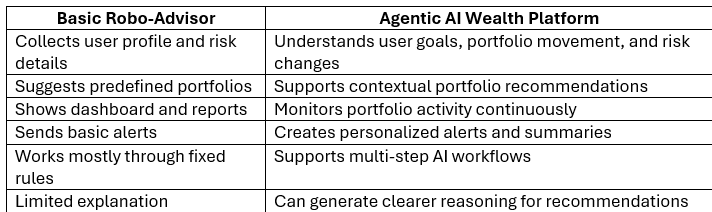
This difference matters because wealth platforms need trust, clarity, and timely action. Agentic AI can help startups build a more responsive and intelligent user experience.
Core WealthTech Use Cases to Build First
AI Portfolio Allocation
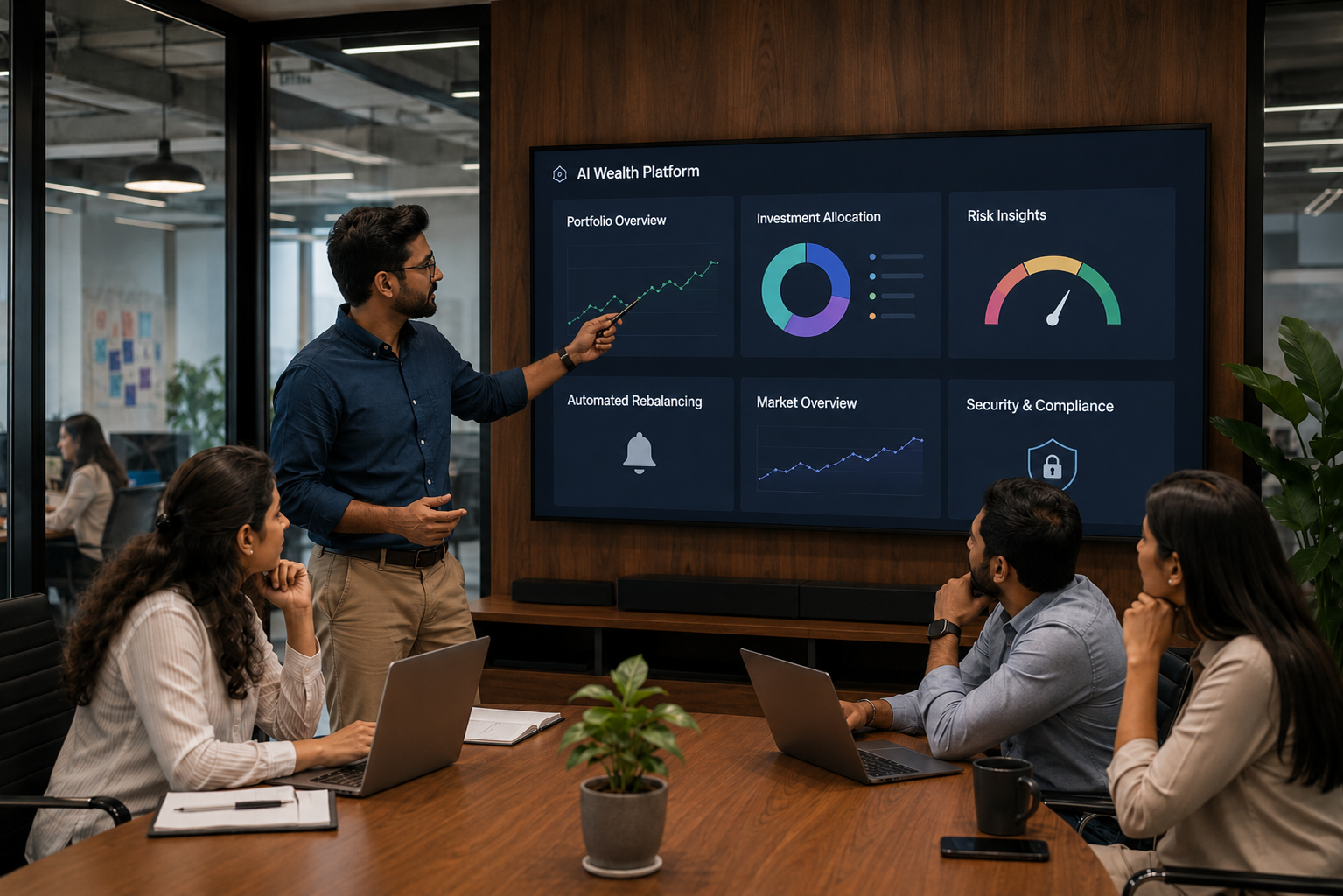
AI portfolio allocation is one of the most important use cases for wealth applications. The platform can analyze user goals, risk appetite, income range, investment horizon, and portfolio behavior to support suitable allocation suggestions.
For example, a young investor with a long-term goal may need a different portfolio approach than a user planning short-term wealth preservation. AI can help create more personalized allocation logic, but the final design should always follow proper compliance and advisory review requirements.
Automated Portfolio Rebalancing
Automated portfolio rebalancing helps keep a portfolio aligned with the user’s target allocation. Market movements can change the balance between equity, debt, mutual funds, ETFs, or other asset categories. When the portfolio moves away from the target range, the system can detect the change and suggest a correction.
A simple workflow may look like this:
- The portfolio moves away from the planned allocation.
- The AI agent detects the drift.
- The system checks the investor’s risk profile and goals.
- A rebalancing suggestion is prepared.
- The user or advisor reviews the action.
- The decision is recorded for transparency.
This approach helps startups create smarter portfolio workflows without making risky promises.
Personalized Investor Insights
Generative AI in wealth management can help convert complex portfolio data into simple explanations. Instead of showing only charts and numbers, the app can generate short summaries, performance explanations, risk notes, and goal-based insights.
For example, the app can explain why a portfolio changed during the month, what asset class contributed most to performance, or why a rebalancing alert was triggered. This improves user understanding and engagement.
MVP Blueprint for a WealthTech Startup
A WealthTech MVP should not try to include every advanced feature from day one. Founders should focus on the core features needed to test the product, support users, and build trust.
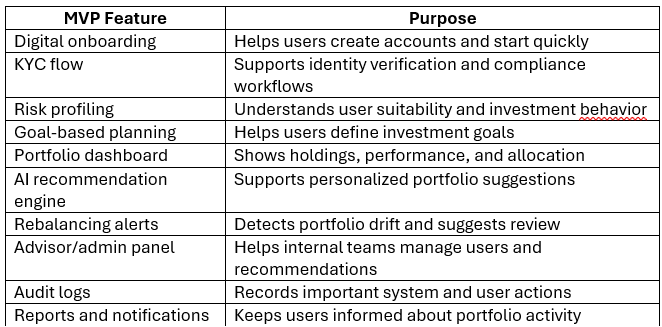
This kind of MVP can help founders test demand before scaling into a more advanced secure wealth management platform. For startups, the goal should be to build a strong base first, then improve the AI layer with better data, user feedback, and product learning. For Bengaluru-based fintech teams, the MVP should also consider India-specific needs such as KYC flows, local payment or financial data integrations, advisor review workflows, and user trust from the first version.
Technology Stack and Architecture Considerations
The technology stack for an Agentic AI wealth platform should support security, scalability, accuracy, and user experience. It should also be flexible enough to add new features as the product grows.
A practical architecture may include:
- Frontend layer for mobile apps and web dashboards
- Backend layer for user data, business rules, portfolio logic, and reporting
- AI/ML layer for risk scoring, insights, and recommendation support
- Cloud infrastructure for hosting, storage, monitoring, and scalability
- API layer for market data, KYC, notifications, and financial integrations
- Security layer for authentication, access control, encryption, and logs
This is where machine learning development services become useful. Machine learning can support risk profiling, portfolio scoring, investor segmentation, and recommendation logic. However, model selection should depend on available data, compliance needs, product goals, and the level of explainability required. In real development, teams also need to plan for market data delays, KYC API failures, incomplete user data, and model drift, because these issues can affect the reliability of wealth platform workflows.
For core portfolio suitability and compliance-related matching, many platforms also use deterministic business rules along with AI models. This helps keep recommendations explainable, consistent, and easier to review.
Mobile and Web Experience Matters in Wealth Apps
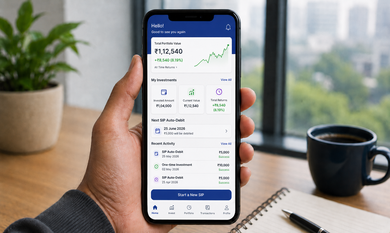
A wealth application is not only about AI models. The user experience matters just as much. Investors need a clean mobile app where they can view goals, track portfolio performance, receive alerts, and understand recommendations without confusion.
Advisors and internal teams may need web dashboards for user management, portfolio review, reporting, and approval workflows. This is why mobile app development services are important for fintech startups building investor-facing platforms.
A strong mobile and web experience can make the product easier to use, easier to trust, and easier to scale.
Security, Compliance, and Explainability Should Be Planned Early
Security and compliance should not be added after development. Wealth applications handle sensitive personal and financial information, so they need careful planning from the beginning.
Key areas to consider include:
- Data privacy and secure storage
- KYC and identity verification support
- Secure login and authentication
- Role-based access control
- Audit trails for important actions
- Explainable AI recommendations
- Human approval for sensitive investment actions
- Clear user consent and disclosure
- Compliance review before launch
For platforms that support investment advisory workflows in India, founders should review SEBI’s Investment Advisers Regulations during product planning. Read more on SEBI's official portal. They should also consult qualified legal and compliance experts before launching advisory or recommendation-based features.
This section is important because AI wealth apps should not work like black-box systems. Users and advisors need to understand why a recommendation is shown, what data influenced it, and whether approval is required before action is taken.
Step-by-Step Build Roadmap for Bengaluru Fintech Founders
For founders planning fintech app development in Bengaluru, a structured roadmap can reduce confusion and help teams build faster.
- Define the target investor segment.
- Map the complete advisory and investment workflow.
- Create the risk profiling logic.
- Design portfolio allocation rules.
- Identify where Agentic AI workflows can help.
- Build the mobile and web MVP.
- Integrate KYC, market data, reporting, notification APIs, and relevant India-specific financial data workflows where applicable.
- Add security, access control, and audit logs.
- Test the platform with pilot users.
- Improve the product using user feedback and performance data.
This roadmap is especially useful for WealthTech startups in Bengaluru that want to move from idea to MVP without overbuilding. Start with the core experience, then add advanced automation as the product matures.
Practical Benefits for WealthTech Startups
Agentic AI can bring strong business value when it is implemented responsibly. It should be used to support workflows, improve user experience, and reduce manual effort, not to make unrealistic claims about financial outcomes.
For fintech and WealthTech startups, AI wealth management app development can help with:
- Faster investor onboarding
- Reduced manual advisory workload
- Better portfolio visibility
- More personalized user journeys
- Improved advisor productivity
- Scalable digital operations
- Clearer investor communication
- Better engagement through timely alerts
These benefits can help startups build a more efficient wealth platform while keeping users informed and involved in important decisions.
How Theta Technolabs Can Help
Theta Technolabs supports fintech and WealthTech startups with AI, machine learning, mobile app development, web app development, backend systems, and cloud-based solutions. For an AI wealth platform, this can include investor mobile apps, advisor dashboards, AI recommendation engines, secure APIs, role-based access, cloud deployment, and scalable architecture. The team also works with technologies such as generative AI, agentic AI, LLMs, machine learning, Python, JavaScript, React, Node.js, AWS, Azure, GCP, Docker, and Kubernetes, which are useful for building practical and secure digital wealth products.
Conclusion
Building Agentic AI wealth applications in Bengaluru can help fintech founders create more useful and responsive wealth platforms. With features like AI portfolio allocation, automated portfolio rebalancing, personalized insights, secure architecture, and smooth mobile and web experiences, startups can support better investment workflows. The main goal is to build a platform that is simple for users, reliable for advisors, and scalable for future growth.
Discuss Your WealthTech App Idea
Want to build an AI-powered wealth management or robo-advisory platform? Theta Technolabs can help you with agentic AI, web, mobile, and cloud development. To discuss your project, contact sales@thetatechnolabs.com.
Frequently Asked Questions
What is an Agentic AI wealth application?
An Agentic AI wealth application is a digital wealth platform where AI agents support portfolio monitoring, risk analysis, user insights, alerts, and recommendation workflows. It helps users and advisors make more informed decisions, but it should not be treated as a replacement for qualified financial or compliance review.
How does Agentic AI help in automated portfolio rebalancing?
Agentic AI can monitor portfolio allocation, detect drift from the target allocation, compare the change with the user’s risk profile, and prepare a rebalancing suggestion. For sensitive investment decisions, the platform should include user or advisor approval and proper audit logs.
What features should a WealthTech MVP include?
A WealthTech MVP should include digital onboarding, KYC flow, risk profiling, goal-based planning, portfolio dashboard, AI recommendation support, rebalancing alerts, admin or advisor dashboard, notifications, reporting, and audit logs. These features help startups test the product with a strong foundation.
Why is Bengaluru a good location for building AI wealth apps?
Bengaluru has a strong startup ecosystem, fintech talent, AI and machine learning professionals, mobile app developers, and cloud engineering teams. This makes it a suitable location for startups that want to build and scale AI-powered wealth management platforms.
Do AI wealth apps need compliance planning in India?
Yes. AI wealth apps need compliance planning, especially if they support investment advisory workflows. Startups should consider data privacy, KYC, audit trails, explainable AI, user consent, approval workflows, and applicable Indian financial regulations before launching.