

Alternative fund managers in Ahmedabad are handling more investor data, fund documents, reporting requirements, portfolio updates, and compliance workflows than before. When these operations depend heavily on Excel sheets, email threads, and disconnected tools, teams may struggle to scale smoothly. This is where a centralized fund platform can help firms organize workflows and build a stronger digital foundation.
For AIFs, PE firms, VC firms, hedge funds, and family offices, the goal is not just to build another dashboard. The real goal is to create a secure, practical, and scalable system that improves investor onboarding, portfolio visibility, reporting, and decision-making.
The Real Operations Problem Alternative Fund Managers Face
Alternative investment firms often start with simple tools because early-stage operations are manageable. But as the number of investors, portfolio companies, fund documents, and reporting cycles grows, manual systems become harder to control.
Many fund operations teams face issues such as:
- Investor onboarding still depends on manual follow-ups
- KYC and AML documents are stored across emails, folders, and spreadsheets
- Portfolio updates take time to collect, verify, and organize
- Investor reporting becomes slow during busy periods
- Compliance records are difficult to track without proper audit logs
- Internal teams depend on specific people who know where every file is stored
This is why alternative investment fund management software is becoming more important for growing firms. It gives fund managers a structured way to manage investors, funds, portfolios, reports, and compliance-related workflows in one place.
Why Ahmedabad-Based Fund Managers Need a More Localized Software Approach
Ahmedabad-based investment firms may have their own investor relationships, reporting methods, approval workflows, and operational habits. A ready-made tool may solve some basic problems, but it may not always match the way a specific fund team actually works.
This is where fund management software in Ahmedabad should be planned around the firm’s real workflow. For example, one VC firm may need stronger deal pipeline tracking, while a family office may need consolidated asset visibility. A hedge fund may need risk and exposure dashboards, while a PE firm may need company-level KPI tracking.
A localized software approach helps fund managers build systems that fit their internal process, investor communication style, and long-term growth plans. For example, an Ahmedabad-based family office or PE firm managing a growing investor base may start with spreadsheets when the process is simple. But once the team handles multiple investors, portfolio updates, KYC documents, capital notices, and reporting cycles, manual tracking can quickly become difficult. A custom platform helps bring these workflows into one structured system.
For firms working with business families, HNI investors, private market portfolios, or growing fund structures, software must reflect how relationships, documents, approvals, and reporting are actually managed.
What Smarter Fund Operations Software Should Include
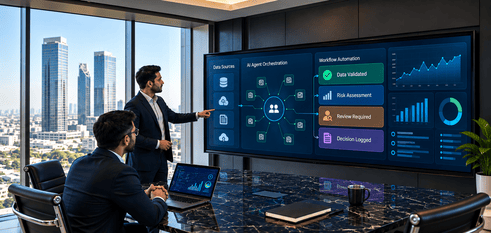
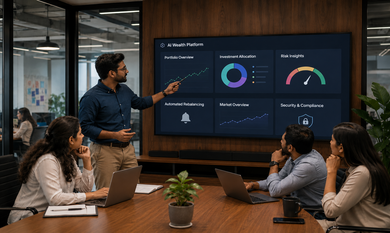
A smarter fund operations platform should work as a central system for fund teams, investors, documents, and decision-makers. It should not only store data. It should help teams move work forward with clear workflows, permissions, and reporting visibility.
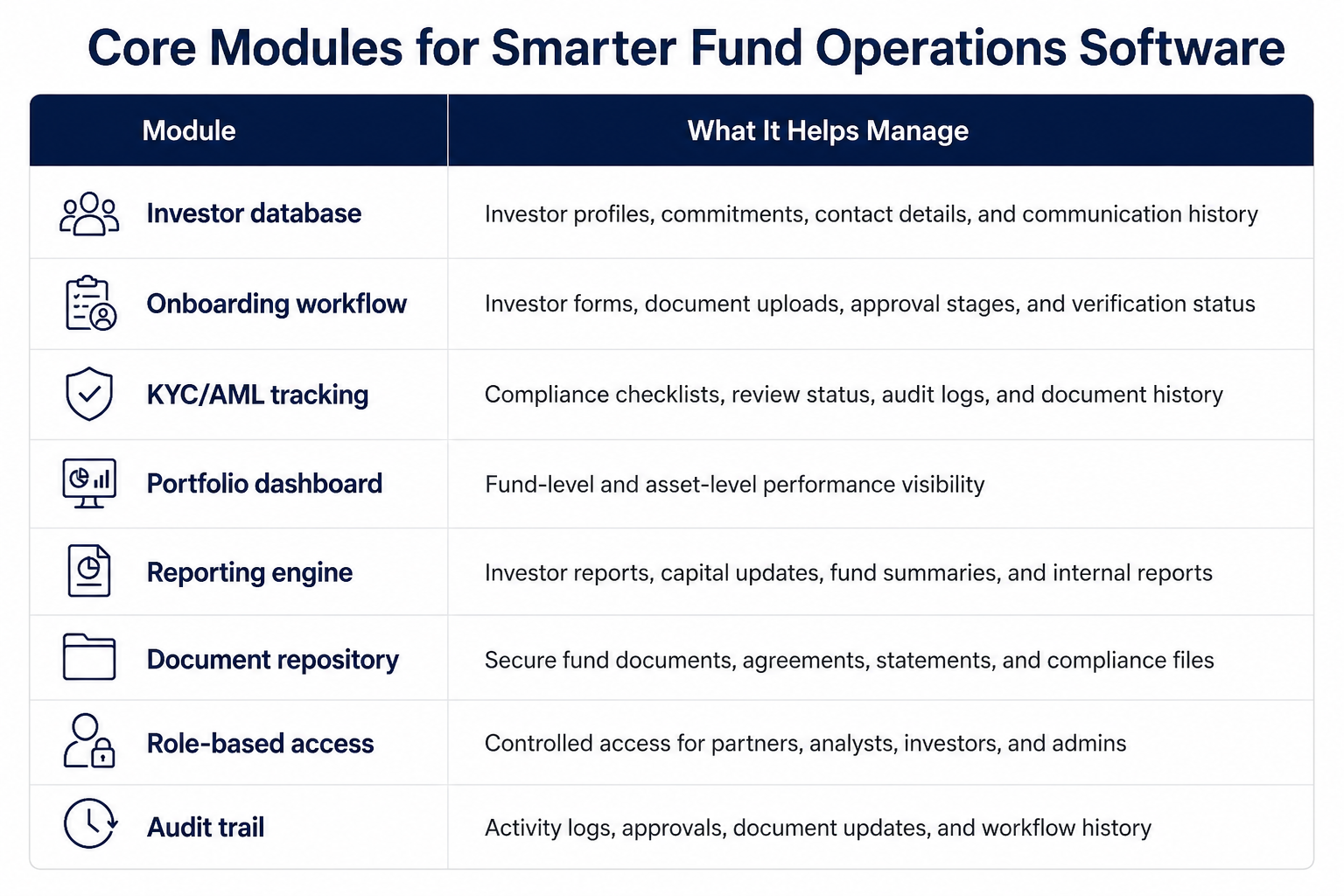
A cloud-based fund management platform can also make these modules easier to access securely across teams, locations, and investor groups.
Investor Onboarding Should Be the First Workflow to Digitize
Investor onboarding is one of the most practical starting points for digital transformation. It usually involves many steps, including investor profile creation, document collection, identity verification, approval tracking, and communication with internal teams.
Before digitization, onboarding may involve:
- Repeated email follow-ups
- Manual form collection
- Missing or outdated documents
- Unclear approval status
- Delays in investor account setup
With investor onboarding software, firms can create guided digital forms, secure document upload flows, automated reminders, approval stages, and status visibility. This reduces confusion for both the investor and the operations team.
For fund managers, this also improves consistency. Every investor follows a defined process, every document has a place, and every approval can be tracked.
KYC/AML Workflows Need Structure, Not Just Storage
KYC and AML workflows should not be treated as simple document storage. Fund managers need a structured process that supports collection, review, approval, access control, and audit readiness.
KYC/AML automation for fund managers can support:
- Investor document checklists
- Verification status tracking
- Internal approval workflows
- Reminder notifications
- Secure document storage
- Role-based access control
- Review history and audit logs
For AIF-related operations in India, fund managers should map their digital workflows in alignment with the latest SEBI Regulations and Operational Circulars for AIFs while working closely with their legal and compliance teams. Custom software can fundamentally support these compliance-related processes, document tracking, and audit readiness, but it should always serve as an operational tool rather than a replacement for professional compliance review.
Build an Investor Management Portal to Improve LP Communication
Investor communication becomes difficult when every update is shared through email. Investors may ask for fund reports, capital call notices, distribution details, tax documents, or portfolio updates. If these records are scattered, the fund team spends unnecessary time responding to repeated requests.
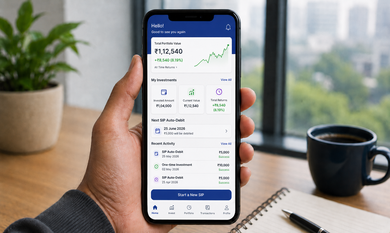
An investor management portal can give investors secure access to important information such as:
- Investment summary
- Capital commitment details
- Capital call notices
- Distribution updates
- Fund performance reports
- Tax and compliance documents
- Downloadable statements
- Support or contact options
This improves transparency and creates a better investor experience. It also helps the internal team reduce manual communication and maintain a clear record of what has been shared.
Portfolio Tracking Should Be Different for PE, VC, and Hedge Funds
Not every alternative fund needs the same type of portfolio dashboard. A useful platform should reflect how the firm invests, monitors assets, and reports performance.
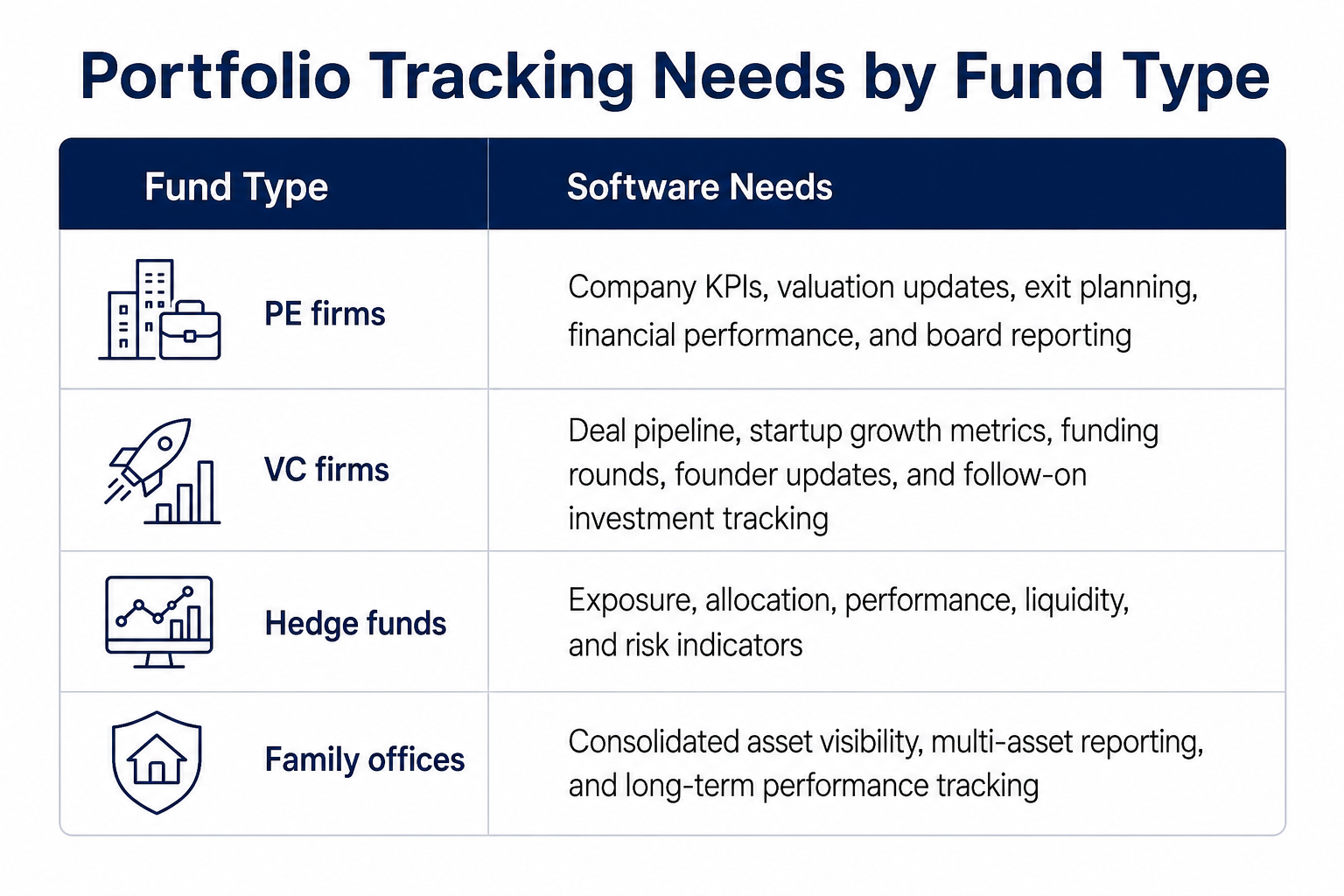
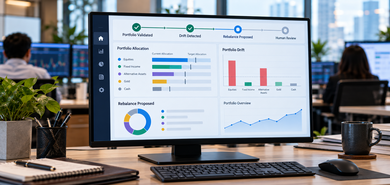
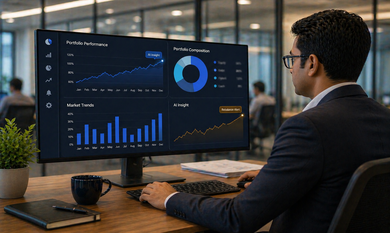
A PE/VC portfolio management platform should help teams monitor portfolio companies, collect updates, and prepare reports faster. A hedge fund management system may need more focus on allocation, exposure, and risk visibility. The software should be shaped around the fund’s operating model, not the other way around.
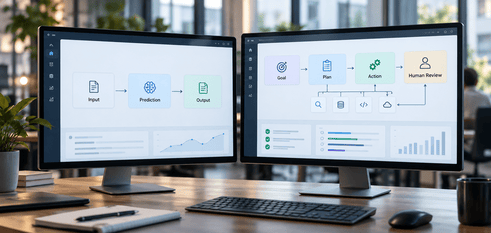
AI Analytics Can Help Fund Managers See Patterns Earlier
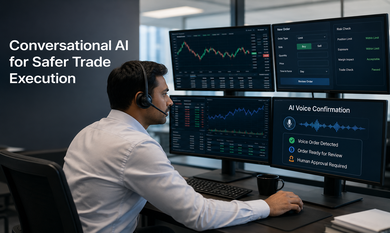
AI analytics can add more value when fund managers already have clean and structured data. It can support analysis, reporting, and decision-making, but it should not be positioned as a tool that guarantees returns or removes investment risk.
Practical use cases of AI analytics for investment management include:
- Portfolio risk indicators
- KPI anomaly detection
- Cash flow forecasting
- Automated report summaries
- Investor behavior insights
- Deal pipeline prioritization
- Performance trend analysis
For example, AI can help identify unusual portfolio performance patterns or summarize large sets of investor reports. It can also help analysts review data faster. Firms exploring advanced analytics can work with an AI development company in Ahmedabad to plan AI features responsibly and align them with real business use cases.
The Right Architecture for Fund Operations Software
A fund operations platform should be designed with security, scalability, and access control from the beginning. Since it handles sensitive investor, fund, and portfolio data, the technical foundation must be carefully planned.
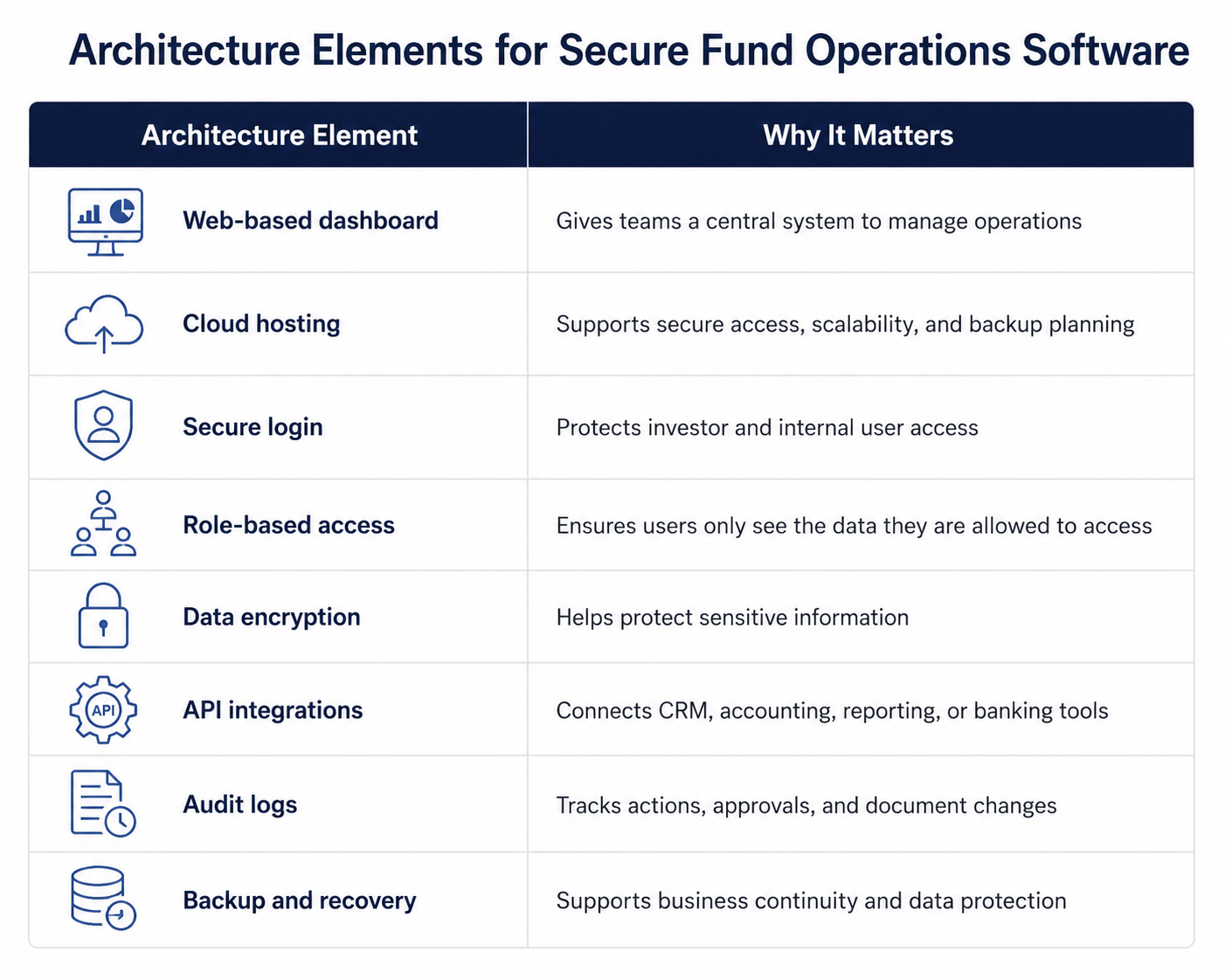
A cloud-based fund management platform also helps teams access investor records, reports, and portfolio dashboards securely from one centralized system.
This is where web app development services in Ahmedabad become highly relevant. Fund managers need more than a front-end interface. They need a secure backend, investor portal, admin dashboard, reporting engine, and integration-ready architecture.
Custom Software vs Ready-Made Fund Platforms
Fund managers often face one important question: should they buy ready-made software or build a custom platform?
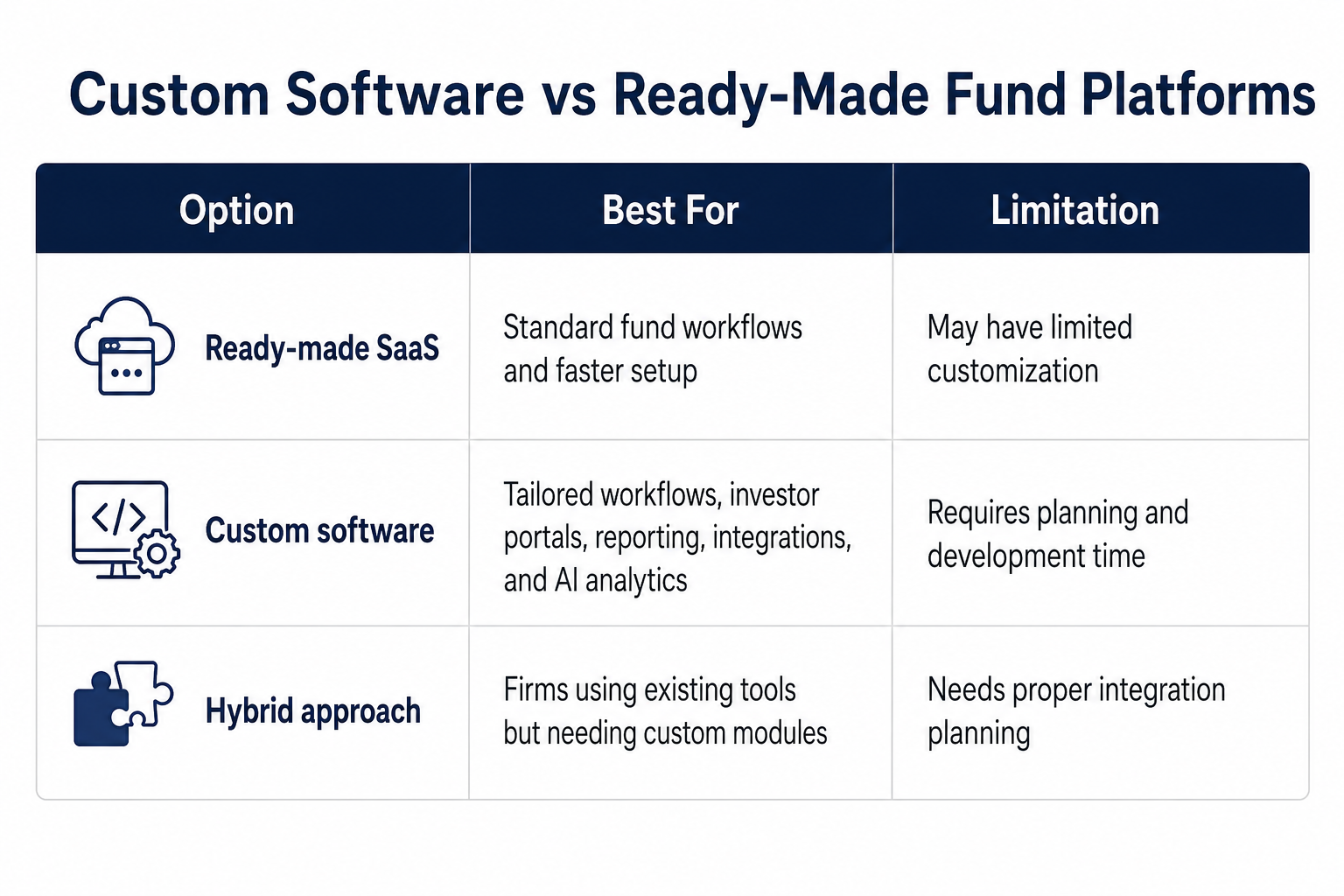
Ready-made platforms can work well when fund operations are standard. A custom fund platform is more useful when firms need specific approval flows, custom investor journeys, branded portals, unique reporting formats, or AI-powered analytics.
The right choice depends on workflow complexity, team size, investor expectations, and long-term growth plans.
A Practical MVP Roadmap for Alternative Fund Managers
Fund managers do not need to build everything at once. A phased MVP approach can reduce risk and help teams validate the platform step by step.
A practical roadmap may include:
- Audit current investor, fund, compliance, and reporting workflows
- Define must-have modules for the first version
- Build the investor database, onboarding flow, and document management system
- Add investor portal and reporting dashboard
- Add portfolio tracking and internal approval workflows
- Add AI analytics, integrations, and automation features
- Test security, user permissions, and compliance-related workflows
This approach makes fund management software in Ahmedabad more practical for growing firms because it allows teams to start with high-value workflows first and scale the platform gradually.
Practical Benefits for Fund Operations
A well-planned fund platform can improve day-to-day operations without making unrealistic promises. The main value comes from better control, faster access to information, and reduced manual dependency.
Key benefits may include:
- Faster investor onboarding
- Reduced manual follow-ups
- Better document control
- Improved reporting speed
- Stronger audit readiness
- Centralized portfolio visibility
- Better investor experience
- Easier collaboration between operations, compliance, and investment teams
A secure investor portal can also improve trust by giving investors timely access to relevant documents and updates. Over time, this helps the firm operate with more clarity and professionalism.
Why Theta Technolabs Is a Suitable Development Partner
For alternative fund managers, secure and scalable software can include investor portals, portfolio dashboards, reporting systems, backend platforms, workflow automation, and AI analytics modules.
As a fintech software development company in Ahmedabad, Theta Technolabs can help finance-focused teams plan and build software around real operational needs.
The team can support:
- Investor portal development for fund communication and document access
- Cloud-based fund platforms for secure and scalable operations
- AI analytics features for reporting, portfolio insights, and workflow intelligence
The focus should always be on building practical software that supports fund operations, not unnecessary features.
Conclusion
Ahmedabad’s alternative fund managers need smarter systems to manage investor onboarding, KYC/AML workflows, portfolio tracking, reporting, and investor communication. A well-planned fund operations software platform can centralize these processes, reduce manual dependency, and help teams build more scalable, secure, and data-driven fund operations.
Plan Your Investor Portal Today
Looking to build a secure investor portal, portfolio dashboard, or cloud-based fund operations platform? Theta Technolabs can help with investor onboarding automation, KYC/AML workflows, AI analytics, reporting dashboards, and cloud-based fund management systems. To discuss your project, contact us at sales@thetatechnolabs.com.
Frequently Asked Questions
1. What is fund operations software for alternative investment firms?
Fund operations software is a centralized platform that helps alternative investment firms manage investor onboarding, KYC/AML workflows, fund documents, portfolio tracking, reporting, approvals, and investor communication. It helps teams move away from scattered spreadsheets and email-based processes.
2. Why is fund management software in Ahmedabad useful for alternative fund managers?
Fund management software in Ahmedabad is useful for firms that want software aligned with their own investor workflows, reporting needs, compliance processes, and operating model. It can help local AIFs, PE firms, VC firms, hedge funds, and family offices build scalable digital operations.
3. What should an investor management portal include?
An investor management portal should include secure login, investment summaries, capital call notices, distribution updates, fund reports, tax documents, compliance documents, downloadable statements, and communication options. It should make investor access simple, secure, and transparent.
4. Can AI analytics help PE, VC, and hedge fund managers?
Yes, AI analytics can support portfolio risk indicators, KPI anomaly detection, forecasting, automated report summaries, and performance trend analysis. However, AI should be used to support decision-making and visibility. It should not be treated as a guarantee of investment returns.
5. Is custom fund operations software better than ready-made software?
It depends on the firm’s workflow complexity. Ready-made software may work for standard needs, while custom fund operations software is better for firms that need tailored reporting, approval flows, investor portals, integrations, branding, and AI analytics.