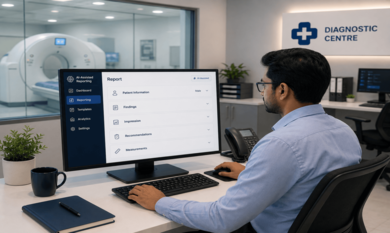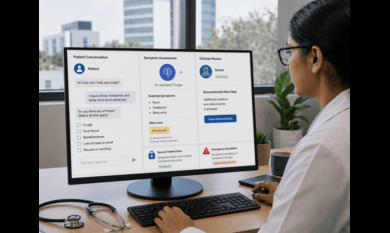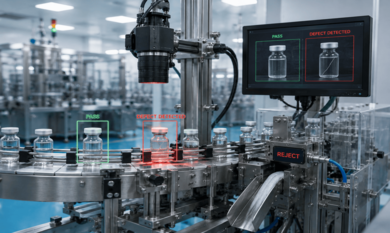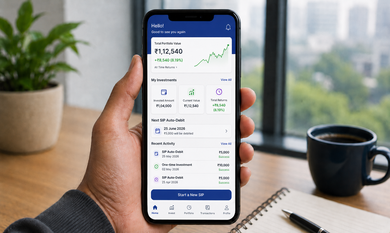


Many businesses in Delhi are planning to use AI and Gen AI in 2026, but one important question is often missed: are their current systems actually ready for it?
AI adoption is not only about buying a tool or adding a chatbot to a website. It depends on how well your data, cloud setup, software systems, security controls, integrations, and workflows can support intelligent automation. If these foundations are weak, even a strong AI idea can face delays, poor output quality, security concerns, or low user adoption.
This AI readiness checklist helps business owners, CTOs, IT heads, and digital transformation teams understand whether their current systems can support next-gen AI adoption in a practical and secure way.
What “AI-Ready Systems” Actually Mean in 2026
An AI-ready business system is not just a modern-looking dashboard or a cloud account. It is a connected technology environment where data is clean, systems communicate properly, workflows are clear, and access is controlled.
In 2026, AI-ready systems usually include:
- Clean and structured business data
- Secure cloud or hybrid infrastructure
- APIs that connect ERP, CRM, websites, apps, and dashboards
- Role-based access and audit logs
- Clear business use cases for AI
- Scalable storage and computing capacity
- Teams that understand how AI will support daily work
Microsoft’s AI Readiness Assessment evaluates preparedness across areas such as business strategy, AI governance and security, data foundations, organization and culture, infrastructure for AI, and model management. This shows why AI readiness should be treated as a complete business and technology check, not only a software upgrade. (Microsoft Learn)
A strong Gen AI readiness checklist should help a business identify what is ready, what is risky, and what needs improvement before AI implementation begins.
The 2026 AI Readiness Checklist for Current Business Systems
This checklist is designed to help business leaders review the systems they already use before investing in AI or Gen AI.
1. Data Readiness: Is Your Business Data Clean, Connected, and Usable?
AI depends heavily on the quality of data it receives. If your customer records, sales reports, inventory details, support tickets, finance data, and operational information are scattered across departments, AI may not deliver useful insights.
For strong data readiness for AI, check:
- Is your data stored in one place or spread across multiple tools?
- Are there duplicate, outdated, or incomplete records?
- Can teams trust the reports they use for decisions?
- Are customer, sales, inventory, and operational datasets connected?
- Is there clear ownership for data quality?
- Can data be accessed securely by approved systems?
For example, a business using separate spreadsheets for sales, inventory, and customer support may struggle to build reliable AI forecasting or customer intelligence tools. Before AI adoption, the company should first clean and connect these data sources.
2. Infrastructure Readiness: Can Your Systems Handle AI Workloads?
AI tools need reliable infrastructure. This does not always mean every business must build a large enterprise-level cloud setup, but it does mean your systems should be scalable, secure, and performance-ready.
For AI infrastructure readiness, review:
- Cloud capacity
- Server performance
- Storage structure
- API speed
- Backup and recovery systems
- Monitoring tools
- Security controls
- Cost management
Businesses that want to scale AI should also review their cloud architecture. Theta Technolabs provides cloud consulting services to help companies plan cloud migration, modernization, scalability, and secure infrastructure for digital and AI workloads.
3. Integration Readiness: Can Your Tools Talk to Each Other?
Many companies already use ERP, CRM, HRMS, accounting software, websites, mobile apps, and dashboards. The problem is that these tools often work separately.
AI becomes more useful when systems are connected. For example, a Gen AI assistant for sales teams becomes more effective when it can access CRM data, product details, customer history, and support records through secure integrations.
Check whether:
- Your ERP and CRM are connected
- Your website and mobile app share data with internal tools
- Dashboards update automatically
- APIs are available and secure
- Manual copy-paste work can be reduced
- Legacy systems can be modernized step by step
In many cases, legacy system modernization for AI does not require replacing everything at once. Businesses can start by improving APIs, databases, reporting layers, and high-impact workflows.
4. Security Readiness: Can AI Access Data Safely?
AI systems often need access to business data, customer records, documents, or internal knowledge bases. That makes security readiness very important.
Before implementing Gen AI, businesses should check:
- Who can access sensitive data?
- Are permissions clearly defined?
- Are APIs protected?
- Is data encrypted where required?
- Are audit logs available?
- Can teams monitor AI usage?
- Are private documents separated from public content?
AI should not create uncontrolled access to business information. Security planning helps reduce risks and builds confidence among leadership, employees, and customers.
5. Workflow Readiness: Are Your Processes Clear Enough for Automation?
AI cannot improve workflows that are unclear or poorly documented. Before automation, businesses need to understand how work actually happens.
A simple workflow readiness check includes:
- Identify repetitive manual tasks.
- Document approval steps.
- Review reporting delays.
- Find areas where employees depend too much on Excel.
- Check where customer or employee queries repeat often.
- Define where AI can support decisions, not replace human judgment completely.
This helps teams select practical AI use cases instead of starting with broad or unclear goals.
Signs Your Current Systems May Not Be Ready for Gen AI
Your business may need improvement before Gen AI implementation if:
- Reports are still created manually every week.
- Data is stored across multiple departments without a single source of truth.
- Teams do not trust existing dashboards.
- ERP and CRM systems do not connect properly.
- Customer data is incomplete or duplicated.
- Cloud infrastructure is limited or unmanaged.
- User access is not controlled properly.
- Business processes are not documented.
- Internal teams are unsure which AI use cases matter most.
- Security policies do not cover AI tools.
These signs do not mean AI is impossible. They simply show that the business should complete a Gen AI readiness checklist before moving ahead.
A Simple AI Readiness Score for Business Leaders
A basic AI readiness assessment can help leadership understand where the business stands before requesting a detailed technical review.
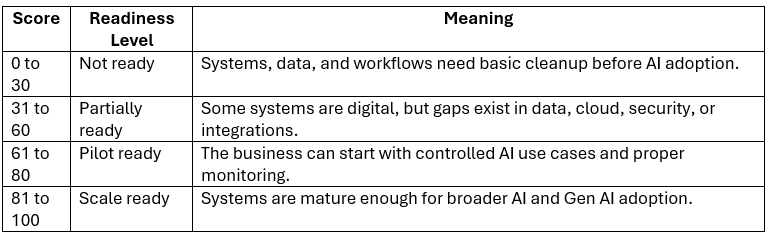
This score is not a final technical audit, but it gives business leaders a simple way to start discussions with IT teams or technology partners.
What to Fix Before Investing in Next-Gen AI
Before spending heavily on AI tools, companies should fix the foundation first.
Clean and Centralize Business Data
Data cleanup should come before AI development. Businesses should remove duplicate records, update old information, standardize formats, and connect important data sources. This improves the quality of AI insights and reduces confusion.
Upgrade Critical Legacy Systems
Not every old system needs immediate replacement. A phased approach is usually better. Start with the systems that affect revenue, customer experience, reporting, operations, or compliance. This makes modernization more practical and cost-controlled.
Strengthen Cloud and Security Foundations
AI needs stable infrastructure. Businesses should check cloud scalability, access controls, secure APIs, monitoring, backup processes, and cost visibility. Weak infrastructure can slow down AI projects or create avoidable risks.
Define Clear AI Use Cases and KPIs
A strong AI implementation roadmap should begin with clear business goals. Common use cases include customer support automation, document search, lead scoring, demand forecasting, inventory planning, internal reporting, and knowledge assistants.
For companies planning advanced automation or intelligent assistants, Theta Technolabs offers Generative AI development services to support use cases such as document processing, internal knowledge search, AI agents, and workflow automation.
Why This Matters for Delhi Businesses in 2026
Delhi has a wide mix of SMEs, startups, service firms, manufacturing businesses, healthcare providers, fintech companies, logistics teams, retail brands, and education businesses. Many of these companies already use digital tools, but AI adoption requires more than basic digitization.
A company may have a website, CRM, ERP, mobile app, and dashboard, but still lack the data quality, system integration, cloud readiness, or security structure needed for AI. This is why Delhi businesses should review their current systems before investing in next-gen AI adoption.
A readiness-first approach helps companies avoid rushed AI implementation. It also helps leadership understand which AI use cases are practical now and which ones need system improvement first.
How Theta Technolabs Can Help with AI Readiness and Gen AI Adoption
Theta Technolabs can help businesses evaluate their systems before moving into full AI implementation. This includes reviewing current software, data quality, cloud setup, security controls, APIs, dashboards, and workflow gaps.
The team can support businesses with:
- AI readiness assessment
- Gen AI development
- Custom software development
- Web application development
- Mobile app development
- Cloud consulting
- Dashboard development
- API integrations
- Legacy system modernization
- AI use case planning
For businesses planning AI adoption, the right technology partner can help assess current systems, identify gaps, and build AI solutions that align with business goals and long-term digital growth.
Conclusion
Next-gen AI success depends on readiness, not only ambition. Before adopting AI or Gen AI, businesses should check whether their data, cloud infrastructure, software systems, integrations, security controls, and workflows are prepared for intelligent automation.
A practical AI readiness checklist helps decision-makers identify gaps early and plan improvements with more confidence. For Delhi businesses, this is especially important as competition, customer expectations, and digital adoption continue to grow.
Theta Technolabs supports companies with AI, Gen AI, Web, Mobile, and Cloud capabilities, helping them modernize current systems and prepare for responsible AI adoption. Businesses searching for an AI development company in Delhi should first focus on readiness, then move toward implementation with a clear roadmap.
Frequently Asked Questions
1. How do I know if my current systems are ready for Gen AI?
Your systems may be ready if your data is clean, your tools are connected, your cloud setup is scalable, your APIs are secure, and your workflows are clearly documented. An AI readiness checklist can help identify gaps before implementation.
2. Can legacy systems support AI without full replacement?
Yes, in many cases. Legacy systems can often support AI through APIs, middleware, data integration, dashboard upgrades, or phased modernization. Full replacement is not always required, but legacy system modernization for AI should be planned carefully.
3. Why is data readiness important before AI implementation?
AI depends on accurate and accessible data. Poor data quality can lead to weak insights, incomplete automation, or unreliable outputs. Strong data readiness for AI helps improve the value of AI use cases.
4. Do businesses need cloud infrastructure for Gen AI adoption?
Cloud infrastructure is often useful for scalability, storage, computing power, security, and integration. However, the right setup depends on the business use case, data sensitivity, budget, and compliance needs. Cloud readiness for AI should be reviewed before large implementation.
5. What should Delhi businesses check before starting an AI project?
They should document current systems, list pain points, review data sources, define AI use cases, set KPIs, and ask for a proper system readiness review before full implementation. This helps both the business and the technology partner plan AI implementation more realistically.
Meta Description -
Is your business ready for next-gen AI? Review data, cloud, security, integrations, and workflows with this 2026 AI readiness checklist.