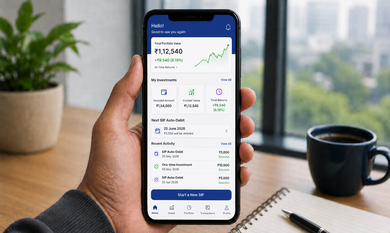
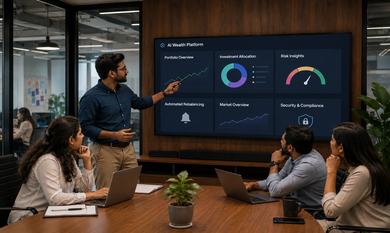
The promotion goes live at 10 a.m. By lunchtime, orders are arriving through the website, marketplace, and store. Customers want delivery updates, the warehouse needs accurate stock information, and the marketing team is preparing another offer.
Each department sees part of the demand. Managing the response requires those parts to stay connected.
AI automation for festive season demand can help businesses interpret changing conditions and coordinate routine work. Its value depends on reliable integrations, clear business rules, and staff oversight.
Consider a hypothetical homeware retailer in Delhi preparing for Diwali. These five applications show how automation can support the journey from planning stock to fulfilling orders.
1. Forecast Demand Around the Festival Calendar
Last year’s sales provide a starting point, but copying the same quantities overlooks changes in pricing, promotions, product ranges, and festival dates.
Festive season demand forecasting can combine sales history with relevant information such as campaign schedules, stock availability, and supplier lead times.
AWS’s demand-planning guidance illustrates how businesses can connect sales, product, and marketing data to support forecasting and operational visibility. This is an implementation approach, rather than evidence of guaranteed accuracy.
For the homeware retailer, planners could compare expected demand across product categories and identify where purchasing decisions need review.
Stockouts also matter: recorded sales may understate interest when products were unavailable. New products need separate assumptions because their history is limited.
When evaluating machine learning development services, ask how forecasts are tested against a simple baseline. Use forecast ranges and planner review to guide decisions.
2. Connect Inventory Signals With Replenishment Decisions
A forecast becomes useful when purchasing and stock allocation can respond to it.
AI inventory management can help identify products selling differently from expectations and prioritise inventory replenishment alerts. The system could prepare a suggested purchase quantity for an authorised employee to review.
However, first establish an accurate stock picture across stores, warehouses, and sales channels.
For the retailer, stock records should distinguish physical quantity, reserved items, damaged goods, and incoming deliveries. A returned product should not become available for sale before inspection.
Replenishment decisions must also consider supplier availability, minimum order quantities, storage capacity, and delivery deadlines.
Keep transaction handling in dependable application logic. AI can support prioritisation, while stock reservations and purchase approvals follow explicit rules.
3. Answer Routine Questions Using Current Order Information
As orders increase, customers often ask similar questions about delivery, availability, returns, and collection.
Festive customer support automation can classify these requests, retrieve approved information, and prepare or deliver appropriate responses.
For example, a customer asks whether a gift set will arrive before a celebration. The assistant needs current order status and supported delivery information. A general product description cannot answer that question reliably.
Connect support tools with the order system, carrier updates, and approved policies. Verify identity before showing account-specific information.
Define a clear route to staff for disputed payments, damaged deliveries, unclear requests, and exceptions. If tracking information is unavailable, the assistant should explain that limitation.
Assess successful resolution and repeat contacts alongside response time. A quick answer helps only when it addresses the customer’s actual need.
4. Prioritise Fulfilment Work as Conditions Change
Order fulfilment automation can bring order status, picking progress, packaging requirements, and collection deadlines into a shared workflow.
AI may help flag orders likely to miss a deadline or suggest which exceptions deserve attention. Scheduling and dispatch decisions still need operational constraints.
The retailer might prioritise an order with a confirmed carrier collection deadline while directing an address query to customer support.
Keep “packed,” “dispatched,” and “delivered” as separate states supported by appropriate records. Printing a shipping label does not establish that the carrier has collected the parcel.
Test duplicate orders, partial shipments, cancelled items, and delayed carrier updates. Retries should not create additional shipments or repeated notifications.
The practical goal is clearer coordination between teams, with employees reviewing exceptions that require judgement.
5. Match Promotions With Stock and Service Capacity
Promotional demand planning should connect marketing decisions with the business’s ability to fulfil them.
An AI system can analyse category interest and campaign responses to suggest relevant products or audience segments. Availability, margins, and operational limits should then determine which suggestions are eligible.
For the homeware retailer, a campaign could feature an available alternative when a promoted gift set sells out. The replacement should genuinely suit the customer’s interests and be presented clearly.
Avoid treating personalisation as permission to send more messages. Use appropriate customer preferences, frequency limits, and straightforward opt-outs.
During a sales peak, marketing and operations need a shared view of available stock and supported delivery promises. Staff should be able to pause campaigns when circumstances change.
Prepare the Workflow Before the Sales Begin
These five applications work best when they share consistent product identifiers, order statuses, and ownership rules.
Start with one measurable process. For example, connect order tracking with support responses before introducing automated replenishment recommendations.
Before launch, check:
- Which system owns each product, order, and stock record.
- Who approves purchases, refunds, and campaign changes.
- How integrations behave during interruptions or duplicate requests.
- Whether the application handles expected traffic peaks.
- How staff continue working when automation is unavailable.
When assessing an AI development company in Delhi, ask for a demonstration using realistic exceptions.
Compare results with a baseline. Forecast error, stock discrepancies, resolution quality, dispatch performance, and operating cost reveal more than the number of automated tasks.
Frequently Asked Questions
1. Which festive season process should a business automate first?
Choose a frequent, well-understood task with reliable data and measurable outcomes. Order-status enquiries or replenishment alerts may be suitable starting points. Review the existing process before adding AI.
2. Can AI forecast demand for a business with limited sales history?
It may support planning using product information and relevant patterns, but uncertainty will be greater. Compare results with simple planning methods and retain human review, particularly for new products.
3. Does festive automation require replacing existing software?
Not always. Supported APIs and integrations may connect current e-commerce, inventory, CRM, and order systems. Assess access, data consistency, vendor restrictions, and maintenance requirements before defining the scope.
4. Which decisions should remain under staff control?
Set approval requirements according to business consequences. Purchasing commitments, refunds, significant discounts, and exceptions may require review. Clear permissions matter more than giving every workflow the same level of autonomy.
5. How should businesses measure the return on automation?
Compare relevant outcomes before and after implementation, accounting for changes in sales volume. Include integration, maintenance, AI usage, and staff review costs. Avoid attributing every improvement during a strong sales period to automation.
Turn Seasonal Preparation Into Lasting Capability
Festive demand creates an opportunity to improve how information moves through the business. The same connected processes can support routine sales after the celebrations.
At Theta Technolabs, we provide custom software development across web, mobile, and cloud platforms. Our team can enhance existing applications, build operational tools, and integrate business systems with supported hardware where relevant.
The useful starting point is a defined workflow, dependable data, and a clear measure of improvement.
Discuss your festive season automation requirements at sales@thetatechnolabs.com.