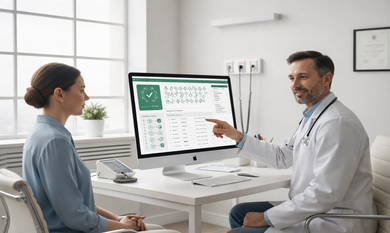
A patient is ready for discharge after an orthopedic procedure at a multispecialty hospital in India. The doctor has completed the operative notes, the nursing team has recorded the care provided, and the billing desk is preparing the final statement. One entry mentions an implant, but its supporting charge details are unclear.
A billing employee may need to compare the discharge summary, procedure notes, materials record, and itemized bill to understand what needs checking. An AI assistant can bring those details together and flag missing information. It cannot decide that an implant should be charged simply because it appears in a clinical note.
How can AI assist medical billing while keeping people in control? It can extract relevant details from permitted records, suggest coding or billing checks, and send uncertain items to trained reviewers. The final decision stays with authorized hospital staff using original documents and applicable rules.
What Are AI Assistants for Medical Billing?
An AI medical billing assistant is software that helps administrative and coding teams examine billing-related information. It may read structured fields from a hospital information system or identify relevant passages in discharge summaries and procedure notes.
Medical coding and medical billing are connected but different. Coding classifies documented diagnoses, procedures, or services using the applicable system. Billing checks charges, approved packages, coverage conditions, and the information needed to prepare a bill or insurance claim.
An assistant can identify a possible mismatch between the two. It should not invent a procedure, select a code from an unrelated code set, or assume every documented service is separately chargeable. Hospitals planning healthcare software development services should define these boundaries before adding AI to their existing applications.
Where Can AI Help Billing and Coding Teams?
Finding information across documents
A single case may involve the admission record, operative notes, discharge summary, pharmacy entries, and itemized charges. Document AI and natural language processing can locate relevant descriptions and present them in one review screen.
For example, the assistant may find that an operative note mentions an implant while the materials record has no matching entry. The useful output is Review Required, not an automatically added charge.
Suggesting coding information
An assistant can propose possible classifications using approved references, provided the hospital has defined the correct coding system for that workflow. A trained coder must check the original clinical documentation and current rules before confirming any suggestion.
A diagnosis recorded at discharge does not automatically justify every associated procedure or charge. Context matters, especially when notes contain abbreviations or describe care that was considered but not performed.
Checking billing completeness
AI can also flag duplicate-looking entries, missing supporting documents, mismatched dates, or incomplete information needed for payer review. These are reasons to investigate, not proof that a claim is incorrect.
How Does AI-Assisted Billing Work With Human Review?
A useful workflow shows reviewers what the software found, where it found it, and what remains uncertain.
1. Retrieve permitted records
The system accesses discharge summaries, procedure notes, itemized charges, and relevant coverage information through approved hospital interfaces. Access should follow staff roles and the hospital's data-handling policies. It does not need to copy every patient record into a separate AI service.
2. Extract and organize details
The assistant identifies documented procedures, supplies, dates, and potentially relevant coding descriptions. Each extracted item should link back to its source text or original field so a reviewer can verify it.
These document-assisted capabilities can be developed through generative AI development services, but clear review rules remain essential. Poor scans, handwritten notes, and inconsistent abbreviations can cause errors. Where information is unreadable, the assistant should say so rather than invent an answer.
3. Identify possible review items
Returning to the orthopedic example, the assistant notices the implant reference and compares it with the materials and billing records. It flags the missing supporting detail and may display a tentative code suggestion if a suitable, approved reference is available.
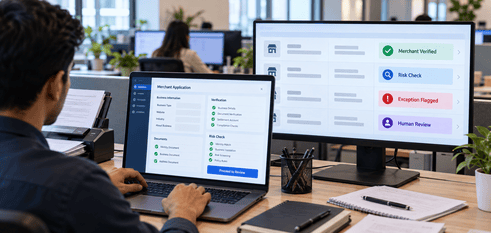
The screen should separate Missing Information, Code Suggestion, and Possible Duplicate. These labels show the reviewer what needs checking.
4. Let trained staff verify the evidence
A medical coder or billing professional checks the operative note, materials record, approved tariff or package terms, and payer requirements. If documentation is incomplete, they request clarification from the relevant clinical or administrative team.
The reviewer may accept, correct, or reject the assistant's suggestion. No implant charge should be created merely because the assistant expects one.
5. Confirm and record the outcome
Once authorized staff verify the information, the updated bill or claim moves through the hospital's established approval process. The system records the review item, supporting evidence, correction, reviewer decision, and final status without exposing unnecessary personal details.
That record helps when a payer requests clarification or the hospital needs to understand why a charge changed.
Why Human Review Is Essential
Clinical notes are written to document care, not to serve as ready-made invoices. They may contain provisional diagnoses, copied text, shorthand, or references to supplies that were not ultimately used. AI can misread those distinctions.
Billing rules also vary. Indian hospitals may work with private insurers, government health schemes, cash-paying patients, and different package agreements. A code or charge appropriate in one workflow may be unsuitable in another.
Human review checks unsupported suggestions and outdated references. It also provides a route for questions software cannot settle, such as whether a procedure was performed as documented or a charge is included in a package. The assistant should support staff with evidence, not pressure them to accept a suggestion because it appears confident.
Connecting AI With Existing Hospital Billing Systems
Hospitals rarely need another isolated screen that forces staff to re-enter information. A better design places suggestions inside the hospital information system, electronic health record (EHR), billing application, or a linked review queue.
The system can show a bill's preparation status, missing evidence, review decisions, and submission status. It should respect existing access controls and source-of-truth records rather than silently rewriting clinical notes or finalized charges.
Claims exchange is a separate but related step. India's National Health Claims Exchange FHIR implementation guide describes standardized exchange of clinical and financial claim information between providers and payers. It does not certify AI-generated coding suggestions or mean that every Indian hospital follows the same exchange process.
Problems Hospitals Should Address Before Deployment
Incorrect extraction: Scanned documents and abbreviations can produce misleading results. Test the assistant on the documents staff actually receive, not only clean examples.
Outdated coding references: Coding guidance, payer terms, and hospital tariffs can change. Approved references need version control and regular review.
Too many review alerts: A screen full of low-value flags can slow staff down. Prioritize items that affect completeness or correctness and review repeated false alerts.
Privacy and access: Billing records contain sensitive health information. Apply security controls, limited access, audit records, and carefully managed vendor permissions.
Unclear accountability: Every consequential suggestion needs an identified reviewer and a way to resolve disagreements. Similar principles apply to wider AI in hospital management, but billing requires its own evidence and verification rules.
How Can Hospitals Measure Whether It Helps?
Compare a defined set of billing cases reviewed with and without AI assistance while keeping the same quality standards. Track time spent finding documents, missing-information findings, reviewer corrections, and avoidable rework.
Also examine false alerts, unsupported code suggestions, and problems found after submission. A faster review is not an improvement if inaccurate charges or incomplete records move forward.
Check results across departments and payer workflows. Orthopedic cases, outpatient consultations, and cashless insurance claims can require different checks.
Frequently Asked Questions
How can AI assistants help with medical billing and coding?
AI assistants can extract details from medical documents, suggest coding information, and identify missing or inconsistent billing entries. Trained staff must verify suggestions against the original records and applicable rules.
Why is human review important in AI-assisted medical billing?
Clinical notes can be incomplete or ambiguous, and billing requirements vary. Human reviewers confirm documented services, coding choices, charges, and supporting evidence before the bill or claim is finalized.
Can AI assistants automatically assign medical billing codes?
They can suggest codes where suitable approved references are available, but suggestions should not become final without qualified review. The correct coding system and payer requirements depend on the workflow.
Can AI medical billing assistants work with existing hospital software?
Often, yes. They can connect through approved interfaces to hospital information systems, EHRs, and billing platforms. Integration depends on system compatibility, data access, and the hospital's review process.
Conclusion
AI assistants can make medical billing review more organized by bringing relevant information together and highlighting items that need attention. Their value depends on trustworthy documents, clear coding rules, and trained professionals who can confirm or correct consequential suggestions.
Theta Technolabs helps healthcare businesses develop connected billing workflows that keep human verification part of the process.
For implementation discussions, contact us at sales@thetatechnolabs.com.