

Manufacturing equipment requires regular inspections, servicing, and repairs to remain reliable. When maintenance records are scattered across spreadsheets, paper registers, and separate departments, factory managers may struggle to understand which machines need attention.
A production supervisor may report an unusual machine sound, while the maintenance team may already have an inspection scheduled. If the information is not connected, an issue can remain unresolved or create unnecessary work.
Equipment maintenance management software provides a centralized way to record machine information, schedule servicing, assign repair tasks, and review maintenance activities.
For Dubai manufacturers, such software can help coordinate equipment maintenance across production lines, warehouses, and industrial facilities.
This article explains which features matter, how maintenance workflows should be organized, and how software can connect with existing factory systems.
Why Maintenance Records Need to Be Connected
Factories depend on equipment that performs different functions within production.
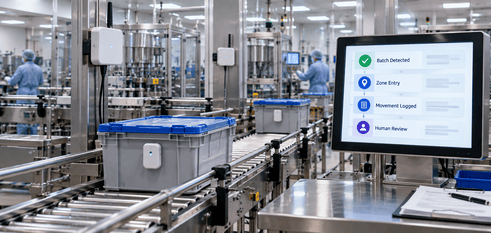
A packaging line may include conveyors, motors, weighing equipment, and sealing machines. A metal fabrication plant may operate cutting machines, presses, compressors, and other specialized assets.
Each machine has different servicing requirements, operating conditions, and maintenance responsibilities.
When information is stored separately, technicians may not have access to previous repairs or inspection findings.
This makes it harder to identify recurring problems and coordinate planned maintenance with production.
A computerized maintenance management system, commonly called a CMMS, addresses this issue by organizing equipment records and maintenance activities in one application.
The system should not simply store completed checklists. It should help teams identify what work is due, which issues remain unresolved, and what resources are required.
Start with an Accurate Equipment Register
Before introducing maintenance automation, manufacturers need reliable information about the machines they operate.
A factory asset register provides a structured record of equipment and its location within the facility.
A typical record may include the equipment identification number, machine type, manufacturer, operating location, installation details, and relevant maintenance instructions.
The register should also identify which production line or department uses the equipment.
Keep equipment identification consistent
Each maintainable asset should have a unique identifier.
This helps prevent confusion between machines with similar names or models.
For example, if a factory operates several identical compressors, each compressor should have a separate maintenance record.
QR codes or barcode labels can make equipment identification easier for technicians working on the factory floor.
A technician can scan the label to retrieve the correct asset record, subject to their access permissions.
Connect supporting documentation
Equipment records may include manufacturer manuals, inspection procedures, warranty information, and approved maintenance instructions.
These documents should be linked to the relevant asset rather than stored in unrelated folders.
When information is organized, technicians can review earlier findings before starting their work.
Make Preventive Maintenance Easier to Plan
Not every maintenance task should begin after a machine stops working.
Factories use scheduled inspections and servicing to identify potential problems and maintain equipment condition.
Preventive maintenance scheduling helps maintenance teams organize these activities using approved intervals and procedures.
A system can generate tasks based on calendar dates, recorded operating hours, or other appropriate equipment measurements.
For example, a manufacturer may schedule inspections for conveyor components or servicing for a production compressor according to its maintenance instructions.
The exact interval should come from suitable technical guidance and operating experience.
Software should not invent servicing frequencies without considering the equipment manufacturer's recommendations and the factory's maintenance requirements.
Coordinate maintenance with production schedules
Maintenance planning also needs to account for production availability.
A servicing task may require the equipment to be stopped or isolated from the production process.
The maintenance system can share planned work with authorized production managers so that suitable time can be arranged.
However, the application must not automatically override production safety procedures or authorize unsafe machine operation.
Relevant personnel must confirm when equipment is available and when maintenance can proceed.
Use Digital Work Orders to Manage Repairs
When a machine develops a problem, the maintenance team needs clear information about what has happened and who is responsible.
Maintenance work orders provide a structured record for reporting, assigning, completing, and reviewing repair activities.
A work order may include the affected equipment, reported problem, priority, assigned technician, required parts, and current progress.
Record the problem at its source
Production operators should have a simple way to report an equipment issue.
A short digital form can capture the machine identifier, observed symptoms, and any relevant notes or photographs.
The report should distinguish between an equipment problem, a service request, and a safety concern.
If an unsafe condition is identified, the factory's established safety and equipment isolation procedures take priority.
Assign and review maintenance tasks
A supervisor can review the request and assign it to an appropriately qualified technician.
The technician records inspection findings, work performed, and any additional requirements.
Before physical maintenance begins, authorized personnel must follow the facility's applicable equipment isolation and safe-work procedures. Once maintenance is completed, the authorized person must confirm that the equipment can safely return to normal use. Closing a digital work order does not replace required safety checks or independently authorize machine restart.
Connect Spare Parts with Maintenance Activities
Equipment repairs may depend on the availability of replacement components.
If maintenance and inventory information are disconnected, technicians may discover missing parts only after beginning a repair.
Spare parts inventory tracking can help maintenance teams check whether the required components are available.
The system can associate part numbers with specific machines and record parts reserved or consumed during maintenance.
For example, a technician replacing a conveyor component can record the part used against the related work order.
Inventory records can then be updated through an approved integration.
This also helps managers understand which equipment frequently requires replacement components.
However, the software must use accurate part compatibility information and appropriate inventory controls.
It should not suggest an unsuitable substitute simply because a similar item is available.
How a Connected Maintenance Workflow Operates
Different maintenance activities require different responsibilities.
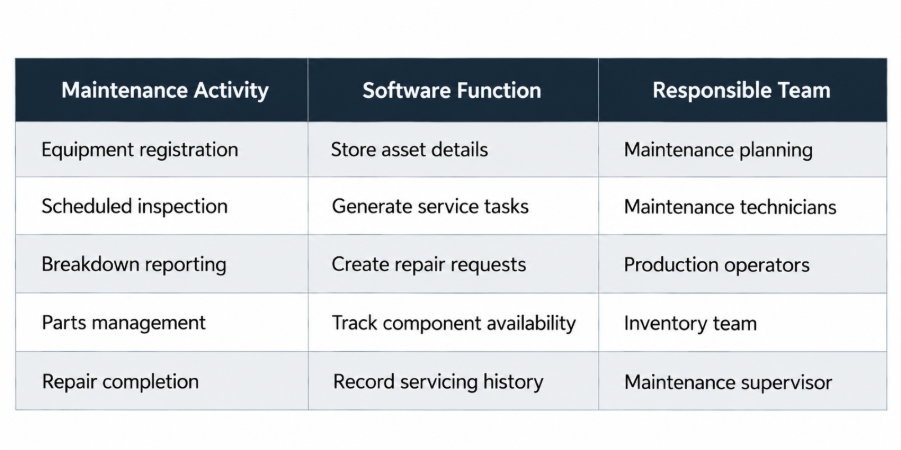
This workflow creates a consistent process from identifying an issue to documenting the completed work.
It also helps different departments understand which information they are responsible for updating.
A maintenance manager can review outstanding tasks without depending entirely on verbal progress reports.
Use Maintenance History to Find Recurring Problems
Completed maintenance work can provide useful information for future planning.
Equipment maintenance history should include previous inspections, reported faults, repairs, replaced components, and relevant technician observations.
Consider a packaging machine that repeatedly experiences conveyor alignment problems.
If each repair is recorded separately without connecting it to the machine, the repeated pattern may remain unnoticed.
A centralized history allows the maintenance manager to review previous work and investigate possible underlying causes.
This information can support decisions about additional inspection, component replacement, maintenance procedure changes, or equipment upgrades.
The system should also distinguish between an observed fault and a confirmed cause.
A technician's initial observation should not automatically become the final diagnosis without appropriate review.
When Should Manufacturers Connect IoT Sensors?
Not every factory needs an advanced sensor network to improve maintenance management.
For some equipment, scheduled servicing and accurate maintenance records may be sufficient.
However, certain machines can benefit from additional monitoring.
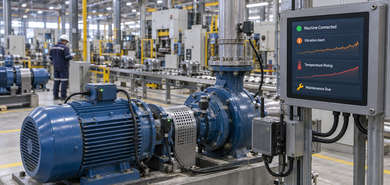
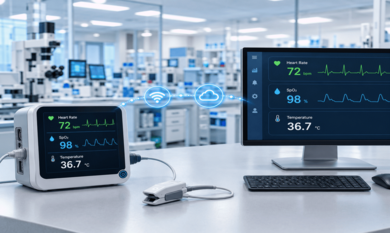
IoT condition monitoring can collect information such as temperature, vibration, operating hours, or other relevant machine measurements.
These readings may help identify unusual operating conditions and support maintenance planning.
For example, a sensor connected to an appropriate motor assembly might detect changes in vibration patterns.
The software can record the readings and alert maintenance personnel when a configured condition requires attention.
Sensor alerts depend on correct installation, appropriate monitoring thresholds, and reliable data. An unusual reading should prompt further investigation and should not automatically be treated as confirmation of equipment failure.
Keep monitoring separate from machine safety controls
IoT data should be obtained through appropriately designed and authorized connections.
A maintenance monitoring application should not interfere with programmable logic controllers, emergency-stop functions, or existing equipment safety systems.
Where operational technology networks are involved, factory teams should evaluate network segmentation, device security, and permitted data access.
Through IoT development in Dubai, manufacturers can explore suitable sensor connectivity, secure data collection, and maintenance monitoring applications.
The equipment type, available interfaces, and maintenance objectives should determine whether sensor integration is worthwhile.
Connect Maintenance Software with ERP and Production Systems
Many manufacturers already use enterprise resource planning systems to manage purchasing, inventory, and business operations.
Production teams may also use manufacturing execution systems, commonly called MES, to coordinate manufacturing activities.
Maintenance software can connect with these systems through suitable APIs or other approved integration methods.
ERP integration
An ERP connection can support spare-part availability, purchase requests, approved material consumption, and relevant equipment records.
It is important to decide which system owns each record.
For example, inventory balances may remain within ERP, while maintenance work orders stay in the CMMS.
Clear ownership reduces duplicate updates and conflicting information.
Production system integration
An MES connection may provide relevant production status or operating information.
This can help maintenance planners understand when equipment is scheduled for production and when servicing may be possible.
However, the system should respect the established responsibilities of production and maintenance personnel.
Using web app development in Dubai, manufacturers can create centralized maintenance portals that display permitted information from connected applications.
Such integrations should be introduced with appropriate testing and access controls.
Introduce Maintenance Software Without Disrupting Factory Operations
A practical implementation begins with understanding the factory's existing maintenance activities.
First, select a manageable group of equipment and review its current asset records, servicing procedures, and reported problems.
Next, prepare accurate equipment data and configure work-order categories, user permissions, and maintenance schedules.
Technicians should participate in testing because they understand how maintenance information is collected on the factory floor.
The software should be tested using routine inspections, unexpected breakdowns, missing spare parts, and incomplete maintenance records.
Where mobile connectivity is unreliable, an application may need offline data capture and controlled synchronization.
Managers should also establish procedures for correcting incorrect records and resolving conflicting updates.
After reviewing the initial results, additional production lines can be introduced gradually.
Dubai's industrial development priorities have included food and beverages, fabricated metals, machinery and equipment, pharmaceuticals, and other manufacturing sectors, as described in the Dubai Industrial Strategy announcement.
Software requirements will still differ between factories, even within the same industry.
Evaluate Maintenance Performance with Useful Measures
Manufacturers should examine whether maintenance software improves the reliability of their information and workflows.
Useful indicators include overdue maintenance tasks, repeated equipment faults, work-order completion times, and the availability of frequently required spare parts.
Where records are sufficiently accurate, managers may also assess mean time to repair and mean time between failures.
These measures require consistent definitions and reliable operating data.
Management should review the results alongside production conditions, equipment age, operating practices, and maintenance resources.
Improvement cannot be assumed merely because software has been installed.
The real value comes from using recorded information to make more informed maintenance decisions.
Choosing the Right Maintenance Software
Standard CMMS platforms may suit factories with established maintenance procedures and limited customization needs.
A tailored solution becomes more relevant when a manufacturer needs specialized workflows, connections to existing ERP systems, equipment-specific information, or custom technician applications.
Through manufacturing software development, businesses can create maintenance functionality that reflects how their equipment and production teams operate.
The decision should consider long-term maintenance costs, integration requirements, software security, and usability for employees.
Conclusion
Effective maintenance management depends on reliable equipment records, organized servicing tasks, and clear communication between production and maintenance teams.
For Dubai manufacturers, maintenance software can connect these activities while supporting better visibility into equipment condition and repair history.
Theta Technolabs can develop tailored maintenance platforms using modern web technologies, Node.js, and cloud infrastructure, with suitable ERP and IoT integration.
For custom equipment maintenance software development, contact Theta Technolabs at sales@thetatechnolabs.com.