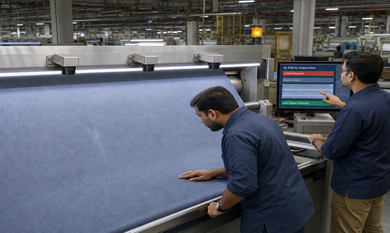


A repeat fabric order arrives with an approved shade reference. The production team retrieves the recipe, prepares the material, and schedules the batch. Throughout this process, one question remains central: will the finished fabric meet the agreed colour requirements?
AI-powered smart dyeing can help teams answer that question with better-connected information. By analysing colour measurements, recipe histories, and production conditions, software can support recipe selection and highlight deviations for review.
The most useful approach follows the fabric through production, connecting each decision with the information needed to make it.
Start With the Approved Shade
Before analysing production, manufacturers need a reliable definition of the target colour.
An approved sample should connect to its digital reference, customer requirements, material details, and measurement procedure. This gives laboratory and production teams a shared starting point.
Establish Consistent Measurement Conditions
A spectrophotometer provides instrumental colour measurements, while controlled visual assessment supports the approval process. Sample preparation, instrument settings, and viewing conditions affect how results are interpreted.
Colour difference, commonly expressed as ΔE, indicates how a sample differs from its reference. Teams should record the agreed calculation method and acceptance tolerance. A single numerical threshold does not suit every fabric or customer.
Software can keep these requirements alongside the order, helping teams assess samples against the correct reference throughout production.
Build a Connected Record for Every Batch
The next step is bringing laboratory and production information together.
A recipe describes the intended process. Actual production records show what happens during the batch. Both are necessary when investigating why a shade meets or misses its target.
Useful information includes:
- Fabric composition, pretreatment details, and material lot.
- Dye identities, quantities, and supplier lots.
- Approved recipe and revision history.
- Machine identifier and relevant process readings.
- Colour measurements, corrections, and approval status.
A consistent batch identifier connects these records across applications.
Bring Equipment Data Into the Workflow
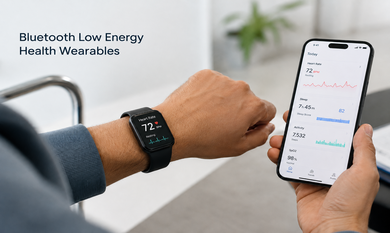
Where suitable interfaces exist, software can collect temperature, pH, timing, and dosing information from compatible equipment. Spectrophotometer readings can also enter the batch record through supported interfaces or controlled file imports.
IoT development services can support these connections between instruments, machinery, and manufacturing applications.
Integration requires an assessment of equipment access, units, timestamps, and missing readings. Process measurements provide operating context; they do not independently establish the finished fabric’s colour.
Apply AI Where It Supports a Clear Decision
Once reliable records are connected, manufacturers can identify where prediction adds value. Two practical areas are recipe recommendations and process deviation detection.
Help Colourists Evaluate Recipe Options
AI can analyse relevant historical recipes and their measured outcomes to suggest candidates for evaluation.
For a repeat shade, the application might retrieve accepted batches with similar fabric characteristics and processing conditions. A colourist can then compare suitable options, review material differences, and select a recipe for laboratory validation.
Existing textile colour matching software may already perform formulation and correction calculations. Additional AI should address a specific requirement beyond those capabilities.
Recommendations also need clear limits. Performance established for one fabric and dye combination should not be assumed to apply equally to unfamiliar materials.
Highlight Changes During Production
AI-driven IoT analytics can compare current process patterns with relevant historical batches.
For example, an unusual temperature profile can prompt an operator to investigate before continuing under the assumption that the process matches previous accepted production.
The alert identifies a difference requiring attention. It does not prove that temperature causes a shade problem.
Prediction can also support specialised tasks. A controlled study published in Fibers investigates estimating dry cotton colour using wet-state colour measurements and squeeze pressure. This illustrates a specific research application that requires validation before use under different factory conditions.
Give the Production Team a Clear Review Screen
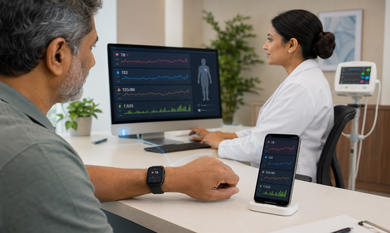
An effective dashboard brings the information needed for a decision into one view.
Instead of displaying isolated graphs, it can connect the approved reference, current batch, recipe revision, process history, and measured colour results. Users should be able to identify whether a value comes from an instrument or a prediction.
A useful review screen answers four questions:
- Which batch and reference are being assessed?
- What differs from the expected result?
- Is the supporting information complete?
- Who needs to review the finding?
Keep Changes Traceable
When a colourist approves a correction, the application can record the revised recipe, reason, reviewer, and time. Final acceptance should remain linked to the measured result and applicable requirements.
Any connection that allows software to change machine settings needs separate engineering assessment, operating limits, and validation. Monitoring, recommendations, and automatic control each require their own implementation decisions.
Improve the Existing Setup in Manageable Steps
A manufacturer does not always need a completely new platform to improve colour consistency.
The first requirement may be connecting laboratory results to production records. Another factory may already have connected data but need clearer reporting or a recommendation feature.
Choose Between Integration, Enhancement, and New Development
Review existing colour-management applications, ERP software, laboratory tools, and machine interfaces before selecting the approach.
Through AI consulting and development services, manufacturers can assess data readiness and define a suitable software scope.
An integration can connect separate systems. An enhancement can add capabilities to an existing application. New development becomes appropriate when current software cannot support the required workflow.
Measure Results Before Expanding
Start with a defined fabric and process family. Establish current performance, then assess changes using comparable batches.
Relevant measures include shade acceptance, correction cycles, review time, and alert usefulness. Test predictions on batches excluded from training.
Water and energy improvements should be reported only when reliable consumption records support them. This creates a factual basis for deciding whether to extend the system.
Frequently Asked Questions
Can Smart Dyeing Software Work With Older Machines?
It depends on the equipment’s controllers, available interfaces, and access permissions. Some machines support direct connections; others require additional integration hardware or controlled data entry. Compatibility should be assessed before development begins.
Does AI Replace Existing Colour Matching Software?
AI can complement an existing application where a defined requirement exists. Manufacturers may gain more value initially from connecting records or improving data quality. Replacement should follow an assessment of current capabilities and operational needs.
Can a Camera Replace a Spectrophotometer?
A camera can support specific inspection tasks under controlled conditions. Its suitability for colour approval requires validation against the intended requirements. An ordinary photograph should not be treated as equivalent to calibrated instrumental measurement.
How Much Historical Data Does AI Need?
There is no universal minimum. Requirements depend on the prediction task and how well records represent relevant materials and conditions. Consistent, complete data is more useful than a larger collection with missing production context.
Will AI Eliminate Shade Corrections?
AI can support better decisions, but corrections may still be necessary. Material variation, process conditions, and measurement quality continue to influence results. Laboratory validation and experienced review remain part of a dependable approval process.
Conclusion
Colour consistency improves when teams can trace an approved shade through recipes, production conditions, measurements, and final review. AI can strengthen this workflow when its recommendations rely on suitable data and validated performance.
Theta Technolabs, a software development company in India, can integrate compatible hardware, enhance existing applications, and develop custom software connecting textile laboratory and production workflows.
Contact: sales@thetatechnolabs.com