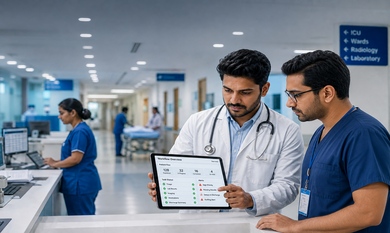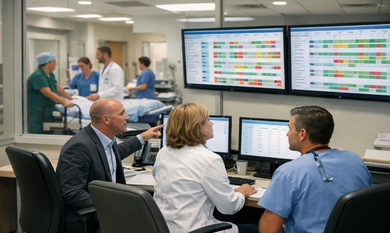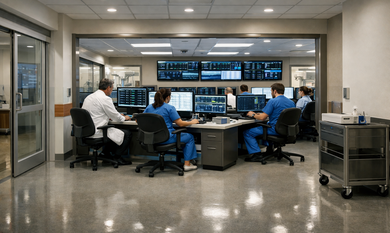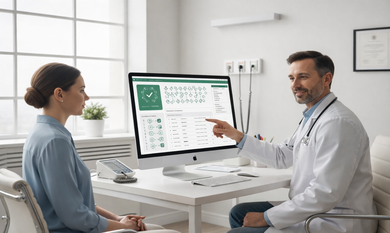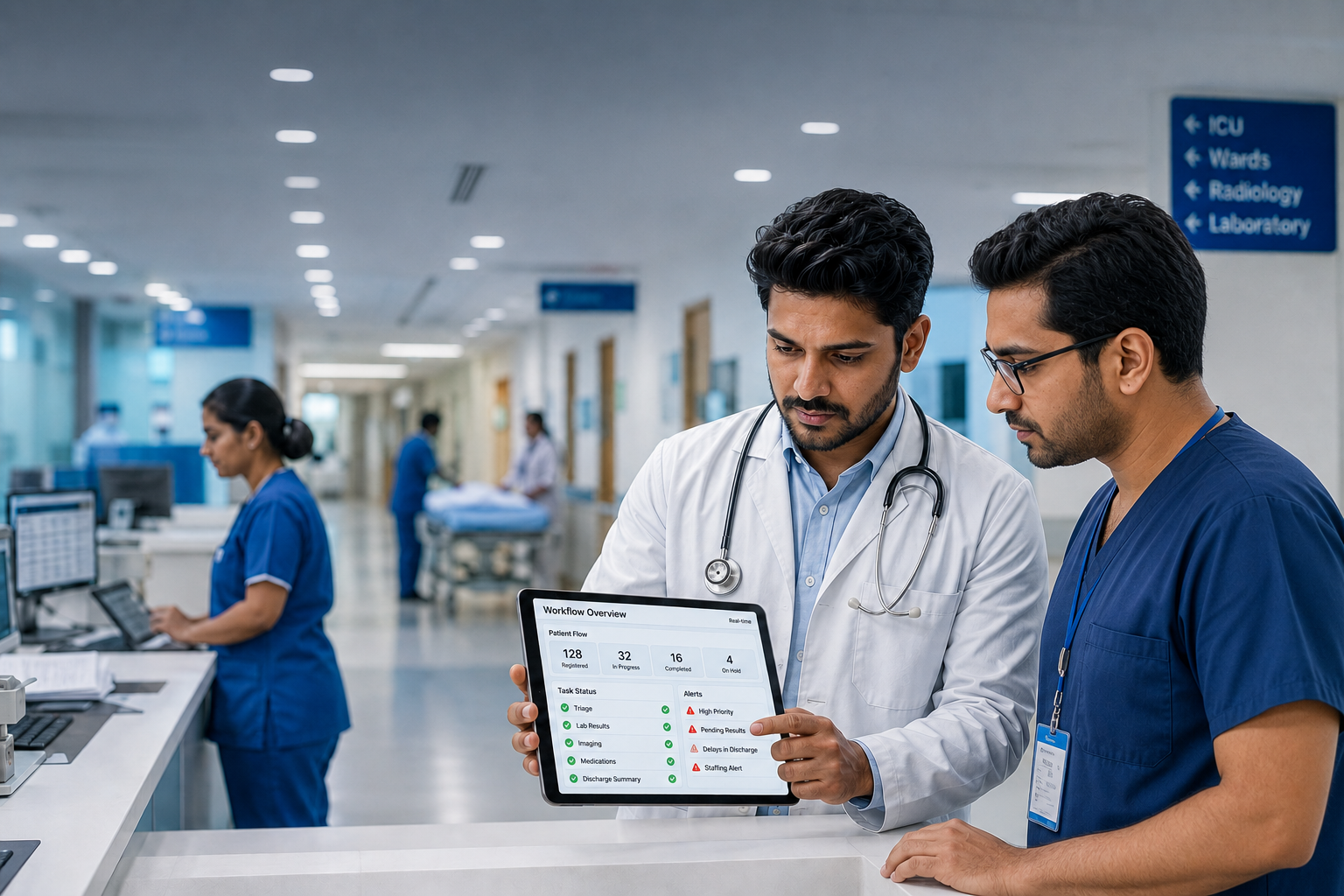


In a busy Hyderabad hospital, a clinical workflow rarely fails because someone is careless. It fails because the day is simply too busy — high OPD volumes, shift changes, and constant handoffs between teams. Under that pressure, a check gets skipped, a note goes unrecorded, or a step happens out of order, and nobody notices until it has become a problem.
This is exactly the problem agentic AI for clinical workflow monitoring is meant to solve. Instead of replacing your staff, it can watch the clinical workflow end to end in the background, catch gaps as they happen, and prompt the right person to act — while your clinicians stay firmly in control. This blog explains what that looks like in practice, where it helps, and what to consider before building it.
The hidden cost of manual clinical workflow monitoring
Most hospitals already rely on people to keep workflows on track — a nurse double-checking, a consultant reviewing, a coordinator following up. That works until the numbers get too high for one person to track. When one team is juggling dozens of patients across overlapping processes, things start slipping through.
The usual failure points look familiar to anyone who runs hospital operations:
- Required checks skipped when a ward is short-staffed or unusually busy
- Documentation left incomplete during rushed handoffs between shifts
- Steps completed out of sequence, so a downstream action is missed
- Alert fatigue, where so many fixed pop-ups fire that staff stop noticing the ones that matter
Any one of these seems minor. Add them up over a month and they become rework, near-misses, and NABH audit findings. Traditional clinical workflow automation built on fixed rules has limits, and at scale those limits start to cost time, money, and confidence.
What agentic AI is, and how it differs from rule-based automation
Agentic AI in healthcare describes a system that does more than react to a single trigger. It understands a goal, follows a process from start to finish, reasons about what should happen next, takes an action, and then checks the outcome. In a clinical setting, that means it can watch a whole workflow rather than a single data point.
This is a real shift from the rule-based alerts most hospital systems already use. It is also different from clinical decision support, which advises on a diagnosis or treatment. Agentic AI here watches the process, not the patient's diagnosis.
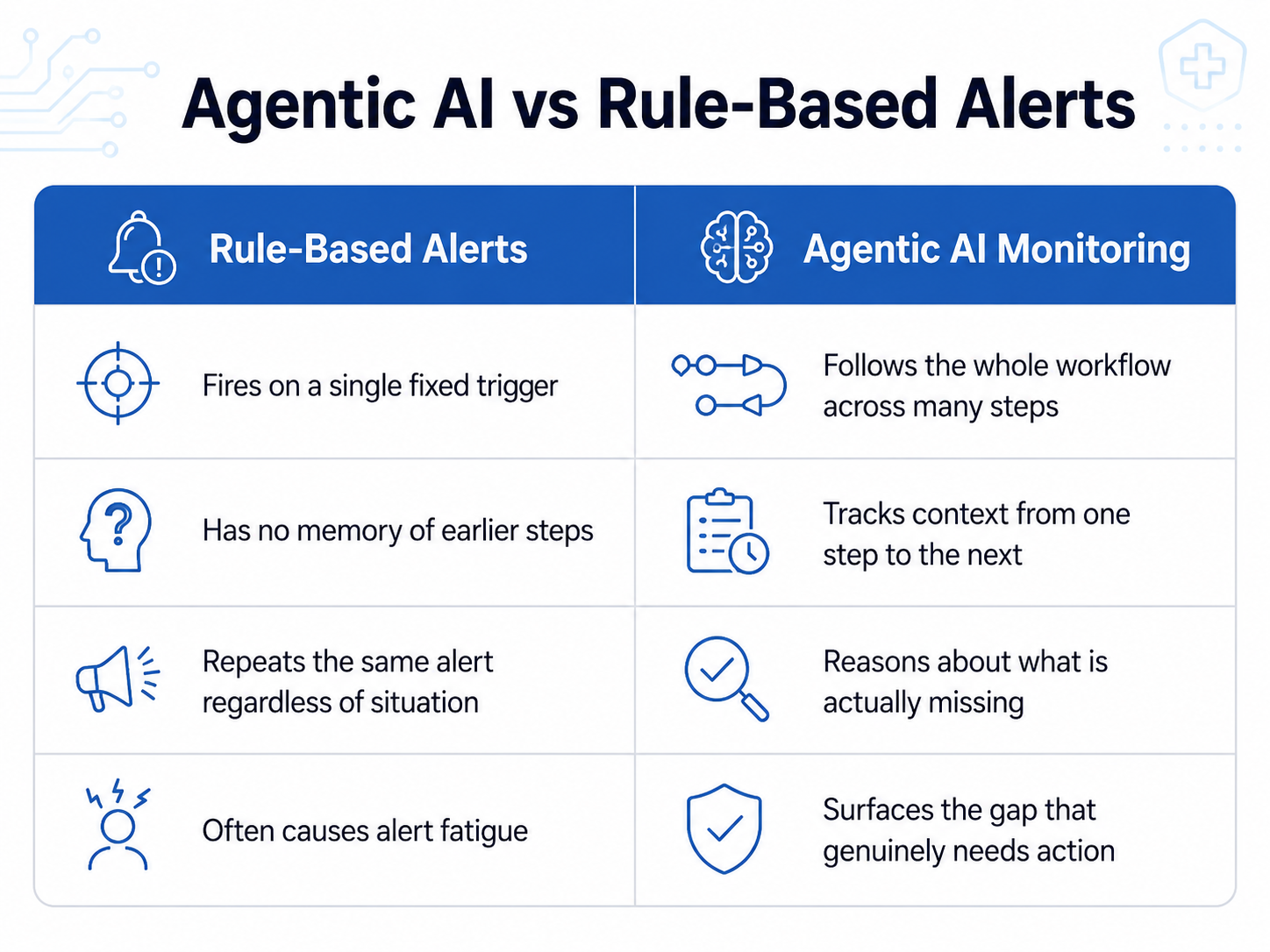
A rule-based alert tells you when one condition is met. Agentic monitoring understands how the whole sequence should run, and notices when something falls out of place.
How agentic AI improves clinical workflow monitoring
So how does agentic AI improve clinical workflows in hospitals on a normal working day? It runs in the background alongside your existing systems and keeps a continuous view of each active workflow. When a required step is skipped, a record is left incomplete, or an action happens out of order, the system can recognise the gap and flag it to the right team member in real time — before it travels further down the line.
The intelligence behind this comes from the models underneath. The ability to recognise a "normal" workflow and spot when something deviates is built on machine learning and deep learning trained on real process patterns. That is what helps the system tell the difference between a harmless variation and a genuine miss.
A real workflow example
Picture a patient moving from admission to a procedure during a packed morning:
- A pre-procedure check is meant to be completed and recorded, but the ward is busy and it slips.
- The agentic system notices the step is missing for that patient at that stage and flags it to the attending team.
- A clinician reviews the prompt, completes the check, and confirms — the gap is closed before the procedure proceeds.
The system did not make any clinical decision. It just made sure the missed check did not slip past and left the call to the clinician. That is what this kind of monitoring is really for.
Keeping the clinician in control
A monitoring system is only trustworthy if it strengthens clinical judgement rather than competing with it. Here, the agent only points things out; it never diagnoses, decides, or overrides. The clinician remains the accountable decision-maker at every step.
It also matches how healthcare AI is expected to work in India. The Indian Council of Medical Research's ethical guidelines for AI in biomedical research and healthcare place clear emphasis on human oversight, accountability, and patient autonomy, and treat the human professional as responsible for the final decision. A human-in-the-loop AI approach keeps the system on the right side of those principles.
Where agentic AI should defer
Good systems are built to step back, not push forward, when judgement is needed. The agent should flag and wait — never act on its own — wherever a decision affects diagnosis, treatment, or patient safety. Its job is to catch what would otherwise slip through, then hand the decision to a person. Designed this way, monitoring reduces risk instead of quietly introducing it.
Compliance and patient data for Hyderabad hospitals
Any system that touches patient information must handle it responsibly. In India, that data is governed by the Digital Personal Data Protection Act, 2023, which sets expectations around consent, security, and accountability for personal health data. A monitoring system should be designed around those requirements from the start, not have them added later.
There is also a regulatory question worth raising early. Depending on how it is used and what its outputs influence, clinical software of this kind may fall under the oversight of the Central Drugs Standard Control Organisation, which regulates medical device software in India. The sensible approach is to clarify intended use upfront and design accordingly, rather than assume a tool sits outside any framework.
Why Hyderabad hospitals are adopting agentic AI now
Hyderabad has become one of India's most active healthcare hubs, with a dense mix of multi-speciality and corporate hospitals serving very high patient volumes. That combination — scale, complexity, and a strong focus on accreditation and quality — is exactly where workflow gaps become hardest to manage manually.
At the same time, hospitals in the city have grown more comfortable with digital systems, which makes a monitoring layer easier to adopt than it would have been a few years ago. For many, agentic monitoring is a sensible next step in their wider move toward AI-driven healthcare solutions — a targeted way to make existing workflows more reliable, rather than a risky overhaul. Given how quickly the city's hospitals are adopting digital tools, the timing makes sense.
Building agentic AI monitoring with the right partner
A monitoring system is only as good as the way it is built and integrated. The most successful projects share a few traits:
- A phased rollout that proves value on one workflow before expanding
- Integration with your existing HIS or EMR, rather than replacing what you already run
- A team that understands clinical reality, not just code
- Clinicians involved throughout, so the system fits how people actually work
This is where an experienced agentic AI development company working with Hyderabad hospitals makes the difference. Theta Technolabs builds custom agentic AI development services for healthcare providers, with integration and clinician oversight treated as core requirements rather than afterthoughts. If your hospital is exploring this, you can start a conversation at sales@thetatechnolabs.com.
Frequently asked questions
Does agentic AI replace clinicians in clinical workflow monitoring?
No. It monitors the process and flags gaps, while the clinician remains the accountable decision-maker. This mirrors the human-oversight principle at the centre of India's healthcare AI guidance.
How is this different from the rule-based alerts in our existing HIS?
Rule-based alerts fire on fixed triggers and have no memory of earlier steps. Agentic AI follows the whole workflow and reasons across steps, so it can catch context that static rules miss.
Is agentic AI for hospital workflows regulated in India?
Patient data is governed by the DPDP Act, 2023. Depending on its intended use, the software itself may also fall under CDSCO's oversight of medical device software.
Will it integrate with our current HIS or EMR, or must we replace systems?
It is designed to layer onto your existing systems through integration, depending on your systems. The goal is to strengthen current workflows, not to force a costly rip-and-replace.
What does it take to build a custom agentic AI monitoring system?
A phased build workflow mapping, model training, integration with your systems, and clinician validation — before anything goes live in a real clinical setting.
Conclusion
Manual oversight will always struggle on a long, busy hospital day. Agentic AI for clinical workflow monitoring offers a practical alternative — a background layer that watches the workflow end to end, catches missed steps early, and keeps your clinicians in charge of every decision. For hospitals in Hyderabad looking to make their clinical processes more reliable, it is a sensible, low-disruption place to start. The technology supports your team; it does not replace them.