Diwali promotions may end before the finance team finishes checking the payments they generated. Orders come through a website, marketplace, store counter and mobile application. Customers pay using UPI, cards or other supported methods, while refunds and settlements may follow different timelines. A successful payment message in the order system does not necessarily mean the matching amount has reached the merchant's bank account.
Payment reconciliation for Indian retailers brings these records together so each sale, deduction, refund and settlement can be explained. The objective is not to force every amount to match immediately. It is to identify legitimate timing differences, find missing records and give staff a controlled way to resolve exceptions.
Know which records should agree
Retail reconciliation begins with distinct data sources. The order management system records what the customer purchased. The payment gateway records transaction attempts and status changes. The settlement report shows what the provider intends to pay the merchant, including applicable deductions. The bank statement confirms what was actually credited.
Automated payment reconciliation compares these records using order IDs, provider transaction IDs, settlement references, timestamps, amounts and currencies. A single order may involve a failed attempt followed by a successful one. One settlement may contain many payments. Refunds may be processed separately from the original collection. The application must model those relationships rather than expecting one bank credit for every sale.
Retail teams should also distinguish payment success from fulfillment. An order may be paid but cancelled before dispatch. Another may be partially shipped and partially refunded. These are business events that affect the financial result but do not automatically indicate a problem with the payment provider.
Build a transaction history that survives corrections
A dependable system stores the original payment event and each subsequent update. When a transaction changes from pending to successful, the initial record should remain available. If a refund is initiated and later completed, the system should show both steps and their dates.
A central retail transaction matching layer can assign a consistent internal reference while retaining external identifiers. It needs to handle duplicate webhook deliveries and repeated file imports without creating duplicate payments. Incoming records should be validated before they enter the matching process, with malformed or incomplete entries sent to a separate review queue.
This is especially important after promotional campaigns when teams may receive reports from different providers. A daily file could be re-uploaded because the first import appeared slow. Without checksums, file identifiers and idempotent processing, the same settlement lines may be counted twice.
Retailers using retail and e-commerce software should connect the reconciliation layer to the existing order lifecycle. Building another isolated transaction dashboard will only create a new place where records disagree.
Match collections to settlement deposits
Begin with exact-reference matches wherever possible. A paid order should map to a payment-provider record with the corresponding payment reference and confirmed status. The provider's settlement report then maps that transaction into a payout batch. Finally, the payout batch maps to a credit in the bank statement.
Payment gateway settlement matching becomes harder when payouts are net of fees, taxes, adjustments or refunds. The solution should calculate expected deductions from the merchant's actual contract and provider reports. It should not assume a universal fee rate or treat every difference as lost money.
A good interface lets an analyst open a settlement and inspect its contributing transactions. If the payout is incomplete, the screen shows the missing items, applicable cutoff period and unresolved adjustment codes. This is far more useful than a green or red indicator beside a total amount.
Payment reconciliation becomes more complicated when retailers receive payments through different channels, including UPI, debit cards, credit cards and payment gateways. Each channel may have different transaction references, settlement arrangements and reporting formats. The Reserve Bank of India (RBI) explains the framework governing payment and settlement systems in India, including how electronic payment instructions and settlement processes work. Retailers can use this understanding to design reconciliation software that compares order records, payment confirmations and bank settlements while keeping unmatched transactions available for review.
Separate refund events from sales differences
After Diwali, order returns, damaged-item claims and cancellations may create a second flow of money. The original sale, refund request, refund approval, provider refund transaction and final customer credit are different events. Refund reconciliation should track them separately while keeping the relationship to the originating order.
An initiated refund should not be reported as completed before the provider confirms its status. Similarly, a bank deposit that does not yet reflect a recent refund may be a timing difference rather than a discrepancy that needs correction. The system should flag what is still pending and when the next check is due.
Partial refunds deserve particular care. A retailer may return the price of one product from a multi-item order while retaining shipping charges under an approved policy. The expected refund must come from the order and refund records, not a calculation that always reverses the entire payment.
The case record should show who approved the refund and which system executed it. Reconciliation software may report a mismatch, but it should never issue a second refund merely because the first result has not yet appeared in the imported statement.
Give every exception a reason and owner
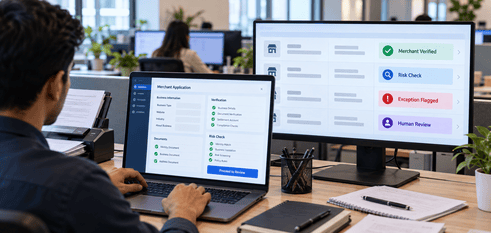
Not all unmatched records require the same treatment. Useful exception categories include missing payment reference, delayed settlement, unexpected fee, duplicate import, unmatched bank credit, incomplete refund and disputed transaction. Each category should have a responsible team and an escalation rule.
Reconciliation exception management can automatically group repeated issues from the same settlement batch. It can also attach gateway responses and bank references so an employee does not have to search across multiple portals. The system should display the proposed explanation alongside the evidence, not replace evidence with a generated summary.
Machine learning may help identify likely matches where reference data is incomplete, but financial postings need stronger controls. A possible match is not a verified match. When teams engage an AI development company in Ahmedabad, they should define which recommendations are advisory and which updates require finance approval.
Approval controls are particularly relevant for manual journal adjustments, refund corrections and changes to beneficiary details. Assign permissions by role, record the reviewer and retain an audit trail of the final decision.
Reconcile channels without losing channel context
Marketplace orders, owned-store purchases and physical point-of-sale transactions may all appear in one bank account. Their settlements can still follow different commercial arrangements. A multi-channel retailer needs a common data model, but not a single matching rule for every channel.
Omnichannel payment tracking should retain the source channel, merchant ID, payment method and tax treatment. An online return collected in a physical store may also require a linked inventory adjustment. Keeping the sales and refund workflows connected helps prevent finance teams from resolving amounts while leaving order records incorrect.
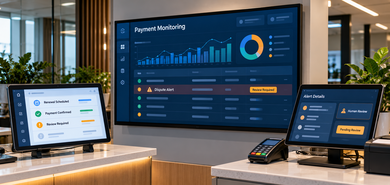
A useful dashboard groups exceptions by provider, channel, age and value at risk. Finance managers can inspect whether discrepancies are concentrated in one integration or appear across the entire process. The dashboard should also allow export of transaction evidence for accounting review.
Implement the system in manageable stages
Start with the payment method that creates the most manual work, not necessarily the one with the largest transaction count. Collect representative transactions that include failed attempts, retries, partial refunds, delayed settlements and disputed payments. Confirm the matching logic against known accounting outcomes.
Then automate data collection and exact matches. Add exception routing only after staff trust the base records. Retail finance automation should preserve human sign-off for corrections with financial consequences. Compare unresolved items, false matches, duplicate records and time spent investigating each exception before expanding across channels.
Technical teams should use secure APIs where available and controlled file imports where they are not. Design retry and idempotency behaviour before relying on scheduled jobs. Custom fintech software development can help integrate payment platforms with ERP, bank feeds and internal review tools, without replacing the retailer's accounting authority.
A review queue should also distinguish an unresolved transaction from a transaction that has been examined and deliberately left open. Finance teams need notes explaining expected settlement dates, the next evidence to request and the person assigned to follow up. This prevents the same discrepancy from being repeatedly investigated by different employees.
Frequently asked questions
What is the difference between settlement and reconciliation?
Settlement is the process through which funds are transferred according to the payment arrangement. Reconciliation compares payment, settlement and bank records to confirm that the expected financial events are accounted for.
Can UPI and card transactions be reconciled in one application?
Yes, if the system preserves each provider's identifiers, reports and settlement rules. A shared dashboard can present results without pretending every payment channel behaves identically.
Why do some sales remain unmatched after the festival?
Common causes include settlement timing, fees, refunds, failed payment attempts, missing references and delayed imports. The explanation must come from the relevant records rather than assumption.
Should software automatically correct an unmatched amount?
Only within a documented, low-risk rule that the retailer has approved. Material adjustments and uncertain cases should go through authorized finance review.
A cleaner close to the festive sales cycle
The right solution connects orders, payments, refunds, settlement reports and bank credits, then makes exceptions visible to the people who can resolve them.
Theta Technolabs develops custom payment reconciliation software using secure REST APIs, Python-based matching systems and cloud dashboards to help Indian retailers connect sales orders, UPI and card payments, refunds and bank settlements in one platform. These solutions can help finance teams identify payment discrepancies, manage reconciliation exceptions and maintain proper approval controls. To discuss your retail payment reconciliation software requirements, contact Theta Technolabs at sales@thetatechnolabs.com.