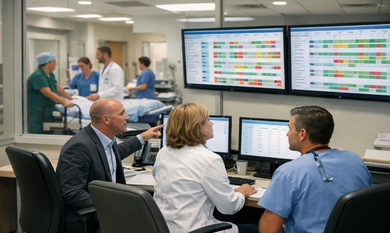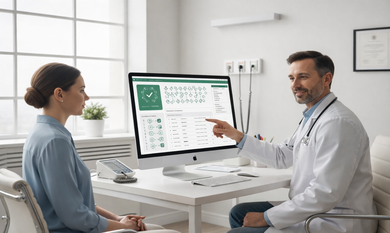


Diagnostic centres, including many in Hyderabad, often deal with a team problem as much as a speed problem. One senior radiologist writes tight, consistent reports. A junior colleague, still finding their rhythm, writes something noticeably different for the same modality. A second branch across town formats things differently again. Add rising scan volumes and the broader shortage of experienced radiologists relative to demand across India, and reporting can end up inconsistent as much as it is slow.
This is where AI-assisted structured reporting is actually useful, not as a speed trick, but as a way to bring consistency to how a team of radiologists documents findings, regardless of experience level or location.
Why Consistency Matters More Than Speed in Radiology Reporting
Most conversations about AI in radiology focus on one radiologist and one scan: how much faster can this person read an image and dictate a report. That framing misses what actually happens inside a busy imaging centre, where reports are produced by multiple people, at different experience levels, often across more than one location.
Clinical research evaluating automated AI integration into radiology reporting workflows, in one study focused on chest X-ray reporting, found that reports produced through a standardized AI-assisted pipeline were rated significantly higher in quality than free-text reports on a five-point scale. The gain wasn't just speed, it was radiologist team consistency. That distinction matters more for a diagnostic centre than it does for an individual radiologist working alone, because consistency is what determines whether a referring physician trusts a report the same way regardless of which radiologist signed it. You can read the full study here.
What AI-Assisted Structured Reporting Actually Does
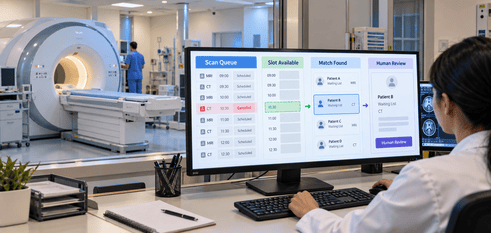
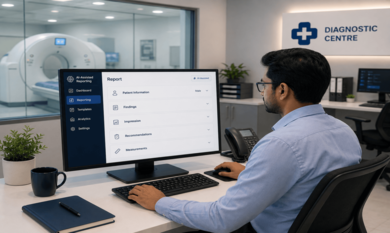
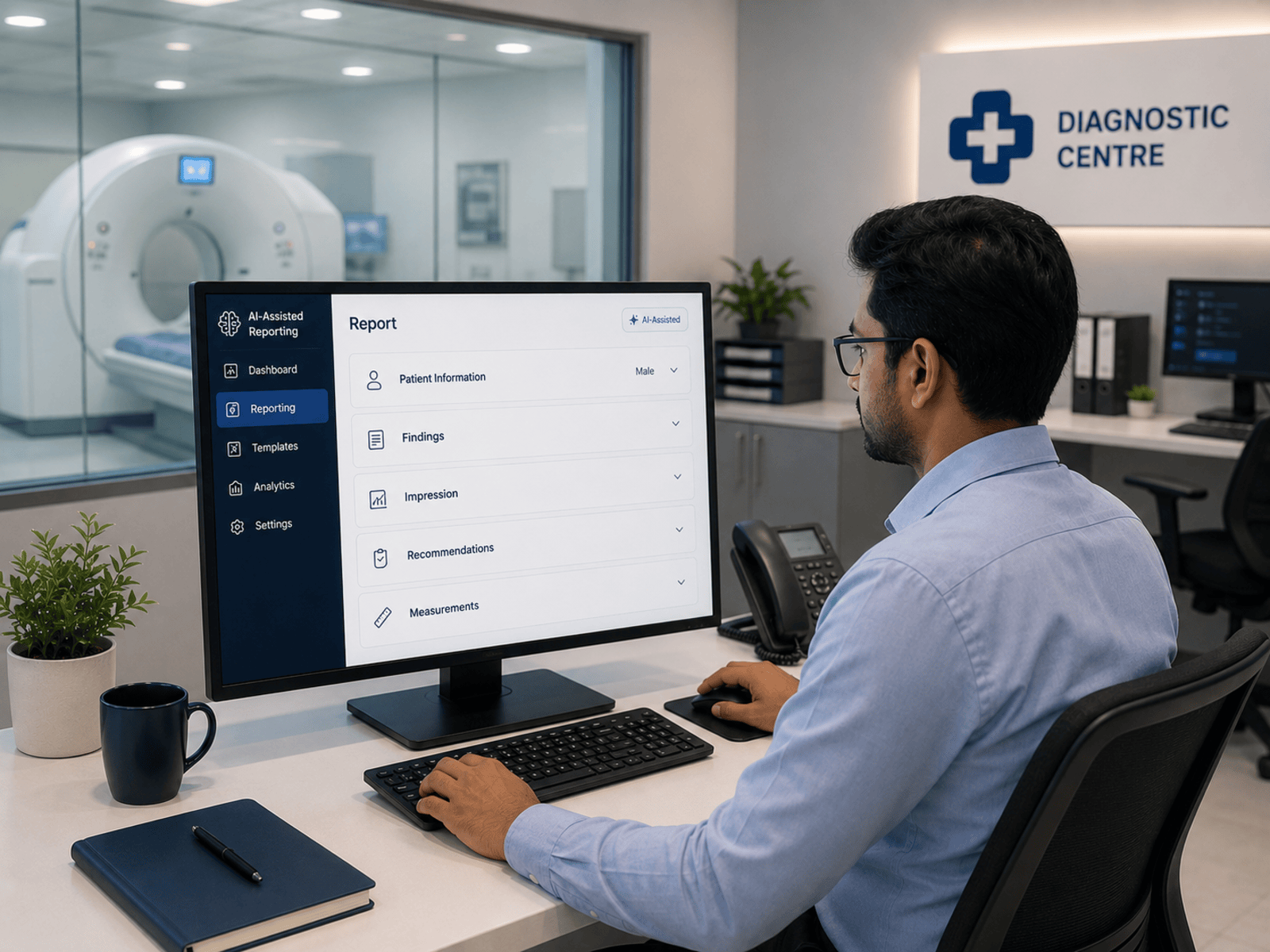
Strip away the marketing language, and structured reporting radiology tools work like this: the system analyzes the image, pre-populates a standardized report template with relevant findings and measurements, and flags anomalies for the radiologist's attention. The radiologist then reviews, edits, and finalizes. The report doesn't leave the building without a human sign-off.
This is different from a radiologist dictating a report from a blank page every time. Free-text vs structured reports is really a question of variation: free-text reports differ in structure, level of detail, and terminology from one radiologist to the next, even when describing the same finding. Structured reporting forces every report, regardless of who writes it, into the same format, with the same fields, the same level of completeness.
Underneath this is the same computer vision in radiology technology used for image analysis in other diagnostic contexts, detecting patterns, segmenting regions of interest, and quantifying findings before a human ever reviews them. Centres exploring computer vision development services for imaging workflows are usually looking at this exact capability, just applied specifically to the reporting stage rather than earlier steps like triage or detection.
Where This Helps Hyderabad Diagnostic Centres Specifically
Hyderabad's diagnostic imaging sector faces a fairly specific version of a national problem: scan volumes are growing faster than the pool of experienced radiologists. Centres that operate more than one branch feel this even more acutely, because they're trying to maintain the same reporting standard across locations that may not have the same seniority mix of staff on any given day.
AI radiology reporting Hyderabad adoption helps in three concrete ways here. First, it gives junior radiologists a consistent template to work within, which narrows the formatting and documentation gap between how a five-year and a fifteen-year radiologist record the same type of scan. Second, it makes cross-branch consistency realistic, since a report from one location reads the same way as a report from another when both are built on the same structured fields rather than personal dictation habits. Third, it makes second opinions and case reviews faster, since a senior radiologist reviewing a colleague's report doesn't have to first decode an unfamiliar reporting style before evaluating the actual clinical content.
For a Hyderabad-based imaging or diagnostic centre weighing diagnostic centre AI adoption, the honest answer is that it depends less on how large the centre is and more on how much variation currently exists across its reporting team. Centres working with an AI development company in Hyderabad to explore AI in medical imaging Hyderabad projects usually start by auditing exactly that: how different are reports across radiologists and branches today, before deciding what a structured system needs to standardize.
Addressing the Real Concerns: Accuracy, Compliance, and Trust
It's worth being direct about what AI-assisted reporting is not. It is not a system that reads a scan and issues a diagnosis on its own. Every structured report still requires a radiologist to review the AI-populated fields, correct anything that doesn't match their own reading of the image, and sign off before it goes to a referring physician. The AI's role is to support radiologist workflow automation for the repetitive, template-filling part of the job, not to replace clinical judgment.
Compliance is the other legitimate concern, particularly for Indian diagnostic labs handling sensitive patient imaging data. Any structured reporting system worth adopting needs to handle patient data securely in line with India's Digital Personal Data Protection (DPDP) Act, and fit within regulatory expectations for medical device software under CDSCO guidelines, not treat compliance as an afterthought. This is also where any 'reduces error' claim needs a caveat: structured reporting can reduce certain kinds of error, particularly the kind caused by fatigue, rushed dictation, or incomplete documentation late in a shift, but it doesn't remove the need for a radiologist's trained eye. Centres that have implemented AI medical imaging solutions with compliance requirements in mind, such as CDSCO guidelines for medical device software, tend to treat this as a design requirement from day one rather than something added later.
What to Look for When Adopting AI Reporting Tools
Not every tool built for AI reporting for diagnostic labs works the same way, and the differences matter more once you're running it across an actual team rather than testing it on a handful of scans. Before adopting one, it helps to check the following:
- PACS/RIS integration. The tool needs to fit into the imaging and reporting systems your centre already runs, not force a separate, parallel workflow.
- Template customization per modality. A template built for chest X-rays shouldn't be forced onto MRI or CT reporting without adjustment.
- A clear review-and-edit step. Be cautious of any system positioned as fully automated. The radiologist's review has to remain a required step, not optional.
- Multi-branch support. If your centre operates more than one location, confirm the system can maintain the same template and standards across all of them, not just a single site.
These aren't exotic requirements, but they're easy to overlook when a demo focuses only on speed and accuracy numbers rather than how the tool fits into a multi-radiologist, multi-location workflow, and how it helps reduce radiology reporting time without cutting corners on review.
Frequently Asked Questions
1. Does AI-assisted reporting replace radiologists?
No. AI-assisted reporting drafts and structures a report based on image findings, but a radiologist still reviews, corrects, and signs off on every report before it's finalized. The technology supports the reporting process; it doesn't replace clinical judgment.
2. How much time can structured AI reporting save?
Published research on AI-assisted radiology reporting has found reduced reporting time alongside maintained or improved report quality, though actual time savings vary depending on modality, case complexity, and how well the system is integrated into existing workflows.
3. Is AI-assisted reporting reliable for smaller diagnostic centres?
Yes, provided the centre maintains a proper radiologist review step. Smaller centres often benefit from standardized templates, since they may have fewer radiologists covering a wider range of case types.
4. How does structured reporting help onboarding new radiologists?
Standardized templates give newer radiologists a consistent formatting and documentation structure to work within, narrowing the gap in how reports are written compared to more experienced colleagues. This helps with consistency and faster ramp-up, but it doesn't substitute for the clinical judgment and interpretation skills that senior radiologists still need to oversee, especially on complex cases.
Closing Thoughts
The value of AI-assisted structured reporting for a Hyderabad diagnostic centre isn't really about shaving minutes off a single report. It's about whether a referring physician can trust that a report reads the same way regardless of which radiologist wrote it, or which branch it came from. That kind of consistency is hard to build through training alone. It's easier to build into the reporting structure itself.
If you're evaluating what this could look like for your centre's specific team and case volume, Theta Technolabs works with diagnostic and imaging providers on exactly this kind of AI and computer vision integration. Reach out at sales@thetatechnolabs.com to talk through what a structured reporting rollout would actually involve for your setup.