.png)


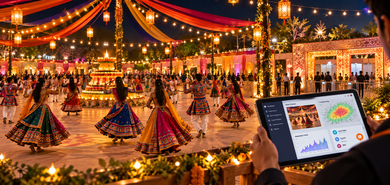
Anyone who has stood in line for Mukh Darshan at a major Ganesh pandal knows the expect: you arrive early, the queue barely moves, and by the time you're within sight of the idol, hours have passed. At some of Maharashtra's biggest pandals, wait times during peak days can stretch well past 12 hours. Multiply that by lakhs of devotees over a ten-day festival, and it's clear why organizers, police, and municipal bodies are looking closely at technology. A smart queue management system won't replace the devotion or the scale of these gatherings, but it can make the experience faster, safer, and far more predictable for everyone involved.
This blog looks at how smart queue management actually works, what makes it different for temporary pandals versus permanent temples, and where it's already showing results.
Why Traditional Queue Management Struggles During Festivals
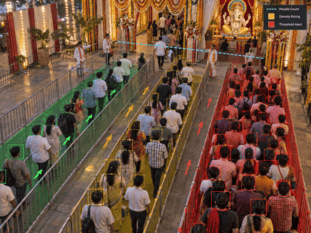
Managing crowds at a permanent temple is hard enough. Managing crowds at a Ganesh pandal is harder, because most of these structures exist for barely ten to eleven days a year. There's no time to plan and install heavy, fixed infrastructure the way a centuries-old temple might. Organizers work with rope barricades, volunteer coordination, and manual headcounts, systems that hold up reasonably well on a quiet weekday morning but strain badly during evening aartis, weekends, or the final immersion day when crowds arrive in multiples of the daily average.
This isn't a failure of planning. It's simply the nature of any large public gathering: demand spikes unevenly, and manual systems can only scale so far before queues start backing up and temple darshan waiting time reduction becomes the pressing need. That's the gap smart queue management is built to close, for both pandals and temples, in different ways.
What Smart Queue Management Actually Means
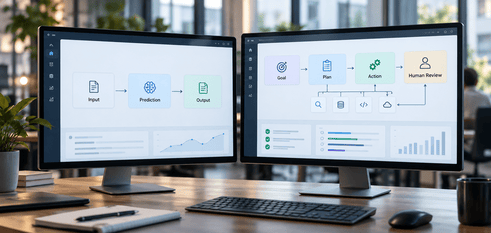
Smart queue management isn't a single app or gadget. It's three connected pieces of technology working together, each solving a different part of the same problem.Individually, each piece helps. Together, they turn a queue from a guessing game into something organizers can actually see and manage in real time.
Digital Token & Time-Slot Systems
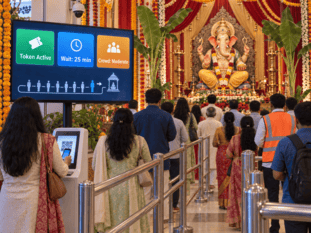
Instead of physically joining a line, devotees can generate a token-based queue system entry through SMS, WhatsApp, or a QR code scan at designated points. That token holds their place in the queue while they wait nearby, visit other pandals, or simply sit down instead of standing for hours. On the organizer's side, this also means the physical space once used purely for queuing can be freed up for other festival activities.
This kind of token system is a natural extension of good IoT development services, where the token issuance, real-time updates, and backend queue logic all run on connected infrastructure that can be set up quickly and scaled up or down depending on the day's expected footfall.
Real-Time Crowd Monitoring with IoT Sensors
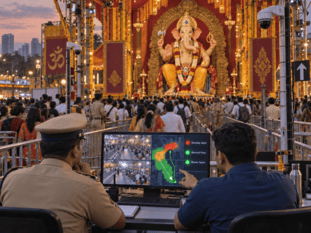
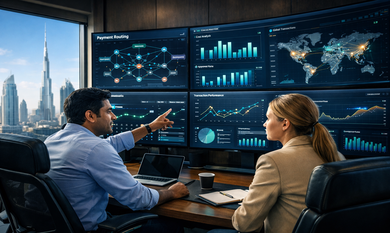
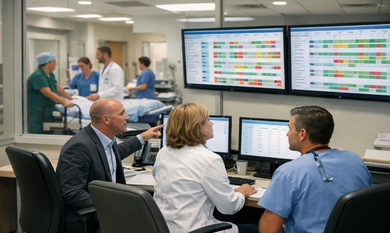
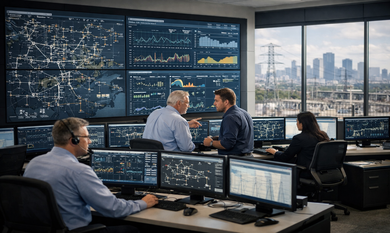
Tokens alone don't solve the safety problem; organizers still need to know how crowded a space actually is, in real time. This is where sensor-based pandal safety solutions come in. According to a technical paper published by IJRASET on temple and pilgrimage crowd management, an integrated system combining artificial intelligence, IoT-based sensing, backend server processing, and a web-based monitoring dashboard can continuously track crowd density and flag risk zones before they become dangerous.
For narrow pandal lanes, this often means sensors placed at entry and exit points to catch bottlenecks early. For larger temple courtyards, it might mean broader camera coverage across multiple darshan queues. Either way, the goal is the same: give organizers and police visibility into crowd conditions before a slow queue turns into a safety concern.
Predictive Analytics: Managing Peak Hours Before They Happen
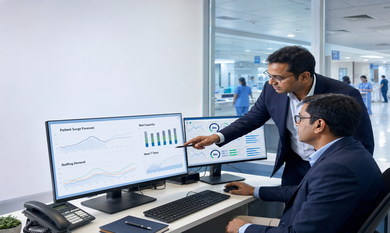
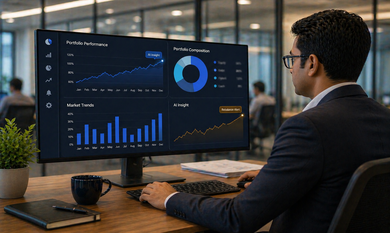
The most useful part of smart queue management isn't reacting to a crowd that's already formed, it's anticipating it. By combining historical footfall patterns (evening aartis, weekend surges, immersion-day peaks) with live sensor data, organizers can adjust token issuance rates in advance, add temporary staff, or stagger entry times before a queue spirals out of control.
AI crowd prediction for festivals approaches mirror the same logic already used in broader smart city IoT solutions, where traffic and utility systems are managed proactively rather than reactively. Applying that same thinking to festival crowd management is a natural next step for cities that already invest in civic technology.
Real-World Example: Tech-Driven Crowd Management in Practice
This isn't theoretical. Mumbai's Lalbaugcha Raja, one of the country's largest and most heavily visited Ganesh pandals, has already used AI-integrated surveillance to support crowd management technology for temples and safety monitoring during Ganeshotsav, helping authorities respond faster to incidents during peak hours. The results were notable enough that officials have discussed extending similar technology-driven approaches to other major festivals and gatherings across the state.
If this kind of system can operate at the scale of Lalbaugcha Raja, where queue times can run into double digits of hours, it's realistic for mid-sized pandals and temples to adopt scaled-down versions of the same core technology.
What This Means for Organizers and Civic Bodies
For pandal committees and temple trusts, the practical upside is straightforward: shorter effective wait times, safer crowd flow during peak hours, and better data to plan next year's festival with more accuracy. For civic bodies, particularly in Pune, where Ganeshotsav draws some of the largest festival crowds in the country, this kind of technology fits naturally alongside other smart city investments already underway. Municipal teams and event organizers looking to build this capability don't need to start from scratch; working with an experienced AI development company in Pune can help translate these concepts into a system suited to local festival conditions.
Conclusion
Smart queue management isn't about replacing tradition or making festivals feel less personal. It's about protecting the experience devotees come for in the first place. By combining digital tokens, real-time IoT crowd sensors, and predictive analytics, organizers get a practical way to reduce waiting times, respond to surges before they become unsafe, and plan more effectively year after year. Whether it's a temporary pandal set up for ten days or a temple that welcomes pilgrims year-round, the underlying approach scales to fit the setting.
Let's Build It Together
If you're a pandal committee, temple trust, or civic body exploring what this could look like for your festival or site, Theta Technolabs can help bring it to life end to end. That means a mobile app for devotees to generate tokens and track their queue position, a web-based dashboard for organizers to monitor crowd density and manage staff deployment in real time, and a cloud infrastructure layer that processes sensor data and runs predictive analytics behind the scenes, all built on IoT sensor integration and AI-driven crowd insights tailored to your event's scale and duration.
Reach out to us at sales@thetatechnolabs.com to talk through what a smart queue management system could look like for your next festival season.
Frequently Asked Questions
What is a smart queue management system?
It's a combination of digital tokens, real-time crowd sensors, and predictive analytics that lets organizers manage waiting lines and crowd flow without relying purely on manual barricades and headcounts.
How does IoT help manage temple crowds?
IoT sensors and connected cameras track crowd density at entry, exit, and darshan points in real time, giving organizers early visibility into overcrowding before it becomes a safety risk.
Can pandals (temporary setups) use this technology affordably?
Yes. Because pandals only need technology for ten to eleven days, most smart queue solutions for them are built around mobile apps, rented sensor units, and cloud dashboards rather than expensive fixed installations.
Does smart queue tech work without a smartphone app?
Yes. Many systems support token generation through SMS, WhatsApp, or QR code scanning at physical points, so devotees without a dedicated app can still participate.
How is crowd data used to plan for next year's festival?
Historical footfall and queue data from one festival season can be analyzed to predict peak hours and crowd surges the following year, helping organizers plan staffing, token issuance, and layout well in advance.