During Diwali shopping, a customer may pay for gifts at several stores, order items online and retry a checkout after a failed attempt. That activity can look unusual compared with an ordinary week, but unusual does not necessarily mean fraudulent. Flagging every change can interrupt genuine payments and burden reviewers.
Real-time payment risk scoring evaluates relevant transaction signals to estimate whether an event needs closer attention. For platforms concerned about Diwali shopping payment fraud, the challenge is to distinguish possible misuse from genuine festive purchasing while respecting the role of each participant in India's payment system. The implementation connects events, scoring, authorised decisions and reviews.
Define Where Payment Risk Scoring Fits Into Diwali Checkout
Identify which participant has the information
A merchant knows its orders and customer checkout journey. A payment gateway may process requests and responses, while banks, payment system operators and other authorised participants hold different parts of the payment information and make different decisions. This matters when designing festive season payment security: the system cannot assess fields its operator is not entitled to receive.
For example, an online store may notice repeated failed checkouts but have no access to a customer's wider banking history. UPI fraud monitoring at a payment-system participant may involve signals unavailable to the merchant. Document each field’s source, purpose and retention.
The data flow for FinTech software platforms should therefore start with a diagram of participating systems and their access permissions, not a generic promise that every suspicious transaction can be stopped automatically.
Keep scoring separate from authorisation
A fraud score expresses estimated risk. Authentication confirms that required customer verification steps have been completed. Payment authorisation and any subsequent decline or hold follow the relevant participant's rules and authority. Scores cannot replace these controls.
Collect Transaction Signals Without Duplicating Events
Capture only relevant, permitted information
Effective payment transaction monitoring may use amount, merchant, transaction time, payment status, recent attempts and available session or device information. Signals depend on lawful access and payment channel. Avoid collecting unnecessary personal details.
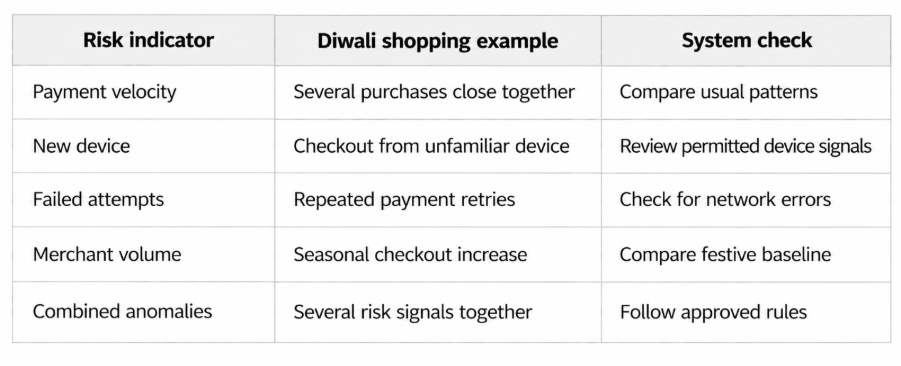
Transaction velocity checks examine activity over an appropriate period. Several successful purchases in succession may deserve different treatment from many failed authentication attempts. Festive shopping can involve unfamiliar merchants. The engine should analyse combinations of signals rather than infer fraud from one unusual purchase.
Treat retries and delayed confirmations carefully
Suppose a shopper taps Pay again because a checkout screen does not update. The merchant may receive several request events, a delayed response and a later reconciliation update. Counting them all as completed payments would distort the velocity calculation.
Use event identifiers and idempotent processing to distinguish notifications from new transactions. Preserve the original event time and the processing time; they may differ. Late statuses should update existing records. Without this groundwork, even a sophisticated model may learn misleading patterns. During integration testing, replay the same event more than once and send confirmation messages out of order. The final payment record and velocity features should remain consistent.
Calculate Transaction Risk Using Rules and Machine Learning
Build understandable rules first
AI fraud detection in India is most useful when its inputs and decisions can be examined. A transaction risk scoring engine might combine repeated failures, unfamiliar transaction patterns and other approved signals. Rules can flag specific conditions, while a model may estimate risk from relationships across several features.
Use clear time windows and document what each feature means. Checkout attempts are not completed transfers. Record alert reasons without exposing sensitive detection details.
Train models with reliable outcome labels
Machine learning fraud detection depends on reliable historical outcomes. A transaction that received a warning is not automatically confirmed fraud. Separate suspicious activity, reviewed cases, customer disputes and established fraud outcomes in the training data.
Validate on later periods to assess changing behaviour. A model built only on routine months may overreact when purchases increase during Diwali. Festivals do not justify indiscriminately weakening security.
Compare unusual activity with legitimate festive patterns
Consider a returning customer who places several gift orders across different merchants. That behaviour might differ from their usual purchasing frequency yet have no other concerning signals. Compare similar patterns and evaluate combined signals.
Validate probability calibration and risk bands for their intended use. A high score should mean the case warrants the defined treatment, not that the system has established criminal intent.
Turn Risk Scores Into Alerts and Review Decisions
Assign a response under approved payment rules
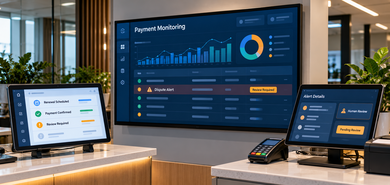
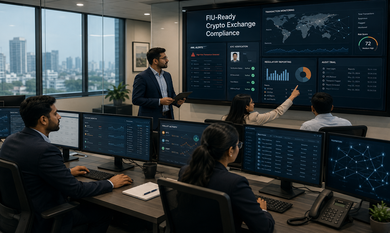
Real-time fraud alerts can notify the appropriate monitoring team when defined conditions are met. Depending on the participating entity, an event may continue through existing controls, be routed for review or trigger an authorised additional check. Risk-based payment authentication must remain within the authentication methods and rules applicable to that payment flow; an independent merchant risk model cannot invent a new UPI approval requirement.
Include event ID, status, risk reasons and review outcome. Keep sensitive details out of unrestricted notifications.
Preserve the history of an investigation
A risk assessment may change after an issuer response, customer report or analyst review. Retain scores, rule versions, updates and resolutions. This gives teams a traceable explanation without treating every alert as a confirmed case of fraud.
Test False Positives and Processing Performance
Include legitimate Diwali transactions in testing
Payment fraud false positives occur when legitimate activity is incorrectly treated as suspicious. Test the engine against seasonal shopping scenarios, multiple successful purchases, retries, different order values and known fraud cases where reliable labels exist. Obvious fraud examples alone do not test customer impact.
Review precision, recall and the proportion of legitimate transactions flagged, alongside how long investigations take. Break results down by payment channel and relevant customer segments where permitted and appropriate. Investigate differences rather than claiming one overall accuracy figure proves the engine is fair.
Measure the whole transaction process
Scoring time matters because payment systems have their own response-time requirements. Measure how quickly permitted events arrive, features are calculated, an assessment is returned and an alert becomes visible. Test unavailable data sources, duplicate messages and temporary service failures. Define safe fallback behaviour with the responsible payment participant.
Even where real-time FinTech fraud detection includes broader investigative workflows, transaction scoring still needs its own validation, latency budget and operational controls.
Keep Payment Monitoring Secure and Auditable
Restrict access and protect event records
Limit fraud review data to authorised users, encrypt sensitive information where appropriate, and maintain a record of access and decisions. Mask confidential details in operational views and customer notifications. When a model or rule changes, record its version and test evidence so earlier outcomes remain explainable.
Apply regulatory requirements to the right organisation
The Reserve Bank of India's directions for cyber resilience and digital payment security controls for non-bank payment system operators address real-time or near-real-time fraud monitoring and alerts for specified authorised non-bank PSOs and their relevant systems. Those directions have defined applicability and implementation timelines; they should not be presented as identical obligations for every merchant or software provider.
Review scoring against applicable regulations, contracts and payment controls.
Frequently Asked Questions
What is real-time payment risk scoring during Diwali shopping?
It is the assessment of transaction signals as payment events arrive, using rules or validated models to identify activity needing attention. During Diwali, the system should consider legitimate seasonal purchasing patterns rather than treating every increase in transactions as fraud.
How can payment platforms identify suspicious UPI transactions?
Authorised participants may evaluate permitted signals such as unusual activity, repeated failures and relevant transaction history. The available information and permitted response differ by role. Suspicious activity should be assessed through approved monitoring and investigation processes, not treated as proof of fraud.
Can legitimate Diwali purchases trigger false fraud alerts?
Yes. Multiple gift purchases, new merchants or checkout retries may resemble unusual behaviour. Monitoring teams can test such scenarios and review false positives to improve rules without removing required security checks.
What transaction signals are used in AI-based fraud detection?
Depending on authorised access, signals may include transaction time, amount, merchant, velocity, payment status and available device or session information. Their usefulness depends on data quality and context; no single indicator reliably establishes fraud.
Can an AI risk scoring system automatically block a payment?
Only when the relevant payment participant has authority and approved controls for that response. A risk score by itself is not a payment authorisation decision. Other events may require review or an additional permitted verification step.
Developing Real-Time Payment Risk Monitoring Systems
A dependable festive payment monitoring system begins with authorised transaction data, clear event processing and risk rules that can be tested. Machine-learning scores, investigation dashboards, secure records and payment integrations can then support timely review without confusing unusual shopping with confirmed fraud.
Theta Technolabs develops FinTech applications, machine-learning components and secure software integrations. For a custom payment monitoring discussion, contact us at sales@thetatechnolabs.com.